

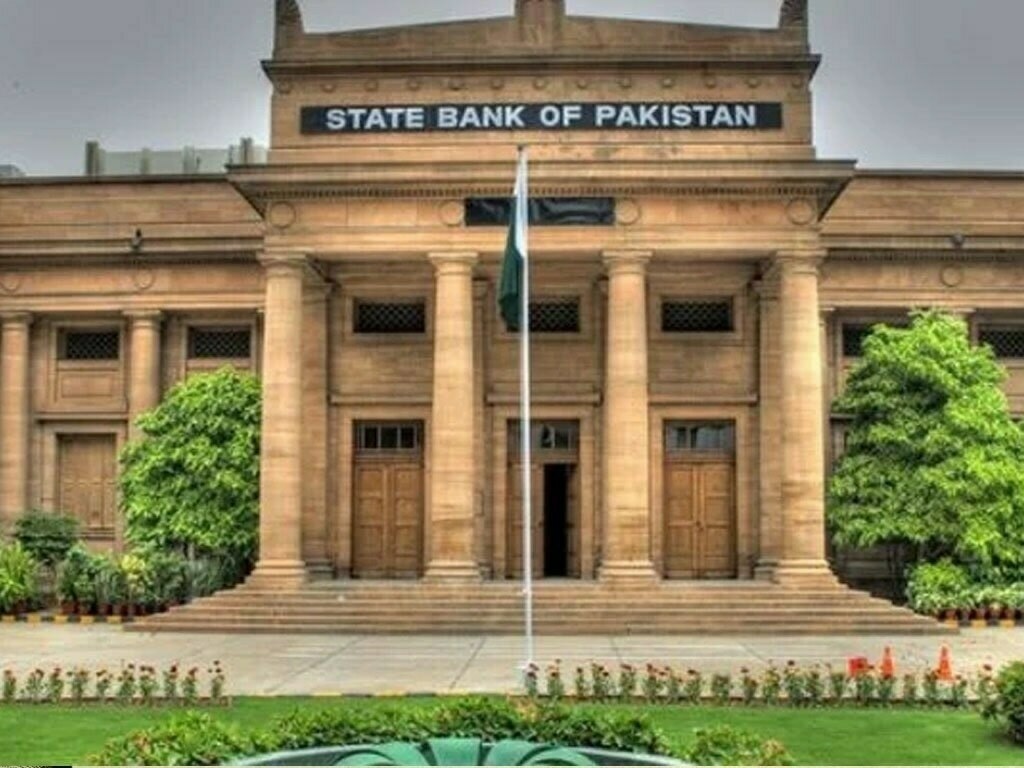

Pakistan’s central bank sits at a crossroads this week. Inflation just jumped back into double digits, the Gulf war keeps pushing fuel costs higher, and the Monetary Policy Committee has to decide, again, whether holding the line on interest rates still makes sense.
The State Bank of Pakistan will announce its next policy rate decision on Monday, September 14, with the benchmark currently parked at 11.5 percent. Most market watchers expect another pause. A recent brokerage survey found that roughly 87.5 percent of respondents see the rate staying put, while a smaller group is betting on a hike given how fast prices have been moving.
The stakes are higher than usual this time around. Headline inflation, as measured by the Consumer Price Index, hit 11.1 percent year-on-year in August, up sharply from 9.2 percent in July. A year ago, the same month showed inflation of just 3.56 percent. That is close to a tripling in twelve months, and it has caught the attention of everyone from bond traders to shopkeepers.
Why the SBP Is in a Tight Spot
Part of the pressure comes from outside Pakistan’s borders entirely. Researchers and analysts point to the prolonged Gulf war as a major factor squeezing regional economies, including Pakistan’s, out of taking a clear stance on monetary policy. As the conflict has spread toward the Red Sea and disrupted shipping through the Strait of Hormuz, oil tankers have struggled to move safely, and global fuel prices have climbed as a result.
Pakistan imports the vast majority of the petroleum it consumes, so every jump in international crude prices lands directly on pump prices at home. That, in turn, feeds straight into transport costs, which was the single largest contributor to August’s month-on-month inflation reading. Food prices were not far behind, rising nearly 14 percent year-on-year.
At the same time, Pakistan’s external account has actually been showing some strength. The current account deficit fell 38 percent year-on-year in July, and the SBP’s reserve position has held up reasonably well despite the global oil shock. That mixed picture, weak on inflation, resilient on the external side, is exactly the kind of split signal that makes rate-setting difficult.
What Officials and Analysts Are Saying
JS Global Research Head Waqas Ghani Kukaswadia has pointed to sticky core inflation and a wide trade deficit as reasons the Monetary Policy Committee has leaned toward caution in recent meetings, even as domestic growth surprised to the upside. Core inflation, which strips out volatile food and energy prices, rose to 8.7 percent year-on-year in August, still uncomfortably far from the SBP’s 5 to 7 percent medium-term target.
SBP Governor Jameel Ahmad has repeatedly framed the committee’s approach as one of watching whether price pressures look temporary or structural before reacting. That distinction matters a lot right now, because nobody can say with confidence how long the Gulf war’s disruption to oil markets will last.
What It Means for Borrowers and Businesses
A rate hold keeps borrowing costs steady for now, which is welcome news for businesses carrying variable-rate loans and for a government managing a heavy domestic debt load. But it does not do much to bring down the price of a bag of flour or a tank of petrol, and that is the pain point most households actually feel day to day.
If inflation keeps accelerating into the rest of FY27, the central bank may not have the luxury of standing pat much longer. A hike would raise the cost of credit across the economy just as growth has started to look encouraging, which is precisely the trade-off policymakers are wrestling with.
What Comes Next
Monday’s announcement will offer the clearest signal yet of how the SBP is weighing an external oil shock against a domestic economy that, aside from prices, has been performing better than expected. Whatever the committee decides, it will almost certainly stress that future moves depend on how persistent this inflation spike turns out to be, and on how the Gulf war evolves in the weeks ahead.
Frequently Asked Questions
Why is inflation increasing in Pakistan?
Inflation has picked up mainly because of a global oil price shock tied to the ongoing Gulf war, which has disrupted shipping through the Strait of Hormuz and pushed up the cost of imported fuel. Since Pakistan imports the bulk of its petroleum needs, higher crude prices quickly show up in transport fares, electricity generation costs, and the price of goods that need to be trucked around the country. On top of that, food prices have climbed sharply due to supply constraints, and a weaker rupee has made imported raw materials and machinery more expensive for local manufacturers, adding further pressure to the overall price level.
What is 1000 PKR in 1990 worth today?
Pakistan’s rupee has lost a huge share of its purchasing power since 1990 because of decades of persistent inflation, periodic currency devaluations, and repeated balance-of-payments crises. Using long-run inflation data from the Pakistan Bureau of Statistics, 1,000 rupees from 1990 would need to be worth several tens of thousands of rupees today just to buy the same basket of goods, and the exact figure shifts depending on which inflation index and time period are used for the calculation. For a precise, up-to-date conversion, it is best to check an official inflation calculator maintained by the State Bank of Pakistan or the Pakistan Bureau of Statistics rather than relying on a fixed historical multiplier.
What is Pakistan’s current inflation rate?
As of the latest data released by the Pakistan Bureau of Statistics, Pakistan’s headline Consumer Price Index inflation stood at 11.1 percent year-on-year in August 2026, up from 9.2 percent the previous month. Urban inflation came in at 10.4 percent, while rural inflation was noticeably higher at 12.2 percent, largely driven by steeper food price increases outside major cities. Core inflation, which excludes volatile food and energy items, was running at 8.7 percent, still above the State Bank’s medium-term target range of 5 to 7 percent.