
Summary
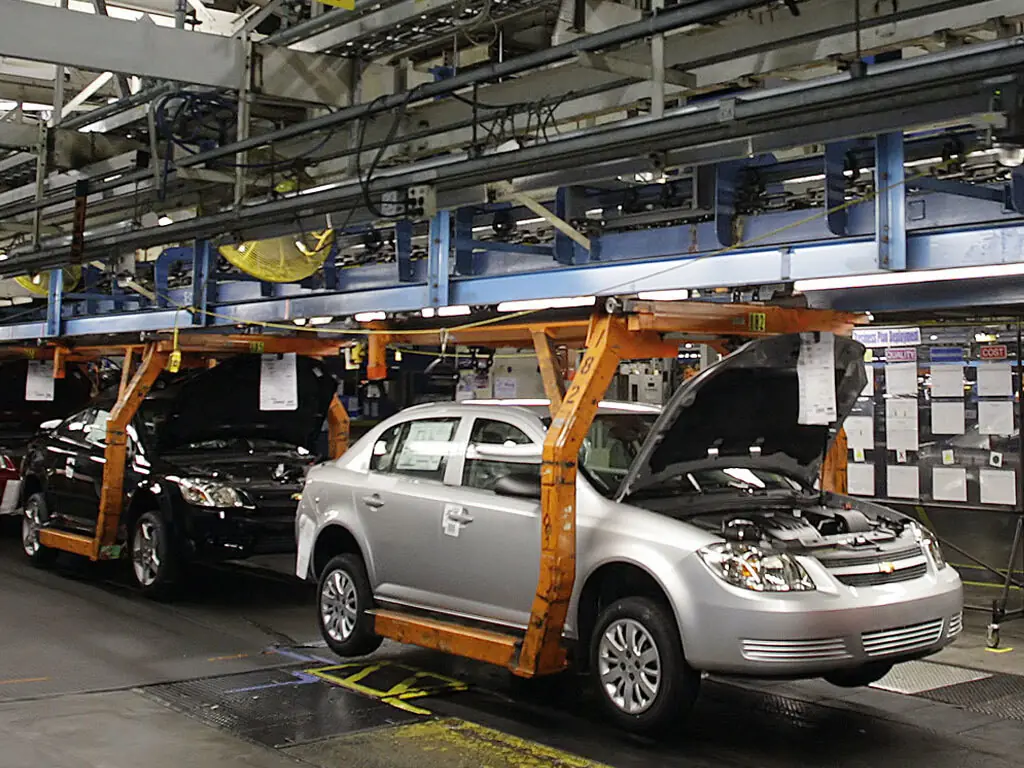
Pakistan has moved ahead with its new auto policy, formally called the Automotive and Auto Parts Manufacturing Policy 2026-31. Prime Minister Shehbaz Sharif has approved the framework, which now goes to the International Monetary Fund for review. The plan sets mandatory export targets, cuts tariffs on smaller imported cars, and pushes local manufacturers toward higher value addition instead of relying on protection.
Background
For decades, Pakistan’s auto sector grew behind high tariff walls. Local assemblers enjoyed heavy protection from imports, but exports stayed close to zero and buyers had few choices. The 2021-26 policy tried to turn the country into a manufacturing hub, but it did not push firms toward exports or genuine technology transfer.
The new automobile policy Pakistan is meant to fix that gap. An inter-ministerial committee led by Power Minister Sardar Awais Ahmad Khan Leghari was tasked with reviewing the draft and proposing amendments before it went to the cabinet.
Details
The auto sector reforms rest on seven broad principles: higher exports, greater localisation, promotion of new energy vehicles, lower tariffs, more competition, technological upgrading, and integration with global supply chains.
Car, jeep and SUV manufacturers must raise exports from zero in 2026-27 to 12 percent of factory-gate production value by 2029-30, holding at that level in 2030-31. Tractor makers face a jump from 5 percent to 15 percent over the same period, while bike and rickshaw exporters move from zero to 15 percent.
Auto parts manufacturers are not spared either. Their export requirement rises from 5 percent to 15 percent under the new automobile policy Pakistan has proposed. Officials expect these combined mandatory exports to generate close to 2.4 billion dollars over the five-year policy period.
On the tax side, the Finance Act 2026 has already reduced customs duty on smaller imported vehicles. Cars up to 800cc now attract 30 percent customs duty instead of the earlier 50 percent, and mid-range categories have seen similar relief. Larger, high-end vehicles above 2000cc face a steeper Special Excise Duty of up to 41 percent, keeping some protection at the top end.
The policy also introduces Minimum Domestic Value Addition targets. By 2030-31, local content requirements rise to 40 percent for conventional cars, 45 percent for light commercial vehicles, 80 percent for tractors, and 90 percent for motorcycles and rickshaws. New energy vehicles must reach 15 percent local value addition by the same year.
A Duty and Tax drawback scheme will support exporters. Eligible manufacturers can claim 10 percent of net FOB export value as baseline support, with a further 5 percent available if their export value grows by at least 5 percent year on year.
Quotes
Officials involved in drafting the plan have said the goal is to move state support away from simple assembly and toward genuine manufacturing depth, covering engines, transmissions, and battery systems rather than just seats and wiring harnesses.
Industry voices quoted in local business press have welcomed the direction but flagged execution risk, noting that similar export targets in the past were rarely enforced with real penalties.
Impact
For consumers, the near-term impact is mixed. Smaller imported cars and CBU vehicles under 1000cc should become somewhat cheaper as customs duty drops. Buyers eyeing bigger, imported SUVs will still pay a steep premium because of the new Special Excise Duty bands.
For local assemblers, the pressure is now on performance rather than protection. Manufacturing licences will be tied to export commitments and data-sharing requirements, and firms that fail to meet targets could lose preferential treatment.
The broader Pakistan automotive industry stands to gain if the export push works. Officials project cumulative foreign exchange savings of nearly 38.75 billion dollars through local value addition, alongside roughly 4.41 billion dollars in direct export earnings across cars, tractors, bikes, rickshaws and parts.
Conclusion
The policy still needs IMF review and final legal vetting before it takes full effect. Even after his cabinet approval, questions remain about whether export targets will be enforced with real financial penalties, and whether Pakistani-made parts can actually compete in export markets rather than just meeting a paperwork requirement. The coming months, as the Finance Ministry engages the IMF and the Ministry of Law completes its review, will show how much of this ambitious automotive policy 2026 survives contact with negotiation.
Frequently Asked Questions
What are the targets of Pakistan’s auto policy 2026-31?
The policy sets mandatory export targets across vehicle categories. Car, jeep and SUV makers must reach 12 percent of factory-gate production value in exports by 2029-30, tractor makers must reach 15 percent, and bike and rickshaw manufacturers must also reach 15 percent by 2030-31. Auto parts exporters face a target rising from 5 percent to 15 percent. Alongside exports, the policy sets Minimum Domestic Value Addition targets that climb as high as 90 percent for motorcycles and rickshaws by the end of the policy period.
What are the changes in Pakistan’s import policy for 2026?
Regulatory duty on many imported vehicle categories has been reduced, and the government plans to bring the overall cumulative tariff on cars down over the next few years as part of a broader National Tariff Policy. Separate CKD imports for left-hand-drive vehicles will be allowed, and the Federal Board of Revenue has already tightened vehicle valuation rules by moving away from local agent price certificates toward manufacturer-based pricing for customs purposes.
Will the new auto policy make cars cheaper in Pakistan?
Some relief is likely for buyers of smaller cars and lower-capacity imports, since customs duty on those categories has already been reduced. However, mid-size and premium vehicles are unlikely to see major price drops in the short term, since the government has kept meaningful protection in place for larger engine categories while it phases in competition gradually.