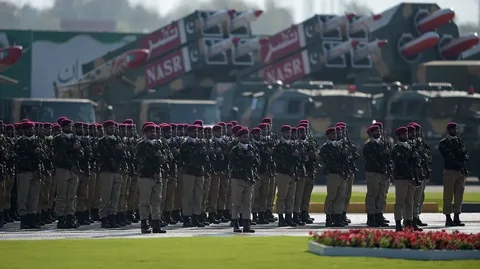

As drones, cruise missiles, and precision aircraft become bigger factors in modern conflict, Pakistan has kept investing in its layered air defence setup radar coverage, missile platforms, and surveillance systems meant to protect key sites and react to aerial threats.
Recent talk about drone interception efforts has put the country’s air defence network back in the spotlight, with the usual questions coming up again: what’s actually in the arsenal, how far can it reach, what does it cost, and how does it stack up against neighboring systems.
Background
Air defence has become a bigger priority worldwide, not just in Pakistan, as drones and cruise missiles show up more often in active conflicts. Detecting and responding to that kind of threat quickly is a different problem than defending against traditional aircraft, and most militaries are still adapting.
Pakistan’s approach layers short-, medium-, and long-range systems together, tied into radar networks and command centers that are supposed to work as one coordinated system rather than isolated pieces of hardware.
The country’s defence strategy mixes homegrown technology with imported systems from international partners a fairly standard approach for militaries that want both self-reliance and access to more advanced tech than they can build alone.
What’s in the System
Pakistan’s air defence setup draws on a handful of major platforms:
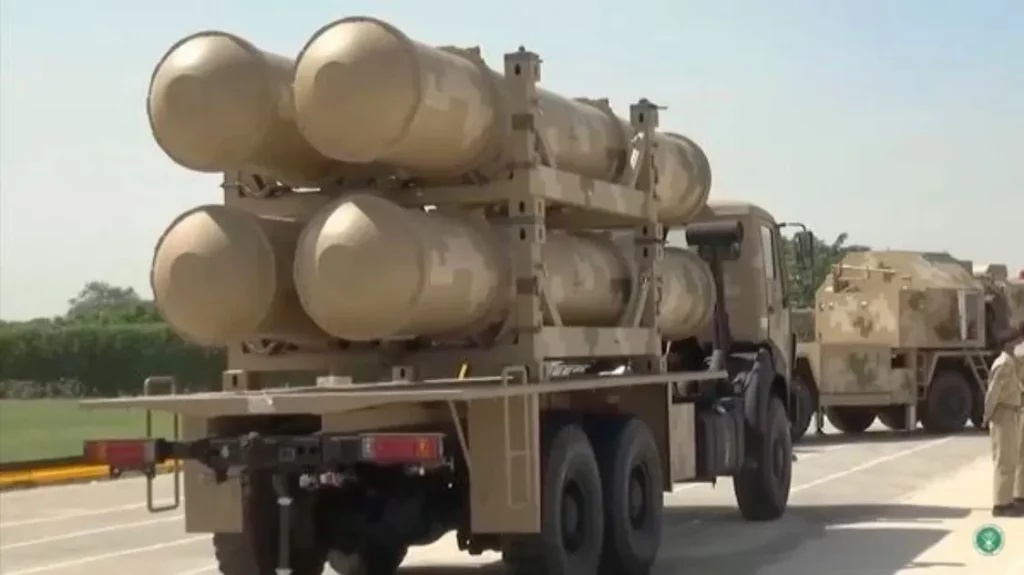
- HQ-9: A Chinese-made, long-range surface-to-air missile system built to track and engage aircraft, drones, and other aerial threats.
- LY-80: A medium-range missile system generally used to defend strategically important areas.
- FM-90: A short-range system aimed mainly at low-altitude threats.
- Anza: Locally produced short-range missiles used across Pakistan’s armed forces.
- Radar and surveillance networks: The backbone of early warning detecting and tracking targets before any missile system gets involved.
None of these work in isolation. The value comes from how they’re networked together, not from any single platform on its own.
How It Actually Works
Air defence, at its core, is about three connected steps: detect, decide, respond. Radar picks up a potential threat entering monitored airspace, that data gets passed to command units, and from there someone decides whether and how to respond.
Depending on the threat, that response might mean activating short-range systems for something close and low, or long-range systems for something farther out. It’s the coordination between these layers, more than any one system’s specs, that determines how well the whole network performs.
Pakistan’s setup has drawn particular attention for how it’s positioned to handle a mix of threats aircraft, drones, and missile technology rather than being built around just one type of attack.
The HQ-9: What It Is, What It Isn’t
The HQ-9 gets the most attention of anything in Pakistan’s arsenal, largely because it’s the long-range piece of the puzzle built to engage targets at significant distance and give the country broader airspace coverage than short-range systems alone could offer.
Its exact operational range isn’t something militaries tend to publish in detail, and Pakistan’s case is no exception most of what’s discussed publicly is informed estimate rather than confirmed specification. Conceptually, it sits in the same category as other long-range surface-to-air systems used by militaries elsewhere.
Range, Cost, and Why Neither Is Simple
How far any given system reaches depends entirely on which platform you’re talking about — short-range systems cover a limited footprint, while something like the HQ-9 is designed for much broader coverage.
Pricing is even murkier. Defence contracts rarely break down into a single number — they bundle in equipment, training, maintenance, and long-term support, and most of those terms simply aren’t made public. Anyone citing an exact price tag for Pakistan’s systems is likely working from speculation rather than confirmed figures.
How Pakistan Compares to India
The India-Pakistan air defence comparison comes up constantly, mostly because of the broader strategic rivalry between the two countries. India has invested heavily in advanced platforms sourced from multiple international partners, while Pakistan has built its own layered mix of missile and radar technology.
Comparing the two isn’t as simple as lining up hardware side by side, though. Analysts generally point out that real effectiveness comes down to training quality, radar coverage, command coordination, and operational planning factors that don’t show up in a spec sheet. Both countries keep modernizing, which means any comparison is really just a snapshot of a moving target.
Online Chatter Isn’t the Same as Analysis
Military topics get their fair share of social media traction too memes, reaction GIFs, the usual mix of humor and political commentary that pops up whenever defence news breaks.
Worth saying plainly: none of that reflects actual technical performance. If you want a real read on capability, that comes from verified reporting and expert analysis, not whatever’s trending.
The Drone Problem
Drones have genuinely changed the calculus here. They’re cheap, hard to detect compared to conventional aircraft, and increasingly common in modern conflicts which forces militaries to rethink detection and response on a much faster timeline than traditional air defence required.
Pakistan’s reported efforts on drone interception reflect that same pressure, and it’s not unique to Pakistan counter-drone technology has become a priority for militaries worldwide, not just in South Asia.
What Officials Say
Officials and defence analysts keep circling back to the same point: strong surveillance and layered air defence matter more now than they did a decade ago, given how the threat landscape has shifted.
The consistent theme is that protecting airspace isn’t about any single piece of technology it’s the combination of trained personnel, working systems, and coordination across units that actually determines effectiveness. And with electronic warfare and drone use both trending upward, that coordination is only going to matter more.
Regional and Global Stakes
This isn’t purely a domestic story. South Asia remains a region where military modernization draws serious international attention, and improvements on one side tend to push the other toward its own upgrades.
Globally, the shift toward drone warfare and precision missile technology is pushing militaries away from single-system defence and toward the kind of layered networks Pakistan is already building which suggests this trend isn’t going away anytime soon.
Where This Is Headed
Expect future investment to center on better radar, faster response times, and stronger counter-drone capability the areas where current systems are being tested hardest.
Artificial intelligence and electronic warfare are likely to factor more heavily into defence planning going forward, here and elsewhere, as militaries try to keep pace with how fast the threat landscape is shifting.
Ultimately, how well any of this performs will come down to sustained modernization and training not any single system, however advanced it looks on paper.
Conclusion
Pakistan’s air defence system is really a network missile platforms, radar coverage, and command coordination working together rather than any one piece carrying the load. The HQ-9 gets outsized attention because it’s the long-range component, but it’s only one part of a much larger picture.
Comparisons with other countries will keep coming up, but as most analysts note, real air defence strength comes down to the whole operational network, not individual weapons. Where drone warfare and modern conflict go next will keep shaping how Pakistan and everyone else — invests in this space.
FAQs
Is the PAF stronger than the IAF?
It depends what you’re measuring. The IAF has a bigger fleet and a wider mix of advanced aircraft; the PAF is generally regarded as a smaller but highly trained force with strong operational focus. Fleet size alone doesn’t settle the comparison readiness, pilot training, and support infrastructure matter just as much.
Does Pakistan operate F-35 jets?
No. The F-35 is a US-built fifth-generation aircraft flown by a select group of countries, and Pakistan isn’t one of them. Pakistan’s air force relies on other fighter platforms and continues modernizing through different partnerships and local development.
Does Pakistan have the S-400 system?
No, not officially. The S-400 is a Russian long-range system used by countries including Russia and India. Pakistan has gone a different route, building out its air defence around systems like the HQ-9 instead.