

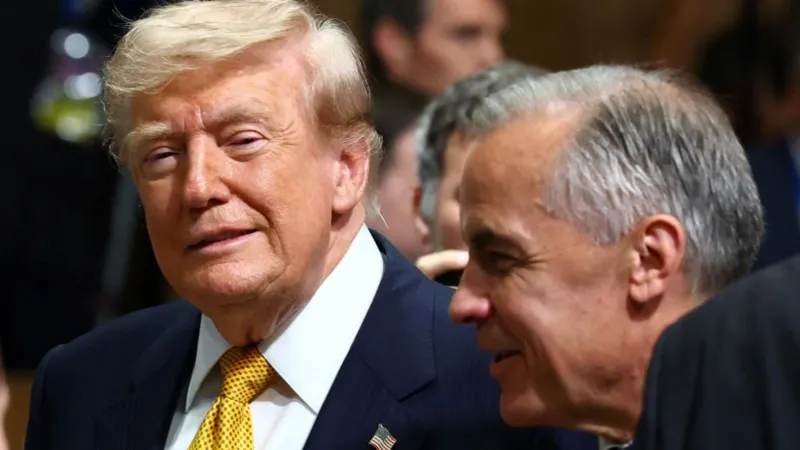
WASHINGTON: US President Donald Trump has announced a sweeping 50% tariff on a broad range of Canadian imports, intensifying trade tensions between the United States and Canada. The move, which the White House says will take effect in 30 days, is aimed at countering what Trump described as Canada’s “unequal treatment” of American products, particularly automobiles, dairy, and alcoholic beverages.
The latest tariff package targets a wide variety of consumer and industrial goods imported from Canada, including wine, hockey sticks, and cement. However, several strategically important exports—including energy products, potash, critical minerals, and fish—have been exempted from the new duties.
Canada Calls for Continued Trade Talks
Canadian Prime Minister Mark Carney responded by reaffirming Ottawa’s commitment to resolving the dispute through dialogue. He said Canada remains prepared to intensify trade negotiations with the United States in the coming weeks despite the latest escalation.
The White House described the tariffs as part of the administration’s broader effort to address long-standing trade imbalances between the two neighboring countries.
Trade Dispute Deepens
Trade tensions between Washington and Ottawa have steadily increased since President Trump returned to office in January 2025 and introduced a broad global tariff strategy. His administration has used tariffs not only to address trade issues but also to pursue wider economic and political objectives.
Tariffs are taxes imposed on imported goods and are generally paid by companies importing foreign products, although the additional costs are often passed on to consumers.
Legal Questions Remain
Earlier this year, the US Supreme Court ruled that several of Trump’s previous tariffs imposed under emergency powers had been enacted unlawfully.
In response, the administration has turned to alternative legal authorities to continue implementing its trade agenda. The latest tariffs are based on a different and relatively obscure law that has not yet been tested in US courts.
Canada Previously Retaliated
Canada, one of America’s largest trading partners, was among the few countries that responded with retaliatory tariffs after Trump’s earlier trade measures.
Ottawa imposed a 25% tariff on approximately C$30 billion (US$21.7 billion) worth of American imports. While Prime Minister Carney later removed some of those measures, several counter-tariffs remain in place.
USMCA Exemptions Not Applied
According to a White House fact sheet, the newly announced tariffs will apply regardless of whether products qualify under the United States-Mexico-Canada Agreement (USMCA), the free trade pact that governs commerce among the three North American countries.
The decision effectively overrides preferential treatment normally available under the trade agreement for the affected products.
Existing Trade Barriers Continue
The latest measures add to a growing list of trade restrictions already imposed by both countries.
The United States currently maintains tariffs ranging from 15% to 50% on Canadian steel, aluminum, and copper, along with a 35% tariff on softwood lumber and a 25% duty on non-US automotive components.
Canada, meanwhile, continues to impose 25% counter-tariffs on selected imports of American steel, aluminum, and vehicles.
The new tariffs are expected to further strain economic relations between the two close allies, with businesses on both sides of the border closely monitoring the outcome of upcoming trade negotiations.