
Iran has formally accused Ukraine deadly drone attack on one of its vessels in the Caspian Sea. The incident has sent shockwaves through the region, marking what analysts describe as a dramatic and dangerous escalation of the Ukraine war’s reach far beyond its traditional European theatre. Videos circulating on Kanal13 Ukraine and other regional outlets have shown drone footage that observers say is consistent with naval targeting operations of the kind Ukraine has deployed successfully in the Black Sea.
What Happened: The Attack on the Caspian
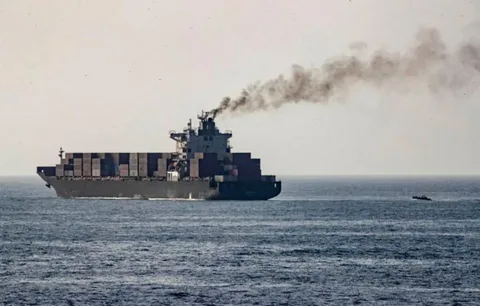
Iranian authorities confirmed that one of their ships operating in the Caspian Sea was struck in a drone attack that resulted in casualties and significant material damage. The attack, according to Iranian officials, bore the hallmarks of Ukraine’s unmanned aerial vehicle operations, which have become a defining feature of Kyiv’s asymmetric warfare strategy since the Russian invasion began in 2022.
The Caspian Sea, a landlocked body of water bordered by Iran, Russia, Azerbaijan, Kazakhstan, and Turkmenistan, has historically remained outside the immediate orbit of the Ukraine conflict. This alleged strike, however, has raised urgent questions about how far Ukraine’s drone capabilities now extend and whether this represents a deliberate strategic shift by Kyiv to open new pressure points against Moscow’s regional allies.
Ukrainian drone videos shared through Kanal13 Ukraine and verified open-source intelligence channels have captured similar naval strike operations in recent months. Security analysts note that Ukraine’s maritime drone program has grown significantly more sophisticated over the past year, with long-range unmanned vessels capable of operating well beyond the Black Sea.
Background: Why the Caspian Matters
To understand why this alleged attack carries such weight, it is essential to understand what the Caspian Sea means to Iran strategically, economically, and politically. The Caspian is not just a body of water. It is the centerpiece of Iran’s northern economic corridor, a vital route for oil transportation, fishing, and trade with Russia and the Central Asian republics.
Iran has consistently treated the Caspian as a sovereign priority. Tehran has long pushed for a legal framework that designates the sea as belonging exclusively to its five bordering nations and closed off to outside military powers. Any attack on Iranian assets in these waters is therefore not merely a military incident. It is a strike at the heart of Iran’s strategic self-image as a regional power capable of protecting its own territory.
The relationship between Iran and Russia adds another layer of complexity. Tehran has supplied Russia with Shahed-series drones that Moscow has used extensively against Ukrainian infrastructure. Striking an Iranian vessel in the Caspian would, if confirmed, represent Ukraine’s most direct message yet to both Tehran and Moscow that no theatre is beyond reach and no ally of Russia is beyond consequence.
Iran’s Accusation: What Tehran Is Saying
Iranian officials delivered their accusation with considerable force. Senior figures within the Iranian government and military establishment have stated publicly that intelligence assessments point to Ukrainian involvement in the attack. They have called the strike a hostile act and warned that Iran reserves the right to respond through appropriate means.
Iranian state media, citing military and security sources, described the attack as premeditated and said it resulted in the deaths of crew members aboard the targeted vessel. The Iranian government has demanded international condemnation and warned that any repetition would trigger a firm response.
Iran’s Foreign Ministry summoned the Ukrainian chargé d’affaires in Tehran following the incident, a diplomatic step that signals the gravity with which Tehran views the alleged attack. Iranian officials have also reportedly raised the matter in conversations with Russian counterparts, underlining the triangular nature of the tensions now emerging between Kyiv, Moscow, and Tehran.
Ukraine’s Position: Denial and Strategic Ambiguity
Ukraine has not officially claimed responsibility for the attack, maintaining the posture of strategic ambiguity it has adopted toward many of its most sensitive operations. Kyiv has neither confirmed nor categorically denied involvement, a stance consistent with how Ukrainian officials have responded to high-profile strikes inside Russian territory and against Russian-aligned targets.
Ukrainian military and intelligence sources have declined to comment directly. However, analysts tracking Kanal13 Ukraine drone videos and open-source reporting note that Ukraine has been systematically expanding the reach of its unmanned systems operations, with confirmed activity not only in the Black Sea but increasingly in areas previously considered beyond Kyiv’s operational range.
Some Ukrainian commentators have suggested that if the attack did occur as described, it would represent a logical and proportionate response to Iran’s ongoing supply of drones to Russia, weapons that have killed Ukrainian civilians and devastated Ukrainian energy infrastructure throughout the winter.
The Caspian Sea: A New Front in a Widening War
What makes this incident particularly significant is what it reveals about the evolving geography of the Ukraine conflict. The war, which began as a conventional land conflict in Eastern Europe, has steadily expanded in its methods and reach. Ukraine has struck deep inside Russian territory, targeted Russian naval assets far from the front lines, and now allegedly extended its reach to a sea that borders five nations and sits at the heart of Eurasian geopolitics.
The Caspian Sea has no direct access to any ocean, which has traditionally insulated it from the kind of naval warfare seen in the Black Sea or the Mediterranean. A drone strike on a vessel in these waters, if confirmed, would represent a genuinely new chapter in modern asymmetric warfare, demonstrating that landlocked bodies of water are no longer sanctuaries in an era of long-range unmanned systems.
Kanal13 Ukraine has been among the outlets closely tracking Ukraine’s drone program, and videos released through that channel and others have shown the remarkable precision and range of Ukrainian unmanned systems. Military analysts say that what Ukraine has achieved in the Black Sea, neutralizing Russian naval dominance through drone technology, appears to be a template that Kyiv may now be attempting to replicate in other strategic theatres.
Regional and Global Impact
The fallout from this incident extends well beyond the immediate parties. For Russia, the alleged attack on an Iranian ship is an embarrassment, exposing the vulnerability of a key ally and raising questions about Moscow’s ability to protect partners operating in its strategic neighborhood. The Caspian has long been considered a Russian sphere of influence, and a successful Ukrainian strike there would represent a significant symbolic and strategic blow.
For the five Caspian nations, the incident introduces an unsettling precedent. Azerbaijan, Kazakhstan, and Turkmenistan, all of which share the sea with Russia and Iran, now face the possibility that a conflict they have carefully tried to stay neutral on is physically arriving in their shared waters. That prospect has significant implications for regional stability, energy infrastructure security, and diplomatic positioning.
On a broader level, the incident underscores the degree to which the Ukraine war has become a genuinely global conflict, affecting actors, interests, and geographies far removed from the Donbas front lines. Iran’s involvement as a weapons supplier, Russia’s role as the primary aggressor, and Ukraine’s increasingly global operational reach have transformed what began as a regional invasion into a conflict with worldwide ramifications.
International Response and Diplomatic Pressure
The international community has responded with a mixture of concern and caution. Western governments have not commented directly on the specific allegations but have reiterated their support for Ukraine’s right to defend itself, including through strikes on military targets and infrastructure supporting the Russian war effort. Several European foreign ministries have called for a full and transparent investigation into the incident.
The United Nations has expressed concern about the potential for escalation and called on all parties to exercise restraint and pursue diplomatic channels. Human rights organizations have called for accountability for any civilian casualties resulting from the attack.
Iran, for its part, has sought to use the incident to build international pressure against Ukraine and its Western backers, framing the alleged attack as a violation of international law and an act of aggression against a sovereign nation’s territory. Tehran has called on the international community to condemn what it describes as Ukrainian terrorism on the high seas.
What Comes Next: Escalation or Containment
The immediate question now is whether this incident marks a one-off operation or the beginning of a sustained campaign by Ukraine to target Iranian assets in retaliation for Tehran’s weapons supply to Moscow. Analysts are divided on this point.
Some believe Ukraine has sent its message and will not seek to escalate further in the Caspian, preferring instead to maintain pressure through diplomatic and economic channels while keeping its military focus on the actual front lines in the east and south of Ukraine. Others argue that if the attack succeeded in demonstrating Iran’s vulnerability, Kyiv may view further operations as strategically valuable, particularly if they force Tehran to divert resources to protecting its own assets rather than continuing to manufacture drones for Russia.
For Iran, the pressure is equally complex. An aggressive military response to Ukraine risks drawing Tehran deeper into a conflict it has officially tried to remain at arm’s length from, even while supplying weapons to one side. A muted response, on the other hand, risks appearing weak and invites further challenges to Iranian security interests.
Frequently Asked Questions (FAQs)
Does Iran claim the Caspian Sea?
Iran’s relationship with the Caspian Sea is one of the most complex and contested issues in its foreign policy. Tehran does not claim sole ownership of the Caspian, but it has historically argued for an equal division of the sea among all five bordering nations, which would give each country twenty percent of its total surface area and resources. This position has frequently put Iran at odds with Russia, Azerbaijan, Kazakhstan, and Turkmenistan, who have favored different legal frameworks. In 2018, the five nations signed the Convention on the Legal Status of the Caspian Sea, which designated it as a special legal body of water rather than a sea or a lake under international law, giving each country sovereign rights over a fifteen-nautical-mile zone from its shore and exclusive fishing rights up to twenty-five nautical miles.
Is the Iran war over with the US?
The conflict between Iran and the United States has never been a declared war in the conventional sense, but it has been a sustained period of hostility, proxy confrontations, sanctions, and near-escalations that has defined both nations’ foreign policies for decades. As of 2025 and into 2026, there is no formal peace agreement or normalization of relations between Washington and Tehran. The two countries remain in a state of deep strategic rivalry, with tensions centered on Iran’s nuclear program, its support for militant groups across the Middle East, and its growing military relationship with Russia. Nuclear negotiations, which came close to a new deal in 2022, have repeatedly stalled. Iran has continued to advance its uranium enrichment program, drawing repeated warnings from the United States and its allies.
Why is the Caspian Sea important to Iran?
The Caspian Sea holds enormous strategic, economic, and symbolic importance for Iran across multiple dimensions. Economically, the sea sits atop vast hydrocarbon reserves, and Iran has long sought to develop its share of Caspian oil and gas fields as part of its energy export strategy. Access to these resources is considered vital for Iran’s long-term economic planning, particularly given the pressure that international sanctions have placed on its more accessible Persian Gulf energy operations. Strategically, the Caspian connects Iran to Russia and the Central Asian republics, providing a northern trade corridor that offers an alternative to the heavily monitored Persian Gulf and Strait of Hormuz routes. This northern connectivity has become increasingly important as Iran has deepened its economic relationship with Russia in response to Western sanctions.