

Summary
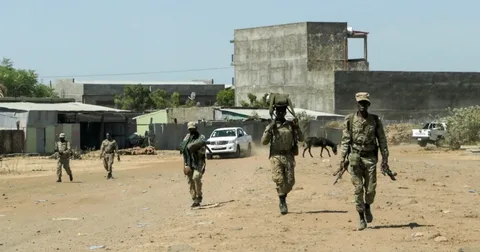
Ethiopian federal forces fought through the night to push back an assault by Tigray fighters in the Afar region, a humanitarian source said Friday. The clashes came as an internet blackout spread across northern Ethiopia, cutting off communications and deepening fears of a return to the devastating conditions of the 2020-2022 civil war. Tigrayan forces seized several local airports this week and pushed into the neighboring Afar and Amhara regions, declaring what they called a renewed “full-blown war” against the federal government.
Background
Ethiopia’s north has a painful recent history of conflict. Between 2020 and 2022, a brutal civil war between federal forces and the Tigray People’s Liberation Front (TPLF) killed an estimated 600,000 people and ended only after a peace deal signed in November 2022. During that war, Tigray was largely sealed off from the outside world, with communications cut and access to food, cash and medicine severely restricted, pushing much of the region toward famine.
The TPLF governed Ethiopia for nearly three decades before being pushed to the political margins following Prime Minister Abiy Ahmed’s rise to power, a shift that eventually helped trigger the earlier war. This week’s escalation is being described by regional observers as the most serious flare-up since that conflict formally ended.
Details
Fighting intensified sharply this week after Tigrayan forces seized three local airports and launched attacks into the neighboring Afar and Amhara regions alongside allied groups. A humanitarian source in Afar told AFP there was heavy fighting overnight around the border town of Abala, with federal troops using a drone to help repel the assault and stop rebels from entering the town.
Separately, heavy clashes broke out Thursday in the North Wollo Zone of Amhara, near the UNESCO World Heritage site of Lalibela, home to Ethiopia’s famed rock-hewn churches.
Alongside the fighting, internet monitor NetBlocks confirmed a subnational internet disruption in northern Ethiopia consistent with reports of a telecoms blackout in Tigray. According to Ethiopia Observer, state-owned Ethio Telecom has fully cut mobile and internet service in Tigray, though private operator Safaricom Ethiopia is reportedly still functioning in the region. AFP said it was unable to reach sources by phone on Friday, and a Tigrayan source living overseas said contacts in the capital, Addis Ababa, were also struggling to reach relatives in Tigray.
Spokespeople for Abiy Ahmed’s office and for the TPLF did not immediately respond to requests for comment.
Quotes
A humanitarian source in Afar said federal forces “pushed the rebels from entering the town” of Abala after overnight clashes.
In Tigray’s capital, Mekelle, a spice shop worker named Samuel Gebreslassie described the mood on the ground: “There is panic in the community.” He added that residents fear banks, telecom networks, electricity and basic goods could be cut off again, echoing the blockade of the earlier war.
Impact
The renewed violence is already reshaping daily life in Tigray. Residents rushed to shops earlier in the week to stock up on supplies and withdraw cash, emptying shelves as panic-buying spread, according to Reuters. The communications blackout is compounding the crisis by cutting off families from relatives and limiting the flow of verified information about the fighting, according to Ethiopia Observer.
Regionally, the clashes near Lalibela raise concern for a UNESCO World Heritage site, while fighting spreading into Afar and Amhara threatens to widen the conflict well beyond Tigray’s borders. UN Secretary-General António Guterres has called for restraint as fighting escalates in the north, underscoring international concern that Ethiopia could be sliding back toward the scale of violence and displacement seen in 2020-2022.
Conclusion
With Tigrayan forces describing the situation as a full-blown war and federal troops actively repelling assaults in Afar, the coming days are likely to be decisive in determining whether this escalation stays contained to border skirmishes or grows into a wider conflict. Continued monitoring of the telecoms blackout, humanitarian access, and diplomatic responses — including any renewed mediation efforts — will be key indicators of where the crisis heads next.
FAQs
What is the main cause of conflict in Ethiopia?
The current fighting has roots in long-standing tensions between the federal government under Prime Minister Abiy Ahmed and the Tigray People’s Liberation Front (TPLF), which ruled Ethiopia for decades before being sidelined politically. Those tensions triggered the 2020-2022 civil war, and unresolved grievances — including disputed territory, political representation, and the terms of the 2022 peace deal — appear to be driving this new escalation, with TPLF-aligned forces expanding operations into Afar and Amhara.
What is the current conflict in Ethiopia?
As of late September 2026, Ethiopian federal forces are fighting Tigrayan forces and allied groups across multiple fronts, including the Afar and Amhara regions. Tigrayan forces have seized several local airports, and heavy clashes have been reported near the Afar border town of Abala and in Amhara’s North Wollo Zone, close to Lalibela. The fighting has been accompanied by a telecoms and internet blackout across parts of northern Ethiopia.
What is the status of the Ethiopian conflict in 2026?
The conflict is escalating rapidly. What began as scattered clashes has, within a week, expanded into fighting across three regions, prompting panic-buying in Tigray and a communications blackout that is limiting information from the region. International figures, including the UN Secretary-General, have called for restraint, but as of this week there is no confirmed ceasefire or resumption of formal talks between the federal government and Tigrayan forces.