
Mass Grave Discovery in Northern Sri Lanka Renews Hopes for Answers About the Missing
JAFFNA: The discovery of a large mass grave in northern Sri Lanka has renewed calls for answers about people who disappeared during the country’s decades-long civil war.
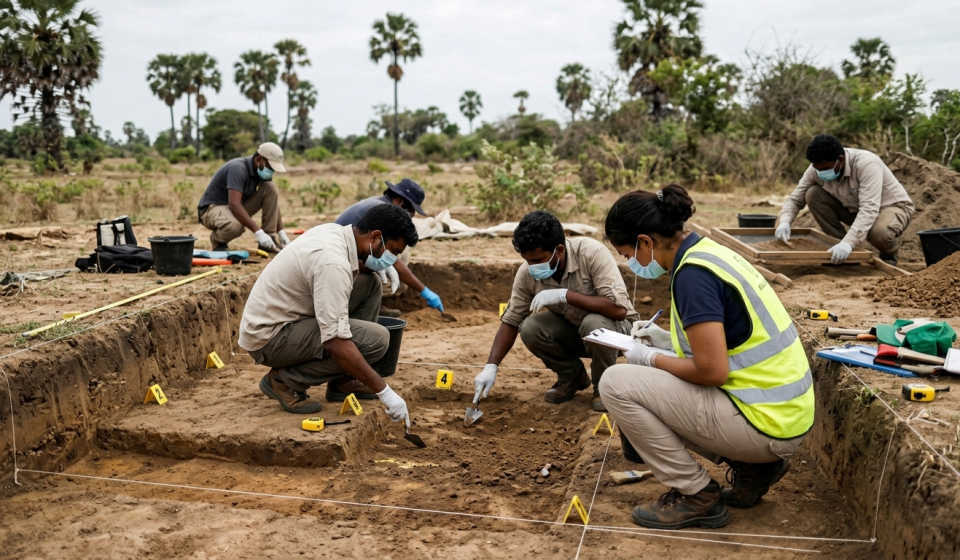
The remains were unexpectedly uncovered in February while workers were expanding a cremation site in the Chemmani area of Jaffna. The discovery led authorities and archaeologists to begin a detailed investigation of the location.
By August, archaeologists had completed the third stage of excavation and reported recovering the skeletal remains of 572 people, including children and infants.
Alongside the remains, investigators found everyday objects believed to have belonged to some of those who died, including bangles, a school bag and a milk bottle.
The site is being described as the largest mass grave discovered in Sri Lanka to date, although further investigation and analysis are expected to help establish more about the identities and circumstances surrounding the deaths.
Long-Standing Claims Revisited
The discovery has also brought renewed attention to earlier claims about a mass grave in the Chemmani area.
During Sri Lanka’s civil war, which lasted for decades, allegations emerged that civilians had disappeared and that large numbers of bodies had been buried in the area. A soldier facing trial over the rape and murder of a young woman had previously spoken about a mass grave reportedly containing hundreds of bodies.
Those earlier claims had not been conclusively established, leaving families of missing people without clear answers.
The latest discovery could provide investigators with new evidence, although identifying the remains and determining when and how the deaths occurred will require further forensic and archaeological work.
Families Hope for Answers
For families whose relatives disappeared during the conflict, the excavation has brought a mixture of grief and hope.
Among them is Jeyaruby Jeyabalan, whose father was among thousands of people who disappeared during the war. Families like hers hope that DNA testing and other investigations could eventually help identify their missing relatives.
The discovery has therefore become more than an archaeological investigation. It has reopened questions surrounding Sri Lanka’s wartime disappearances and the long-standing demand from families for information about what happened to their loved ones.
Further forensic analysis will be important in establishing the identities of those buried at the site and understanding the circumstances surrounding their deaths.