

Supreme Court Ruling on Mail-In Votes: Multiracial Coalition of Advocates Discuss How They Won, What It Means for the Future
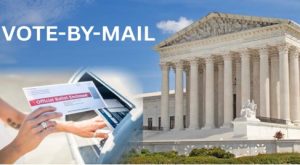
The Supreme Court’s mail-ballot ruling protects vote-by-mail access through the November 3 midterm election. (Image: American Community Media)
On September 22, 2026, American Community Media (ACoM) hosted a national press briefing bringing together the attorneys behind a major legal win for mail-in voters ahead of the November 3 midterm election. The briefing came just over a week after the U.S. Supreme Court declined the federal government’s request to stay a lower court’s injunction against a new U.S. Postal Service rule affecting mail ballots. That decision keeps existing safeguards for mail voting in place through Election Day, a result the panel described as essential for millions of Americans who depend on mail-in ballots to exercise their right to vote.
Why This Ruling Matters
The blocked USPS rule, had it taken effect, would have disenfranchised a wide swath of the electorate. Panelists pointed to voters with disabilities, residents of rural communities, military and overseas voters, students away from home, and Asian American voters — who as a group vote by mail at the highest rate of any community — as those most at risk. A multiracial coalition of voting rights and civil rights organizations brought the legal challenge that ultimately stopped the rule in federal court, arguing it would have created new barriers to a method of voting that millions of Americans now rely on as a matter of course.
Meet the Legal Team Behind the Win
Niyati Shah

Niyati Shah serves as Senior Director of Litigation at Asian Americans Advancing Justice | AAJC, where she oversees the organization’s court priorities on voting rights, immigration, national security, and education equity. She was one of the lead attorneys in Lupe v. Ross, the case that successfully challenged the addition of a citizenship question to the 2020 census. Earlier in her career, she served as Election Counsel at Project Vote, where she became an expert on enforcing the National Voter Registration Act, and she has also litigated Voting Rights Act violations nationwide. She holds a law degree from Rutgers University School of Law-Camden.
John Cusick

John Cusick is Assistant Counsel at the NAACP Legal Defense Fund, where he focuses on voting rights and criminal justice reform, and he is also an adjunct professor at NYU School of Law. He has litigated voting rights cases across the country, including challenges to discriminatory redistricting maps in South Carolina, Georgia, Arkansas, and Tennessee, and he currently sits on the legal team challenging part of a presidential executive order on voting rights. He has also led election-protection efforts for LDF in several Southern states during past election cycles. Cusick earned his law degree from New York University.
Justin Lam

Justin Lam serves as counsel in the Brennan Center for Justice’s Voting Rights and Elections Program. Before joining the Center, he clerked for judges on the D.C. Court of Appeals and the U.S. District Court for the Eastern District of New York, and he previously worked to advance children’s rights in education and juvenile justice. Lam holds a bachelor’s degree in political science from UCLA and a master’s in public policy and law from UC Berkeley, and spent time as a fifth-grade teacher before entering law.
Ethan Herenstein

Ethan Herenstein is a Staff Attorney with the ACLU’s Voting Rights Project, where he litigates voting cases across the country. He previously worked on voting rights at the Brennan Center for Justice and clerked for federal judges on the D.C. Circuit and the Southern District of New York. Herenstein earned his law degree from Stanford Law School, where he served as Senior Notes Editor of the Stanford Law Review.
What Reporters Wanted to Know
During the Q&A, reporters from outlets serving Latino, Asian, Slavic, and other communities pressed the panel on some of the most pressing fears among their readers. Several asked whether the administration might send military personnel or immigration agents to polling places, while others wanted to understand the legal reasoning behind the Supreme Court’s decision and how the coalition established legal standing to bring its case. Reporters also raised concerns about misinformation circulating in their communities about whether mail voting is even legal this cycle, what will happen to the paused USPS ballot-handling system going forward, and whether postal workers who opposed the rule faced retaliation. Questions about accessibility were also front and center, including whether wheelchair-accessible voting options exist for voters who cannot use a mail ballot.
Protecting Your Vote
Panelists urged voters to stay alert to a few practical realities this election cycle. In parts of Southern California, vandalism and theft have forced officials to take some outdoor mail collection boxes out of service, so voters in affected areas should mail ballots directly at a post office instead. National, multilingual election-protection hotlines are also available for voters with questions or who encounter problems:
- 866-OUR-VOTE (English)
- 888-VE-Y-VOTA (Spanish)
- 888-API-VOTE (Chinese, Bengali, Hindi, Korean, Punjabi, Tagalog, Urdu, Vietnamese)
- 844-YALLA-US (Arabic)
Looking Ahead
Panelists were clear that this ruling protects voters only through the current election cycle, not permanently. They called for continued advocacy and legislative action after the midterms to make these protections durable, warning that similar attempts to restrict mail voting are likely to resurface in future election cycles unless Congress or the courts act to close the door for good.