
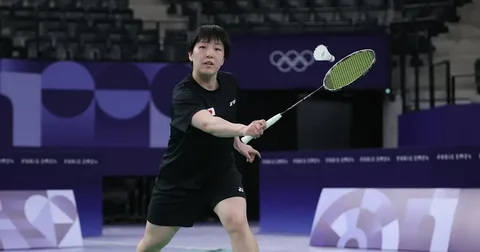

Former Midwife Kotomi Ozawa Says Hospital Pressure Prepared Her for Elite Sport
NAGOYA: Japan’s padel pioneer Kotomi Ozawa says the stress of elite competition feels familiar because she once worked as a midwife in a busy Tokyo hospital. As padel makes its Asian Games debut, the former Keio University Hospital practitioner is leading Japan’s campaign and hoping to win a medal for the host nation. She left the delivery room about four years ago, but says the calm she learned there still helps her in big matches.
Background: Padel Arrives at the Asian Games
Padel is a fast-paced sport that mixes elements of tennis and squash. It is played in doubles on an enclosed court where the ball can bounce off the walls. The sport has long been strongest in Europe and South America, so its arrival at the Asian Games is seen as a major step for the game in Asia.
The padel tournament at the Aichi-Nagoya Games runs from September 28 to October 3 at the Nagoya City Higashi Sports Center. There are 20 pairs in the men’s draw and 23 pairs in the women’s event, with teams from countries such as Japan, Qatar, Iran, Malaysia, Kazakhstan and Indonesia. Padel was also included as a medal sport at the recent Mediterranean Games and South American Games, and officials of the International Padel Federation have described the Asian Games as another step toward Olympic inclusion.
Details: Ozawa’s Unusual Journey
Ozawa studied nursing and medical care at Keio University and graduated in 2021. According to a profile published by the university, she began training seriously at the age of 21, and she became the youngest player to win the national championship in Japan. She later travelled to Spain, the home of the sport’s biggest culture, to train and improve her level.
In 2024, she decided to become the first Asian woman to compete as a professional padel player. She has said that few people expected an Asian woman to compete in international tournaments, and she was often looked at with curiosity in the early days. Moving from a hospital job to a professional sport with its main centres far from Japan was a serious gamble, but she is now the top-seeded Japanese player in Nagoya, partnered with Chifumi Sato. Kae Tokumoto and Saki Tsukamoto are the other Japanese women’s pair.
Quotes: What Ozawa Said About Her Two Careers
Ozawa told Reuters that the two jobs are very different, but both demand physical strength and mental toughness. She explained that midwives must support families and newborn babies in very difficult moments, and that this experience helps her deal with pressure on court. “Even when I have a big match, it makes me feel calmer,” she said.
She also spoke about her long-term plans. Ozawa said one of her dreams is to combine healthcare with sport in the future, because she loves working with children and families and believes sport can help communities. For now, her main focus remains on winning a medal in Nagoya.
Impact: A Boost for Padel in Japan and Across Asia
Ozawa’s story matters because padel is still new in many Asian countries. A well-known local pioneer with a strong personal story can attract new players, especially young women who may not yet see the sport as a career path. Her progress may also encourage more clubs, coaches and investors to look at the sport in Japan.
Interest is already visible online, where fans search for details such as a Japan padel racket, a Japan padel court or a Padel Japan store. Names such as Padel Tokyo Mizumachi, Padel Dojo Tokyo and Tokyo Padel Store are also among the terms people look up when they want to try the sport in the capital. Groups such as the Japan Padel Association are often mentioned in these searches when readers want to know how the sport is organised at home.
The wider region is also watching. Padel has grown quickly in the Gulf, Southeast Asia and South Asia, and a medal event at the Asian Games gives the sport more recognition. It may help national federations secure better funding and training facilities in the coming years.
Conclusion: What to Expect Next
The padel competition in Nagoya continues until October 3, and Japan’s pairs will be watched closely as the medal rounds approach. A podium finish would be a landmark result for the host country in a sport that few Japanese fans knew a few years ago.
After the Games, attention will turn to whether padel can keep growing in Asia and move closer to the Olympic programme. Ozawa herself has not ruled out a return to healthcare one day, but for now she is fully committed to the court. Further updates will follow as the tournament progresses.
Frequently Asked Questions (FAQs)
What is the #1 sport in Japan?
Baseball is generally regarded as the most popular sport in Japan. The professional league draws large crowds, and high school baseball tournaments are followed by millions of people every year. Football is also very popular, especially since Japan became a regular participant at the men’s World Cup, and sports such as rugby, tennis and basketball have loyal fans as well. Traditional martial arts also hold a special place in the country’s culture. Sumo is often described as Japan’s national sport, and judo, which was created in Japan, is a global Olympic sport. In recent years, newer sports like padel have started to attract attention, helped by the Asian Games debut in Nagoya and by players such as Kotomi Ozawa.
Which country is padel most popular in?
Spain is widely considered the country where padel is most popular. The sport is played by millions of people there, and it has thousands of courts, a strong professional scene and a big social culture around it. Argentina is another major stronghold, while countries like Sweden, Italy and Portugal, as well as several Gulf states, have also seen rapid growth. Padel was invented in Mexico in 1969 and then spread mainly through Spain and Latin America. The exact number of players and courts changes every year, so anyone writing about it should check the latest figures from the International Padel Federation. The sport’s growth in Asia, including Japan, is now a big part of its global story.
Why is padel so popular in Pakistan?
Padel has grown quickly in Pakistan’s big cities in recent years, and several reasons are usually given for this. The game is easier for beginners than tennis, because the walls keep the ball in play and rallies last longer. It is played in doubles on a small court, which makes it social and suitable for friends, families and office groups. Many people also see it as a modern fitness activity, and business owners have invested in new courts because demand has been strong. Pakistan has a big racket-sport tradition, including squash and tennis, which may help interest. These are commonly cited explanations, and readers should look for official data or club statements before giving exact numbers of courts or players.