

JAKARTA: Indonesia’s top Islamic clerical body has warned men against wearing women’s clothing during Independence Day celebrations, declaring the practice haram, or forbidden under Islamic law.
The Indonesian Ulema Council, known as the MUI, issued the warning ahead of the country’s annual August 17 Independence Day celebrations, when communities across the vast archipelago hold a wide range of games, competitions and colorful parades.
The ruling has drawn attention because men wearing dresses and hijabs for football matches and other festivities has been a long-standing tradition in some Indonesian communities. The activity is generally viewed as humorous entertainment rather than a statement about gender identity.
Indonesian Clerics Warn Against Cross-Dressing
In a recent statement, the MUI’s Fatwa Commission said the increasing presence of men wearing women’s clothing represented a violation of sharia and social norms.
The council also extended its warning to women who wear traditionally male clothing.
The MUI said its intervention was intended, among other things, to prevent what it described as a covert campaign associated with the Lesbian, Gay, Sodomy and Obscenity (LGSP) movement.
The organization uses the term LGSP as an alternative to the more commonly used acronym LGBT.
Long-Standing Independence Day Tradition
Indonesia celebrates its independence every year on August 17, commemorating the country’s declaration of independence from centuries of colonial rule in 1945.
The national celebrations feature numerous traditional games and community events.
Popular activities include tug-of-war competitions, sack races, cracker-eating contests and climbing greased poles. Communities also organize colorful parades and other public festivities.
In some areas, men traditionally put on dresses and hijabs before playing football as part of the celebrations. The unusual matches are generally intended to entertain spectators and create a festive atmosphere.
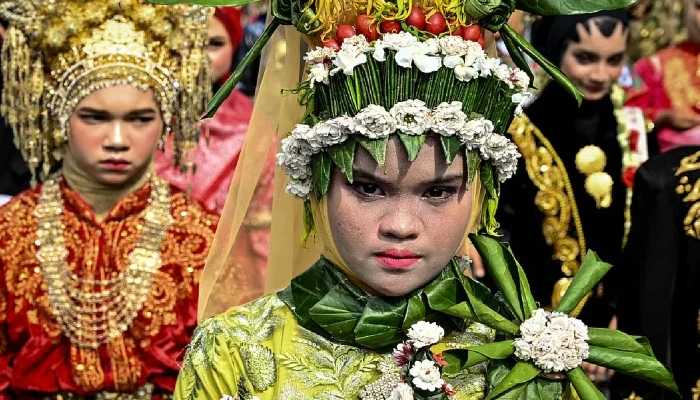
Men may also wear women’s clothing while participating in local Independence Day parades.
MUI Says Practice Violates Social and Religious Norms
The MUI’s latest statement has brought renewed attention to the tradition.
The Fatwa Commission said that practices involving men wearing women’s clothing could contribute to violations of Islamic principles and established social norms.
The council has previously expressed opposition to cross-dressing, but its latest warning comes amid heightened debate over LGBTQ issues in Indonesia.
The development also follows reports of physical attacks against gay people and a presidential regulation that has classified “LGBTQ culture” as a security threat.
Rights Activist Defends Cultural Tradition
Dede Oetomo, founder of the rights organization GAYa Nusantara, told AFP that men playing football or participating in parades while wearing traditionally women’s clothing was a long-standing custom in many Indonesian communities.
He described the practice as part of local Independence Day celebrations, rather than necessarily an expression of gender identity.
The comments highlight the difference between how the tradition is viewed by religious authorities and how it has traditionally been understood in some local communities.
Indonesia Independence Day Celebrations Under Spotlight
The controversy has added a new dimension to this year’s Indonesia Independence Day celebrations.
While the MUI argues that cross-dressing violates Islamic and social norms, supporters of the tradition say the activity has historically been a form of community entertainment during the country’s annual celebrations.
Indonesia’s August 17 festivities remain among the country’s most widely observed community events, bringing together people for games, competitions, parades and neighborhood celebrations.
The debate over men’s clothing during the festivities reflects broader discussions in Indonesia about religious values, cultural traditions and LGBTQ issues.
As communities prepare for another Independence Day, the MUI’s warning is likely to put additional focus on whether long-standing local traditions involving cross-dressing will continue in the same form.