
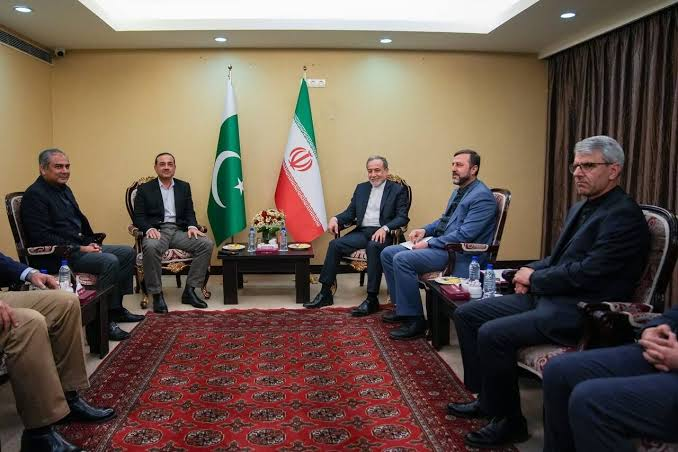

The Munir Araghchi meeting in Rawalpindi placed sustained engagement, mutual trust and close coordination at the centre of Pakistan Iran relations. Chief of Defence Forces Field Marshal Asim Munir met Iranian Foreign Minister Abbas Araghchi to discuss regional peace and stability. The Inter-Services Public Relations (ISPR) confirmed the details in a statement issued on Tuesday, November 17.
Background: Pakistan Mediation and Pakistan Iran Relations
Pakistan has played an active diplomatic role since the war between the United States and Iran began with US and Israeli strikes on Iran in February. Pakistan mediation produced a ceasefire on April 8, and Islamabad then hosted direct talks between the two sides on April 11 and 12. These talks made Pakistan a central venue for dialogue at a tense moment.
The Islamabad Memorandum of Understanding followed on June 17 in Geneva. The document set a framework for moving towards a permanent end to the war. Hostilities have since resumed, but Pakistan remains engaged, and the Munir Araghchi meeting shows that channel is still open.
Field Marshal Munir has also travelled to Tehran several times. He visited on August 24 and met President Masoud Pezeshkian, Parliament Speaker Mohammad Bagher Ghalibaf and Araghchi. A later visit on October 21 produced a message from Iranian leaders that Washington must take the first steps to rebuild trust.
Details of the Munir Araghchi Meeting in Rawalpindi
The ISPR statement said the two leaders discussed matters of mutual interest, regional security dynamics and evolving geopolitical developments. Both sides also exchanged views on exploring avenues to address common security challenges. The meeting took place in Rawalpindi on Monday, and the military’s media wing publicised it a day later.
Araghchi’s Remarks at the ECO Council
The Munir Araghchi meeting came a day after the 30th meeting of the ECO Council of Foreign Ministers in Islamabad. There, Araghchi called for a reliable and sustainable regional energy mechanism. He argued that such a system would safeguard energy flows, ensure stable supplies and reduce external vulnerabilities during disruptions to key fuel supply routes.
Araghchi also said Tehran remained committed to diplomatic engagement and peaceful solutions. He accused Washington of pursuing a course marked by aggression, threats and economic coercion. He further stressed that Iran has no inherent dispute with its neighbours and that regional territory, airspace and facilities should not be used for attacks on one another.
Official Statements and Key Quotes
According to the ISPR statement, Field Marshal Munir underscored the importance of sustained engagement, mutual trust and close coordination between the two countries. The military said this approach was meant to promote regional peace and stability. These points formed the core message of the Munir Araghchi meeting.
The ISPR also said Araghchi appreciated Pakistan’s constructive role in promoting regional peace and stability. He expressed Iran’s desire to further strengthen bilateral relations. Earlier this autumn, during the Tehran visit under the Makkah Defence Pact, President Pezeshkian called for “regional unity” among Islamic countries facing shared threats.
Impact on Regional Security and Pakistan Iran Relations
The Munir Araghchi meeting carries weight for regional security in West Asia and South Asia. Regular contact between the Pakistani military leadership and Iran’s top diplomat keeps a direct line open while the wider conflict remains unresolved. Analysts often note that such channels can reduce misunderstandings during a crisis, though no official assessment has been published on this specific meeting.
For Pakistan Iran relations, the meeting signals continuity. Both governments have repeatedly said they want closer coordination on border security, energy supply and diplomacy. Araghchi’s call for an energy mechanism at the ECO forum suggests that economic cooperation may sit beside security talks in the coming months.
At the global level, Pakistan mediation remains relevant to any wider effort to end the war. The Islamabad Memorandum of Understanding is still the main reference framework mentioned by officials. Readers can follow related coverage on the South Asian Chronicle news desk.
Conclusion
The Munir Araghchi meeting did not announce a breakthrough, and the ISPR statement did not describe any new agreement. Its significance lies in the message of sustained engagement and mutual trust at a time when the conflict has reignited. Pakistan appears set to continue its mediation role while keeping contact with Tehran through military and diplomatic channels.
The next developments to watch include further visits between Islamabad and Tehran and any renewed US Iran contact. Updates on Pakistan Iran relations and the wider regional security picture will follow as official statements emerge.
Frequently Asked Questions
Who attended the Munir Araghchi meeting?
The meeting involved Field Marshal Asim Munir, who serves as Chief of Defence Forces and Chief of the Army Staff, and Iranian Foreign Minister Abbas Araghchi. The ISPR released the details in an official statement on Tuesday. No other participants were named in the statement. The meeting took place in Rawalpindi on Monday, according to the military’s media wing.
What was discussed during the Munir Araghchi meeting?
According to the ISPR, the two sides discussed matters of mutual interest, regional security dynamics and evolving geopolitical developments. They also exchanged views on ways to address common security challenges. Field Marshal Munir stressed sustained engagement, mutual trust and close coordination for regional peace and stability. Araghchi thanked Pakistan for its constructive role.
Why does Pakistan mediation matter in the US Iran conflict?
Pakistan brokered a ceasefire on April 8 and hosted direct US Iran talks on April 11 and 12. It also facilitated the Islamabad Memorandum of Understanding signed on June 17 in Geneva. That document set a framework towards a permanent end to the war. Hostilities have resumed since, yet Pakistan continues its mediation efforts through repeated visits.
What did Araghchi say at the ECO Council of Foreign Ministers?
Araghchi spoke at the 30th ECO Council of Foreign Ministers meeting in Islamabad and called for a reliable and sustainable regional energy mechanism. He said it would protect energy flows and reduce external vulnerabilities. He also said Iran remains committed to diplomacy and has no inherent dispute with regional countries, and he criticised Washington’s approach.
How might the meeting affect Pakistan Iran relations?
Officials describe the meeting as part of continued engagement, and Araghchi expressed a desire to strengthen bilateral relations further. The practical effect will depend on follow up contacts, further visits and any progress on diplomacy. No new agreement was announced, so observers will watch for official statements from both capitals in the coming weeks.