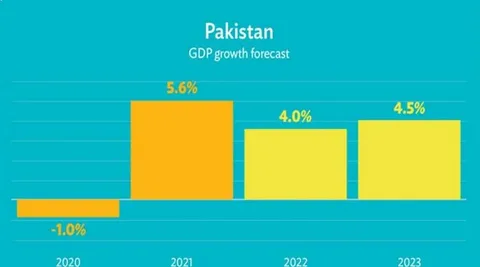

The latest ADB Pakistan growth forecast has brought cautious optimism for the economy of Pakistan. The Asian Development Bank has upgraded Pakistan’s economic growth projection to 3.5%, signaling gradual recovery after years of financial challenges.
This upward revision reflects improving macroeconomic stability, better policy measures, and signs of recovery in key sectors. While challenges remain, the updated forecast suggests that the country is moving in a positive direction.
ADB Report on Pakistan Economy Highlights Recovery Signs
According to the latest adb report on pakistan economy, several factors have contributed to the improved outlook. Stabilization policies, controlled inflation trends, and support from international financial institutions have played a key role.
The Asian Development Bank noted that structural reforms and fiscal discipline are beginning to show results. Increased investor confidence and improved external balances are also helping strengthen the economic outlook.
“Economic recovery is underway, but sustained reforms are essential for long-term growth,” the report suggests.
Pakistan Economy Growth 2026 Outlook
The pakistan economy growth 2026 projection of 3.5% indicates moderate but steady progress. Key sectors expected to contribute to this growth include:
- Agriculture recovery due to better weather conditions
- Industrial output stabilization
- Growth in services sector
- Improved remittances from overseas Pakistanis
While the growth rate is not exceptionally high, it marks a significant improvement compared to previous years when economic uncertainty dominated.
How Bad Is Pakistan Economy? A Realistic View
Many analysts still question, how bad is pakistan economy despite the improved forecast. The reality is mixed. While the ADB Pakistan growth forecast shows progress, several challenges persist:
- High public debt levels
- Inflation pressures on consumers
- Energy sector inefficiencies
- Dependence on external financing
However, experts believe that gradual reforms and consistent policies can help overcome these issues.
“Pakistan’s economy is stabilizing, but it requires long-term commitment to structural change,” say economists.
Role of Reforms and International Support
The improved ADB Pakistan growth forecast is closely linked to policy reforms and financial support from global institutions. Agreements with lenders and efforts to reduce fiscal deficits have strengthened economic confidence.
The government of Pakistan has also focused on improving tax collection, managing expenditures, and stabilizing the currency. These steps are essential for maintaining growth momentum in the coming years.
Future Outlook Beyond 2026
Looking ahead, the Asian Development Bank expects gradual improvement in Pakistan’s economic performance if reforms continue. Sustainable growth will depend on:
- Expanding exports
- Attracting foreign investment
- Strengthening infrastructure
- Improving governance
The ADB Pakistan growth forecast serves as an encouraging sign, but long-term success will require consistent effort and policy stability.
FAQs
What is the economy of Pakistan in 2026?
The economy of Pakistan in 2026 is projected to grow at around 3.5%, according to the ADB Pakistan growth forecast, indicating gradual recovery and stabilization.
What’s the forecast for Pakistan’s future GDP growth?
Future GDP growth is expected to remain moderate but stable, with gradual improvement if reforms and economic policies continue effectively.
What is the GDP forecast for ADB for FY26?
The Asian Development Bank has forecast Pakistan’s GDP growth at 3.5% for FY2026, reflecting improved economic conditions.
Conclusion
The revised ADB Pakistan growth forecast of 3.5% offers a positive signal for the economy of Pakistan. While challenges remain, the improved outlook highlights the impact of reforms and stabilization efforts.
The Asian Development Bank report suggests that Pakistan is on a recovery path, but sustained policy implementation and structural changes will be crucial for long-term economic growth and stability.