
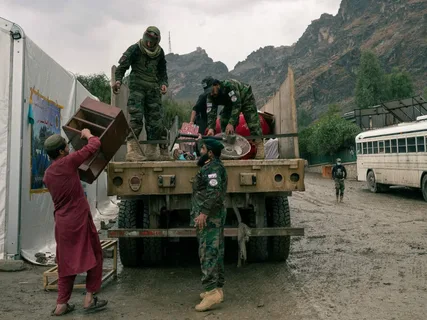
Afghan body Torkham Operation Ghazab lil-Haq handover has taken place following a temporary pause in Pakistan’s military operation — with the body of an Afghan national killed during the border clashes at Torkham being handed over to Afghan authorities through the crossing point that has been at the centre of one of the most serious Pakistan-Afghanistan border confrontations in recent memory.
Afghan body Torkham Operation Ghazab lil-Haq incident reflects the extraordinary tensions that have been building along the Pakistan-Afghanistan border — with the Pakistani military operation launched in response to Taliban-backed militant incursions creating a security environment at Torkham that has resulted in military casualties, civilian disruption, and diplomatic fallout between Islamabad and Kabul that has further strained an already deeply troubled bilateral relationship.
Operation Ghazab lil-Haq — Pakistan’s military response to cross-border militant attacks and the broader security deterioration along the Afghanistan border — has entered a phase of temporary operational pause that Pakistani military sources describe as a tactical decision rather than a permanent ceasefire, with the Afghan body Torkham handover representing a humanitarian gesture intended to reduce immediate tensions without abandoning the operation’s core objectives.
Background: Afghan Body Torkham Operation Ghazab — Understanding the Context
Torkham — The Border Crossing and Its Strategic Significance
Afghan body Torkham Operation Ghazab incident must be understood against the backdrop of Torkham’s extraordinary strategic significance as the most important land border crossing between Pakistan and Afghanistan — and one of the most consequential frontier points in South and Central Asian geopolitics.
Torkham is located in the Khyber district of Khyber Pakhtunkhwa at the western end of the historic Khyber Pass — the mountain corridor through the Hindu Kush that has served as the primary invasion and trade route between the Indian subcontinent and Central Asia for millennia. The Pakistan Afghanistan map position of Torkham makes it the natural focal point of bilateral commerce, people movement, and military confrontation — with the crossing handling tens of thousands of people and hundreds of trucks daily under normal operating conditions.
Torkham’s Pakistan Afghanistan map significance extends beyond bilateral commerce to encompass the humanitarian corridors through which aid reaches Afghanistan’s 40 million people, the smuggling networks that finance militant organisations on both sides of the border, and the diplomatic signalling that border closure or military activity at Torkham sends across the entire Pakistan-Afghanistan relationship.
Afghan body Torkham Operation Ghazab incident has occurred at precisely the point on the Pakistan Afghanistan map where bilateral tensions are most visibly expressed — making the handover both a practical humanitarian act and a diplomatic signal about the limits of the current confrontation.
Pakistan-Afghanistan Relations — The Deteriorating Context
Afghan body Torkham Operation Ghazab must be understood within the broader context of Pakistan-Afghanistan relations that have deteriorated dramatically since the Taliban’s return to power in August 2021 — with the Afghan Taliban government’s unwillingness to control TTP cross-border operations creating a security crisis that Operation Ghazab lil-Haq represents Pakistan’s most forceful military response to date.
Pakistan-Afghanistan relations before August 2021 were already complicated — shaped by decades of Pakistani support for various Afghan factions, Afghan government suspicions of Pakistani interference, and the fundamental tension between Pakistan’s desire for strategic depth in Afghanistan and Afghanistan’s resistance to Pakistani influence over its political future.
The Taliban’s return to power in 2021 initially appeared to offer Pakistan some strategic advantages — with Islamabad having maintained relationships with Taliban leadership through the years of US-NATO occupation and expecting that a Taliban government would be more cooperative on Pakistani security concerns including TTP. These expectations proved wrong. The Afghan Taliban government has consistently refused to take meaningful action against TTP — which shares ideological roots, personal relationships, and operational networks with the Afghan Taliban — creating the security environment that has driven Pakistan to Operation Ghazab lil-Haq.
Afghan Body Torkham — What Happened
The Torkham Clashes
Afghan body Torkham Operation Ghazab incident occurred during fighting between Pakistani security forces and armed individuals crossing from Afghan territory into Pakistani-controlled areas near the Torkham border crossing.
Pakistani military sources describe the Torkham clashes as a response to armed incursion by individuals — identified as Afghan nationals by Pakistani security forces — who crossed the border in a manner that Pakistani forces assessed as a militant infiltration attempt consistent with the broader pattern of cross-border attacks that precipitated Operation Ghazab lil-Haq.
Afghan body Torkham handover came after Pakistani forces confirmed the death of the Afghan national during the exchange of fire — with Pakistani military sources stating that the individual was killed in a legitimate defensive engagement by Pakistani security forces operating in accordance with their rules of engagement under Operation Ghazab lil-Haq.
Afghan authorities — represented by Taliban border officials at the Torkham crossing — formally received the Afghan body Torkham handover through a process coordinated between Pakistani and Afghan border officials during the operational pause in Operation Ghazab lil-Haq.
Torkham Border Closure Context
Afghan body Torkham Operation Ghazab incident has occurred against the backdrop of repeated Torkham border closures that Pakistan has implemented in response to security incidents — with the crossing having been closed multiple times in recent months as Pakistani security forces have responded to what they describe as deliberate Afghan Taliban facilitation of militant cross-border movement.
Torkham border closures impose significant humanitarian and economic costs on both sides — with Afghan civilians and traders dependent on the crossing for medicine, food, and commerce bearing the most immediate burden of border security confrontations like the Afghan body Torkham Operation Ghazab incident. Each closure sends a Pakistan Afghanistan war map signal about Islamabad’s willingness to use economic leverage against Kabul in the absence of diplomatic progress on TTP.
Operation Ghazab lil-Haq — Full Explanation
What Is Operation Ghazab lil-Haq
Operation Ghazab lil-Haq — meaning Righteous Wrath in Arabic — is Pakistan’s military operation launched in response to the sustained deterioration of security along the Pakistan-Afghanistan border and the continued cross-border attacks by TTP and affiliated militant groups using Afghan territory as a base for operations against Pakistani security forces and civilians.
Operation Ghazab lil-Haq represents the most significant Pakistani military action along the Afghanistan border since the period of active US-NATO operations in Afghanistan — involving Pakistani Army, Frontier Corps, and Air Force assets in a coordinated campaign targeting militant infrastructure on both sides of the border and responding forcefully to cross-border incursions.
Operation Ghazab lil-Haq was launched following a series of particularly deadly TTP attacks on Pakistani security forces — including attacks on military checkposts, ambushes on FC and Army personnel, and IED attacks on civilian infrastructure — that crossed a threshold of Pakistani military and political tolerance for continued cross-border militant activity.
Operation Ghazab lil-Haq — Objectives
Operation Ghazab lil-Haq objectives as publicly stated by Pakistani military and government sources include 4 primary goals that define the operation’s scope and success criteria.
First — Operation Ghazab lil-Haq seeks to destroy TTP and affiliated militant infrastructure in the border areas — including weapons caches, command and control facilities, IED manufacturing sites, and the border crossing points that militants use to move personnel and materiel between Afghan and Pakistani territory.
Second — Operation Ghazab lil-Haq aims to establish Pakistani security forces’ control over the border areas — reinforcing the physical barrier represented by the Pakistan Afghanistan border fencing and eliminating the ungoverned spaces that militant networks exploit.
Third — Operation Ghazab lil-Haq sends a political signal to the Afghan Taliban government — demonstrating that Pakistan will respond militarily to cross-border militant activity that Kabul facilitates or tolerates, and that the diplomatic and economic costs of continued non-cooperation on TTP will be accompanied by security costs.
Fourth — Operation Ghazab lil-Haq aims to restore Pakistani civilian population confidence in affected border areas — demonstrating that the state has the capacity and will to protect citizens from the militant violence that has displaced communities and created humanitarian crises in KPK and Balochistan border districts.
Operation Ghazab lil-Haq — The Pause
Operation Ghazab lil-Haq operational pause — during which the Afghan body Torkham handover occurred — has been described by Pakistani military sources as a tactical decision reflecting several simultaneous considerations.
The Operation Ghazab lil-Haq pause allowed Pakistani forces to consolidate gains, resupply forward positions, and process intelligence gathered during the active operational phase before resuming offensive operations. It also provided space for the diplomatic engagement — including back-channel communications with Afghan Taliban authorities — that Pakistani security planners consider a necessary complement to military pressure.
The Afghan body Torkham handover during the Operation Ghazab lil-Haq pause represents the human dimension of this diplomatic engagement — a gesture of respect for Afghan sovereignty and humanitarian norms that Pakistani officials hope will be reciprocated through Afghan Taliban cooperation on the TTP issue that Operation Ghazab lil-Haq is fundamentally about.
Pakistan Afghanistan Map — Strategic Geography
Pakistan Afghanistan Map — Border Length and Terrain
Pakistan Afghanistan map geography is defined by one of the most challenging border environments in the world — with the Durand Line demarcating approximately 2,670 kilometres of frontier across some of the most rugged, remote, and operationally demanding terrain on earth.
Pakistan Afghanistan map border terrain spans the Hindu Kush mountain ranges in the north — where peaks above 7,000 metres create natural barriers but also natural corridors through high passes like the Khyber that have been used by armies and traders for millennia. The Pakistan Afghanistan map central section crosses the Federally Administered Tribal Areas — now merged into KPK — where the terrain is mountainous and the population historically resistant to external control. The Pakistan Afghanistan map southern section runs through Balochistan — a vast desert and semi-arid plateau where border enforcement is challenged by distance, sparse population, and the extensive smuggling networks that have operated across this frontier for generations.
Pakistan Afghanistan map Torkham position at the eastern end of the Khyber Pass places it at the most accessible point of the entire border — the natural funnel through which the majority of legitimate trade and human movement flows, and consequently the point at which border security confrontations like the Afghan body Torkham Operation Ghazab incident are most visible and most diplomatically significant.
Pakistan Afghanistan War Map — Current Conflict Zones
Pakistan Afghanistan war map in the current Operation Ghazab lil-Haq context identifies several primary zones of military activity along the 2,670 kilometre frontier.
Pakistan Afghanistan war map northern zone — covering Chitral, Dir, and the Kunar border area — has seen significant TTP cross-border movement with Afghan Kunar and Nuristan provinces serving as TTP staging areas for attacks on Pakistani security forces in the Malakand Division.
Pakistan Afghanistan war map central zone — covering the merged tribal districts of Bajaur, Mohmand, Khyber, Orakzai, Kurram, North Waziristan, and South Waziristan — represents the most operationally active section of the Pakistan Afghanistan war map and the primary theatre of Operation Ghazab lil-Haq.
Pakistan Afghanistan war map southern zone — covering Balochistan’s border with Kandahar, Helmand, and Nimroz provinces — has seen significant BLA and TTP movement alongside the drug trafficking networks that finance multiple militant organisations operating on both sides of the Pakistan Afghanistan war map.
Quotes on Afghan Body Torkham Operation Ghazab
ISPR Director General Major General Ahmed Sharif Chaudhry confirmed the Afghan body Torkham Operation Ghazab handover — stating that the Pakistani military had conducted the handover as a humanitarian gesture during the operational pause and that Operation Ghazab lil-Haq would resume in accordance with the military’s operational timeline and strategic objectives.
Pakistan’s Foreign Ministry spokesperson Mumtaz Zahra Baloch stated that Pakistan had handed over the Afghan body at Torkham as a sign of Pakistan’s respect for humanitarian principles — adding that Pakistan expected the Afghan Taliban government to reciprocate through concrete action against TTP militants using Afghan soil to attack Pakistani civilians and security forces.
Afghan Taliban spokesperson Zabihullah Mujahid rejected Pakistani characterisations of the Torkham incident — stating that the Afghan national whose body was handed over had been unlawfully killed by Pakistani forces and demanding a full investigation into what Taliban officials described as a violation of Afghan sovereignty at the border.
KPK Chief Minister Ali Amin Gandapur praised Operation Ghazab lil-Haq and the Afghan body Torkham handover — stating that the provincial government fully supported the military operation and that KPK communities living along the Pakistan Afghanistan border deserved the protection that Operation Ghazab lil-Haq was providing.
A senior Pakistani security analyst told Dawn that the Afghan body Torkham handover during the Operation Ghazab lil-Haq pause reflected Pakistan’s attempt to manage the diplomatic consequences of the operation while maintaining military pressure — describing it as a carefully calibrated gesture designed to reduce immediate tensions without signalling any fundamental change in Pakistan’s security posture toward cross-border militancy.
UN Special Representative for Afghanistan Roza Otunbayeva expressed concern about the security deterioration along the Pakistan Afghanistan border — calling on both Pakistan and the Afghan Taliban government to exercise restraint and pursue diplomatic solutions to the bilateral security disputes that Operation Ghazab lil-Haq reflects.
Impact: What Afghan Body Torkham Operation Ghazab Means
For Pakistan-Afghanistan Relations
Afghan body Torkham Operation Ghazab handover and the broader Operation Ghazab lil-Haq context represent the most serious Pakistan-Afghanistan bilateral security crisis since the Taliban’s return to power — with implications for trade, humanitarian access, diplomatic engagement, and the security of border communities on both sides of the Pakistan Afghanistan map.
The fundamental Pakistan-Afghanistan relations problem that Operation Ghazab lil-Haq expresses — Afghan Taliban unwillingness to take meaningful action against TTP — has no military solution. Operation Ghazab lil-Haq can degrade TTP capabilities and impose costs on the Afghan Taliban for their non-cooperation, but it cannot compel a sovereign government to act against groups it considers ideologically aligned and strategically useful.
For Afghan Civilians
Afghan body Torkham Operation Ghazab and the broader border security confrontation impose disproportionate costs on Afghan civilians — particularly the approximately 50,000 people who cross the Torkham border daily under normal conditions for trade, medical treatment, education, and family visits.
Torkham closures driven by Operation Ghazab lil-Haq and the security confrontations that preceded it have disrupted humanitarian supply chains, increased the cost of essential goods in Afghanistan’s eastern provinces, and separated families across the Pakistan Afghanistan map border in ways that humanitarian organisations have documented as creating acute hardship.
For Regional Security
Afghan body Torkham Operation Ghazab lil-Haq represents a Pakistan Afghanistan war map development that has regional security implications extending beyond the bilateral relationship — with India, China, Iran, Russia, and the Central Asian states all watching the Pakistan-Afghanistan security deterioration with concern about its potential for further escalation.
China’s Belt and Road Initiative investments in Pakistan — including the China-Pakistan Economic Corridor — are directly threatened by the security deterioration along the Pakistan Afghanistan war map that Operation Ghazab lil-Haq is attempting to address, giving Beijing a specific economic interest in encouraging diplomatic resolution of the Pakistan-Afghanistan security confrontation.
Frequently Asked Questions
Is Pakistan Declared War Against Afghanistan?
No — Pakistan has not formally declared war against Afghanistan. Operation Ghazab lil-Haq is a military operation targeting TTP militants and cross-border threats rather than a declaration of war against the Afghan state or the Afghan Taliban government. Pakistan maintains official diplomatic relations with the Afghan Taliban government and has not sought a formal state of war under international law. However the Afghan body Torkham Operation Ghazab incident and the broader Operation Ghazab lil-Haq context reflect a level of bilateral military confrontation that goes significantly beyond normal border security operations — with Pakistani airstrikes on Afghan territory, cross-border ground operations, and sustained military engagement representing a security confrontation that the Pakistan Afghanistan war map makes visible even without a formal declaration of war. The distinction between counterterrorism operations and acts of war is contested between Islamabad and Kabul — with Pakistan framing Operation Ghazab lil-Haq as legitimate self-defence against cross-border terrorism and the Afghan Taliban characterising Pakistani military action on Afghan territory as aggression.
Who Is the Biggest Donor to Afghanistan?
The United States has historically been the largest single donor to Afghanistan — providing over 145 billion dollars in total assistance since 2001 including reconstruction funding, military support, and humanitarian aid. Since the Taliban takeover in August 2021 and the subsequent US aid freeze, the international humanitarian aid architecture supporting Afghanistan has shifted significantly. The United Nations and its agencies — including WFP, UNICEF, UNHCR, and WHO — have become the primary channels for humanitarian assistance reaching Afghan civilians. The European Union, Germany, Japan, and the United Kingdom have been among the largest bilateral donors to UN-coordinated Afghanistan humanitarian appeals. China has provided limited development assistance to the Taliban government while pursuing economic relationship building through potential Belt and Road Initiative extensions into Afghanistan. Pakistan — despite the bilateral tensions reflected in the Afghan body Torkham Operation Ghazab incident — remains an important transit route for humanitarian supplies reaching landlocked Afghanistan and has historically provided significant trade facilitation that amounts to indirect economic support for the Afghan economy.
How Much of the Pak Afghan Border Is Fenced?
Pakistan has fenced approximately 90 to 95 percent of the 2,670 kilometre Durand Line border with Afghanistan — a construction project that Pakistan completed over several years at a cost of approximately 532 million dollars. The Pakistan Afghanistan border fencing project — involving a double layer of concertina wire, floodlights, forts, and observation posts — was completed in most sections by 2021 and represents one of the most significant border security infrastructure investments in Pakistani history. The Afghan Taliban government has consistently rejected the Durand Line as a legitimate international boundary — with the Taliban’s ideological position that the Durand Line is an artificial colonial imposition creating political opposition to the Pakistan Afghanistan border fencing that has periodically translated into Taliban forces physically removing sections of fence in disputed areas. The Pakistan Afghanistan map sections where border fencing has been most contested include areas around Torkham itself and several Balochistan border districts where the Pakistan Afghanistan war map shows the highest concentrations of both militant activity and border fencing disputes.
Conclusion
Afghan body Torkham Operation Ghazab lil-Haq handover is a small but symbolically significant moment in a Pakistan-Afghanistan bilateral security crisis that has no easy resolution in sight.
Operation Ghazab lil-Haq reflects Pakistan’s exhaustion with a diplomatic approach to TTP cross-border militancy that has produced years of Afghan Taliban non-cooperation — and its decision that military pressure, whatever its diplomatic costs, is preferable to the continued security deterioration along the Pakistan Afghanistan map that threatens Pakistani civilian communities and undermines the state’s fundamental obligation to protect its people.
The Afghanistan Pakistan map geography that makes Torkham simultaneously the most important bilateral trade corridor and the most visible military confrontation point encapsulates the impossibility of simply separating the security and economic dimensions of the Pakistan-Afghanistan relationship. Every Afghan body Torkham Operation Ghazab handover, every border closure, every airstrike is also a closed trade route, a disrupted humanitarian supply chain, and a further deterioration of the bilateral relationship whose reconstruction will require sustained diplomatic investment that neither side has yet shown the commitment to provide.