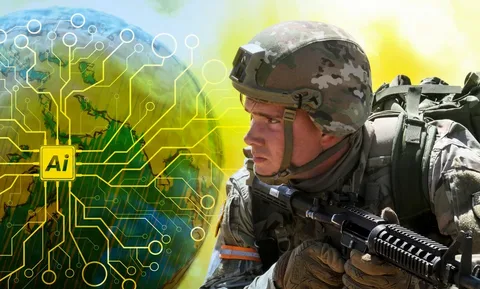

The ongoing conflict between the United States and Iran is being described by experts as one of the first true “AI-driven wars.” The rise of AI in US Iran war has transformed traditional combat into a data-centric battlefield, where algorithms, satellite feeds, and real-time analytics play a decisive role.
Unlike previous wars fought primarily with physical weapons, this conflict highlights how artificial intelligence is now deeply embedded in military strategy, intelligence gathering, and even information warfare.
How AI Is Turbocharging the War in Iran
The phrase how AI is turbocharging the war in Iran reflects the speed and scale at which modern warfare is evolving. Artificial intelligence systems are enabling militaries to process massive amounts of data within seconds, dramatically accelerating decision-making.
According to reports, AI systems have helped analyze drone footage, satellite imagery, and intelligence data to identify targets quickly and accurately.
In some cases, military operations that previously took days of planning can now be executed within hours. AI-supported systems have enabled thousands of strikes in a very short time, showing how technology is reshaping combat efficiency.
“AI is compressing the timeline of war—from analysis to action—like never before,” note defense analysts.
AI Iran War and Smart Targeting Systems
One of the most critical aspects of the AI Iran war is the use of intelligent targeting systems. These systems help identify potential threats and recommend targets based on data patterns.
The US military has reportedly used AI platforms such as the Maven system to assist in selecting and prioritizing targets.
These tools combine multiple data sources, including:
- Satellite imagery
- Surveillance drones
- Communication intercepts
- Historical battlefield data
This integration allows for faster and more informed decisions, reducing the uncertainty often associated with warfare. However, experts warn that reliance on AI also introduces risks, especially when data is incomplete or outdated.
Beyond Weapons: AI in Cyber and Information Warfare
The AI in US Iran war is not limited to physical combat. It also extends into cyber warfare and digital propaganda.
AI-generated content, including videos and images, has been widely used to influence public opinion and spread narratives during the conflict.
In addition, AI tools are being used to:
- Monitor social media trends
- Detect misinformation
- Launch cyberattacks on infrastructure
- Analyze enemy communication patterns
This digital battlefield is just as important as the physical one, as controlling information can shape global perception and strategic outcomes.
Role of Data Centres in Modern Warfare
Modern conflicts like the AI in US Iran war rely heavily on data centres and cloud computing infrastructure. These facilities process vast amounts of information that power AI systems.
From battlefield intelligence to logistics coordination, data centres have become critical assets. Military operations now depend on:
- Real-time data processing
- AI model training
- Secure communication networks
This shift from traditional battlefields to digital infrastructure highlights how wars are increasingly fought behind screens as much as on the ground.
Ethical Concerns and Risks of AI Warfare
While the use of AI offers strategic advantages, it also raises serious ethical concerns. Critics argue that automated systems could make life-and-death decisions with limited human oversight.
Reports suggest that AI-assisted targeting has already sparked debates about accountability and civilian safety.
Key concerns include:
- Risk of incorrect targeting
- Lack of transparency in AI decisions
- Over-reliance on automated systems
- Potential escalation of conflicts
“AI can enhance warfare, but it cannot replace human judgment,” emphasize experts.
US Military and AI Expansion
The United States military has been actively investing in artificial intelligence for years. The AI in US Iran war demonstrates how these investments are now being applied in real-world conflict.
AI is being used for:
- Intelligence analysis
- Autonomous drone operations
- Predictive threat assessment
- Logistics and supply chain management
This reflects a broader trend where advanced technologies are becoming central to military strategy.
Future of Warfare: What Comes Next?
The AI in US Iran war may set a precedent for future conflicts. As technology continues to evolve, wars are likely to become more automated, data-driven, and complex.
Experts believe that future warfare will involve:
- Autonomous weapons systems
- AI-controlled defense networks
- Advanced cyber operations
- Real-time global surveillance
While these advancements may improve efficiency, they also raise questions about control, regulation, and the potential for unintended consequences.
FAQs
How was AI used in the Iran war?
AI was used for intelligence analysis, target identification, and decision-making. It helped process large volumes of data quickly, enabling faster and more precise military operations.
Is AI being used in the U.S. military?
Yes, the United States military actively uses AI for surveillance, targeting, logistics, and cyber operations.
Does the US have AI fighter jets?
The United States is developing AI-assisted aircraft and autonomous drone systems, though fully autonomous fighter jets are still in development stages.
Conclusion
The rise of AI in US Iran war marks a turning point in the history of warfare. From battlefield operations to data centres and cyber domains, artificial intelligence is redefining how conflicts are fought.
While the technology offers unprecedented speed and precision, it also introduces new risks and ethical challenges. As the world moves deeper into the age of AI-driven warfare, balancing innovation with responsibility will be crucial for global stability.