
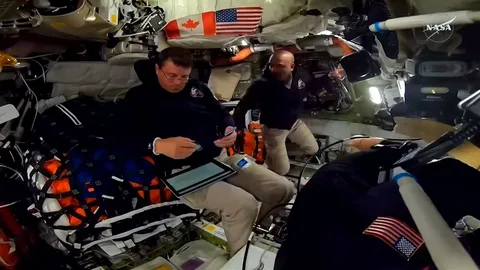

Artemis Astronauts Moon Mission Crosses Major Milestone
The Artemis astronauts Moon mission has passed its halfway point as the four-person crew aboard NASA’s Orion spacecraft continues its historic journey toward the Moon. NASA confirmed on Flight Day 3 that the Artemis astronauts Moon mission is more than halfway to its lunar destination with the crew in excellent health and spacecraft systems performing beyond expectations. The milestone marks a defining moment in the Artemis mission as humanity returns to the vicinity of the Moon for the first time in over fifty years since the Apollo era ended in 1972.
Artemis 2 Launch Date and Journey So Far
The Artemis 2 launch date of April 1 2026 set the Artemis astronauts Moon mission in motion when the Space Launch System rocket lifted off from Kennedy Space Center at 6:35 p.m. Eastern time. The Artemis 2 launch date had been anticipated for months with the global space community watching every development closely. Following the Artemis 2 launch date the crew spent time in Earth orbit checking spacecraft systems before completing the critical translunar injection burn on April 2 which set Orion on its free-return trajectory around the Moon.
Since the Artemis 2 launch date the mission has proceeded smoothly with NASA reporting that navigation and propulsion systems are performing so well that the first planned outbound trajectory correction burn was cancelled entirely. The Artemis 2 launch date countdown had been followed by millions around the world through the Artemis 2 live stream and the mission’s progress since has continued to attract enormous global attention.
What the Crew Is Doing Halfway to the Moon
Commander Reid Wiseman pilot Victor Glover mission specialist Christina Koch and Canadian Space Agency astronaut Jeremy Hansen have been keeping busy aboard Orion since the Artemis 2 launch date. The Artemis astronauts Moon mission crew has been exercising on Orion’s flywheel device conducting medical procedure demonstrations and testing the spacecraft’s emergency communications system in deep space.
Commander Wiseman has shared breathtaking photographs of Earth taken through Orion’s windows as the Artemis astronauts Moon mission travels deeper into space. NASA described the images as showing Earth in a way that carries profound emotional power for everyone following the Artemis mission. Mission Specialist Koch expressed growing excitement about the upcoming lunar flyby saying that seeing Earth from deep space was giving the crew a preview of the Moon views to come.
The crew has also been configuring Orion’s cabin to optimise it for the lunar observation period planned for April 6 when the Artemis astronauts Moon mission reaches its closest approach to the Moon’s far side. The Artemis 2 live stream has allowed followers around the world to track the mission’s progress in real time making the Artemis astronauts Moon mission one of the most widely followed space events in recent memory.
Artemis Mission Journey Details and Records
The Artemis astronauts Moon mission will cover a total of 685,000 miles over its ten-day journey making it one of the most ambitious human spaceflight missions since the Apollo program. The Artemis mission is expected to set several human spaceflight records including the greatest distance from Earth ever achieved by astronauts at approximately 252,799 miles surpassing the record set by Apollo 13 in 1970.
The Artemis mission crew represents historic firsts in human spaceflight. Victor Glover is the first person of colour to travel toward the Moon. Christina Koch is the first woman. Jeremy Hansen is the first non-American. And Commander Wiseman is the oldest person to travel beyond low Earth orbit. Each of these firsts reflects how dramatically the Artemis astronauts Moon mission differs in its diversity and international character from the Apollo era missions that preceded it.
The Artemis 2 live stream coverage has documented every step of the journey allowing the global public to follow the Artemis astronauts Moon mission as it passes milestones that have not been achieved since 1972. NASA has reported that the crew is in great spirits and genuinely excited about the lunar flyby that awaits them in the coming days.
Artemis 3 and the Road Ahead
The Artemis astronauts Moon mission is the critical second step in NASA’s progressive Artemis program designed to return humans to the lunar surface and establish a permanent presence there. Artemis 3 is planned as the next mission and will involve crewed rendezvous operations in low Earth orbit with the lunar landing systems being developed by SpaceX and Blue Origin. Artemis 3 will test the hardware and procedures needed before the first actual lunar landing attempt.
Artemis 3 depends directly on the success of the current Artemis astronauts Moon mission because the systems and data validated during this flight will inform every subsequent mission in the program. Artemis 3 planning is already advanced with NASA having confirmed in February 2026 that the mission will test one or both lunar landers in low Earth orbit before the first crewed landing attempt planned for Artemis 4 in early 2028.
The Artemis mission program has 60 nations signed onto the Artemis Accords supporting the peaceful exploration of space and the Artemis 3 mission will build further on this unprecedented international collaboration. The Artemis astronauts Moon mission currently underway is generating the scientific and operational data that will make Artemis 3 and all subsequent missions safer and more effective.
Conclusion
The Artemis astronauts Moon mission passing its halfway point is a moment of genuine historic significance. Three days after the Artemis 2 launch date the crew is deep in space heading toward a lunar flyby that will place humans closer to the Moon than at any time since Apollo 17 in 1972. With the Artemis 2 live stream keeping the world connected to every development the Artemis mission is uniting humanity around one of its most inspiring collective endeavours. The road to Artemis 3 and eventually to boots on the lunar surface runs directly through the success of the mission currently underway.
FAQs
Why is Artemis 2 Going Around the Moon?
The Artemis astronauts Moon mission is going around the Moon rather than landing because Artemis 2 is fundamentally a test flight designed to validate the Orion spacecraft’s systems with a crew aboard for the first time in deep space conditions. The Artemis mission must confirm that life support, navigation, communication, and all critical systems perform correctly with human crew before NASA commits to landing astronauts on the surface. The Artemis 2 launch date was chosen to allow the crew to conduct a free-return trajectory lunar flyby that tests every capability needed for Artemis 3 and the eventual landing missions while using the Moon’s gravity to return safely to Earth without requiring additional engine firings.
How Far Past the Moon is Artemis 2 Going?
The Artemis astronauts Moon mission will travel approximately 4,700 miles beyond the far side of the Moon at its maximum distance from the lunar surface. The mission’s farthest point from Earth will be approximately 252,799 miles breaking the distance record set by Apollo 13 in 1970. This record-breaking distance makes the Artemis mission the deepest human spaceflight in history. The Artemis 2 live stream will track the spacecraft’s position throughout the journey allowing followers to monitor exactly how far the Artemis astronauts Moon mission has traveled as it reaches and passes the historic distance milestone beyond the Moon.
Will the Artemis 2 Astronauts Walk on the Moon?
No the Artemis astronauts Moon mission crew will not walk on the Moon during this flight. Artemis 2 is a lunar flyby mission not a landing mission. The crew will observe the Moon’s surface closely during a multi-hour lunar observation period on April 6 passing within approximately 4,047 miles of the far side but will not enter lunar orbit or attempt a landing. Walking on the Moon is planned for Artemis 4 currently targeted for early 2028 which will use a commercial lunar lander to put astronauts on the surface for the first time since Apollo 17 in 1972. Artemis 3 will serve as an intermediate step testing the landing systems before Artemis 4 attempts the actual touchdown.