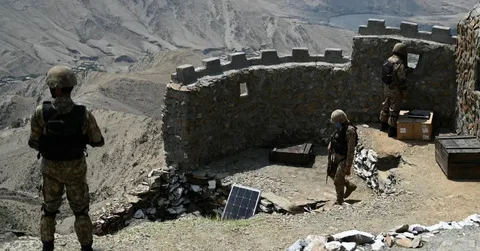

Pakistani Forces Respond Firmly in Bajaur Sector Clash
A major Bajaur sector clash erupted after Afghan Taliban fighters opened fire on Pakistani security forces in Khyber Pakhtunkhwa’s Bajaur region. Security sources confirmed that Pakistani forces retaliated vigorously following the unprovoked attack. This Bajaur sector clash has once again brought the volatile border region into sharp focus.
Background: Rising Tensions Behind the Bajaur Sector Clash
The Bajaur issue has been simmering for months as cross-border attacks from Afghan Taliban have increased in frequency. The Bajaur conflict has deep roots in the region’s geography and its proximity to the Afghanistan border. Security forces have long been engaged in maintaining peace in this sensitive area, making this latest Bajaur sector clash part of a larger and ongoing Bajaur conflict.
Details: What Happened in the Bajaur Sector Clash?
According to security sources, Afghan Taliban fighters initiated fire on Pakistani security forces positioned in the Bajaur sector. The attack was met with a vigorous response from Pakistani forces who retaliated immediately to neutralize the threat.
The Bajaur sector clash took place along the border area where cross-border movement has remained a persistent Bajaur issue for Pakistani authorities. Security forces were fully prepared and responded swiftly to the provocation.
Bajaur Operation Today: Forces on High Alert
Following the Bajaur sector clash, security forces launched a Bajaur operation today to clear the area and prevent further attacks. The Bajaur operation today involved ground troops who moved in to secure the affected zone and push back hostile elements.
Officials confirmed that the Bajaur operation today is ongoing and forces remain on high alert. The Bajaur conflict in this region demands constant vigilance and the latest Bajaur operation today reflects the military’s zero-tolerance policy against cross-border aggression.
Bajaur Conflict: A Pattern of Cross-Border Attacks
The Bajaur conflict is not a new development. Afghan Taliban have repeatedly targeted Pakistani security forces along the Bajaur border, making the Bajaur issue one of the most pressing security concerns in Khyber Pakhtunkhwa. Each Bajaur sector clash adds to the growing list of provocations that Pakistan has had to respond to firmly.
Expert Quotes on Bajaur Sector Clash
Security sources stated that Pakistani forces responded vigorously and with full force after Afghan Taliban opened fire in the Bajaur sector. Officials emphasized that any aggression on Pakistani soil will be met with a swift and decisive response.
Analysts following the Bajaur conflict noted that cross-border attacks have intensified in recent months, turning the Bajaur issue into a major security and diplomatic challenge for Pakistan. The latest Bajaur sector clash is being seen as a serious escalation in the ongoing Bajaur conflict.
Impact of Bajaur Sector Clash on the Region
The Bajaur sector clash has created fear and uncertainty among local residents living near the border. The ongoing Bajaur conflict continues to disrupt daily life and economic activity in the region.
The Bajaur issue also carries significant diplomatic implications as Pakistan has repeatedly urged Afghanistan’s Taliban government to prevent cross-border attacks. Each Bajaur operation today puts further strain on already tense Pakistan-Afghanistan relations.
The Bajaur conflict affects not only security but also development and stability in a region that already faces significant challenges. Local communities bear the heaviest burden of this persistent Bajaur issue.
Conclusion: What’s Next After the Bajaur Sector Clash?
The Bajaur sector clash is a stark reminder that the Bajaur conflict remains far from resolved. Pakistani forces have made clear they will continue to retaliate vigorously against any aggression as part of ongoing Bajaur operation today efforts.
Resolving the Bajaur issue will require both military action and sustained diplomatic engagement with Afghanistan. Until the Bajaur conflict is addressed at its root, the region will remain vulnerable to further clashes and instability.
FAQs
What is Bajaur Famous For?
Bajaur is famous for its strategic location along the Pakistan-Afghanistan border in Khyber Pakhtunkhwa. It is known for its rugged mountainous terrain and has historically been a sensitive tribal region. Beyond the ongoing Bajaur conflict, the area is also recognized for its rich Pashtun culture, traditional crafts, and historical significance. The persistent Bajaur issue has unfortunately brought the region more attention in recent years due to security concerns.
Why is Bajaur Called Bajaur?
The name Bajaur is believed to be derived from ancient local dialects and historical references to the region’s indigenous tribes. Some historians link the name to the Bajauris, the local Pashtun tribes who have inhabited the area for centuries. Despite the modern Bajaur sector clash and ongoing Bajaur conflict, the region’s name carries a deep historical and cultural identity that predates current security challenges.
What is the Literacy Rate in Bajaur?
Bajaur has one of the lower literacy rates in Khyber Pakhtunkhwa, with estimates ranging between 20 to 30 percent. The ongoing Bajaur conflict and persistent Bajaur issue have significantly hampered educational development in the region. Frequent security disruptions including the latest Bajaur sector clash make it difficult to maintain regular schooling, particularly for girls. The government and various NGOs have been working to improve literacy despite the challenging conditions created by the Bajaur conflict.