
China recorded solid China GDP growth of 5% in Q1 2026, outperforming analyst forecasts. Strong exports powered the gains, but weak domestic spending and rising energy costs from the Iran conflict are threatening to slow momentum. As the world watches China’s every economic move, the country faces its most complex balancing act in years navigating a trade war with the United States while managing deep economic ties with Iran.
Background
China has long relied on manufacturing and exports as the twin engines of its economy. The country’s trade surplus reached a record-breaking $1.2 trillion last year, underlining just how export-dependent China’s growth model has become. Beijing set a China GDP growth target of 4.5% to 5% for 2026 the least ambitious goal on record going back to the early 1990s, signaling official awareness of rising headwinds.
At the same time, China’s relationship with Iran has grown into one of the most strategically important partnerships in the world. In 2021, the two nations signed a Comprehensive Strategic Partnership covering economic activity from oil and mining to transportation and agricultur. That 25-year deal set the stage for a deeply interlocked China-Iran relationship that now sits at the center of global geopolitical tension.
Details: China GDP Q1 2026 Performance
China’s National Bureau of Statistics reported a 5.0% increase in gross domestic product from the same period last year, marking an acceleration from the 4.5% growth recorded in the final quarter of 2025. The numbers came in ahead of expectations, which had forecast around 4.8% growth.
Industrial production jumped 6.1% year on year, outpacing retail sales growth of just 2.4%, underscoring manufacturing’s continued dominance as the economy’s primary engine even as domestic consumption lags.
In terms of China GDP in trillion terms, China’s economy is currently the second largest in the world, hovering around $18–19 trillion USD annually. China GDP per capita, however, remains significantly lower than that of Western economies, reflecting deep income inequality between urban and rural regions.
For the first quarter, exports grew 14.7% from a year earlier in dollar terms the fastest pace since early 2022. This export surge has been the primary reason China GDP growth has held up despite a challenging global environment.
The Iran War Factor
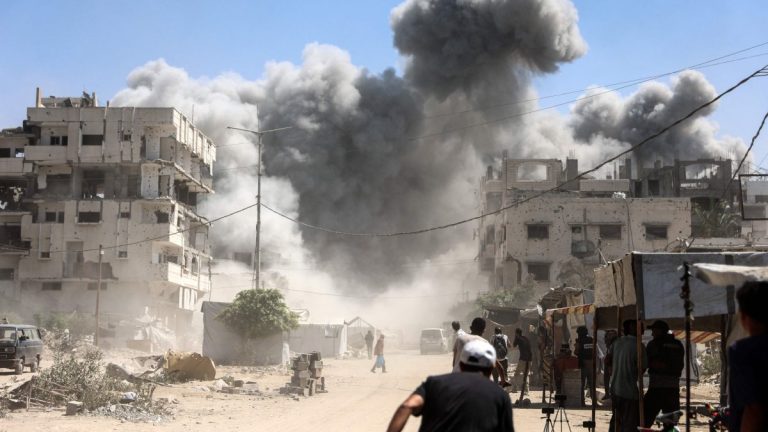
China is the first major economy to report Q1 GDP data since the United States and Israel launched military action against Iran in late February 2026. Skyrocketing energy prices have increased costs for raw materials and caused inflation, which could further squeeze Chinese consumers already spending less because of a prolonged real estate crisis that began in 2021.
China has absorbed the economic shock from the Iran war with limited disruption so far, cushioned by large oil reserves, a diversified energy mix, and tight price controls. But economists warn that persistently higher oil prices are already lifting input costs and squeezing corporate profits at a time when domestic demand remains weak.
The China-Iran relationship goes far beyond the current conflict. China is Iran’s largest trading partner and the primary buyer of Iranian oil Chinese purchases account for roughly 90% of Iran’s exported oil, providing tens of billions of dollars in annual revenue that supports Iran’s government budget.
China fears any escalation that could lead to the closure of the Strait of Hormuz, through which approximately 40% of its oil imports pass, compelling Beijing to push for de-escalation to ensure the flow of energy supplies.
Is China Losing the Trade War?
The question of whether China is losing the trade war with the United States is not simple. China’s exports have grown sharply in 2026 a sign of resilience. Yet officials warned of “volatile” external conditions ahead, as the conflict in the Middle East weakens global demand and threatens China’s export-reliant economy.
Analysts describe China’s growth as “lopsided towards exports,” warning that structural weaknesses in domestic consumption could be exposed if global trade conditions worsen further. The trade war with the US has forced China to diversify its trade partners and double down on manufacturing upgrades, but the pressure is real.
China’s long-term efforts to move into higher-value manufacturing and dominate green technologies have helped insulate it from some trade war pressures, with the global oil shock making clean energy goods even more in demand.
Expert Quotes
Ying Zhang, an analyst at the Economist Intelligence Unit, noted that “China’s retail sales momentum is fading as subsidy impacts wane and auto demand softens,” adding that without structural reforms, “consumption will remain a weak growth driver throughout 2026.”Zichun Huang, a China Economist at Capital Economics, observed that “the Chinese economy is holding up well, but it is becoming ever more dependent on external demand,” with the Iran war likely adding to that trend.
Analysts at Morgan Stanley warned that “higher oil prices would hit China’s economy through terms of trade shock and downstream margin squeeze.”Societe Generale analysts noted that “a strong first-quarter print should give policymakers room to hold off major stimulus at the late-April Politburo meeting despite Middle East-related energy risks.”
Global and Regional Impact
China’s Q1 2026 GDP data is being watched globally as an early indicator of how the Iran war is rippling through the world economy. As China goes, so goes much of global manufacturing, supply chains, and commodities demand.
China’s full-year GDP growth is expected to slow to around 4.6% in 2026, down from 5.0% in 2025, as the Middle East conflict weighs on trade momentum.
Beijing described the US military strikes against Iran as a violation of international law and is positioning itself as an alternative mediator between Iran and Washington, promoting a vision of itself as a more stable international partner.This diplomatic posture serves both China’s economic interests and its broader geopolitical ambition to expand global influence.
For global markets, a slowing Chinese economy would reduce demand for commodities from Australia, Brazil, and Africa, weigh on Asian supply chains, and put pressure on emerging market currencies effects that would ripple far beyond Beijing.
Conclusion: What Comes Next?
Beijing has set a budget deficit of around 4% of GDP for 2026 and lined up heavy bond issuance to support growth, while the central bank has pledged to keep policy accommodative.Policymakers are expected to use the late-April Politburo meeting to assess whether further stimulus is needed.
The coming quarters will test China’s ability to balance its Iran ties against US pressure, sustain export momentum in a disrupted global trade environment, and finally close the stubborn gap between industrial output and domestic consumption.
China’s economy has surprised to the upside in 2026 so far but with the Iran war unresolved and the trade war far from over, the road ahead remains deeply uncertain.
FAQs
Q: Is China helping Iran in the war?
China has not provided direct military assistance to Iran in the current conflict. Beijing condemned the US strikes on Iran as a violation of international law and called for diplomatic dialogue, while positioning itself as a potential mediator. China is pushing for de-escalation to protect its economic interests, particularly the flow of oil through the Strait of Hormuz.Washington has warned China against crossing into military support.
Q: Why is Iran so important to China?
Iran is critical to China for one primary reason: energy. Chinese purchases account for roughly 90% of Iran’s exported oil, making Iran one of China’s most important and discounted energy suppliers.Beyond oil, Iran sits at a strategic crossroads linking China’s Belt and Road Initiative to the Middle East, Europe, and Central Asia. Keeping Iran stable and economically functional directly serves China’s long-term economic security.
Q: What is the economic deal between China and Iran?
In 2021, Iran and China signed the Comprehensive Strategic Partnership a 25-year agreement covering oil, mining, transportation, agriculture, and industrial development.Under the deal, China is to invest up to $400 billion in Iran’s economy over 25 years in exchange for a steady supply of heavily discounted Iranian oil.As of 2026, the 25-year partnership is seen as a pillar for both countries to manage external risks, with both sides deepening cooperation in trade, infrastructure, and emerging sectors like digital economy and clean energy.