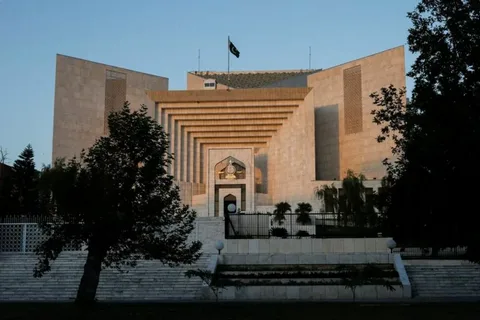

The story of the Cockroach Janata Party begins with a remark that shocked India. On May 15, 2026, Chief Justice of India Surya Kant made controversial comments during a Supreme Court hearing, comparing unemployed young people to “cockroaches” and calling them “parasites of society.” His exact words “There are youngsters like cockroaches, who don’t get any employment or have any place in the profession” immediately ignited outrage on social media platforms across the country.
Abhijeet Dipke, a political communications strategist who had previously worked with the Aam Aadmi Party, responded by founding the Cockroach Janata Party on May 16, 2026 just one day after the Chief Justice’s remarks. The name was a deliberate, satirical play on India’s ruling party, the Bharatiya Janata Party (BJP). The Cockroach Janata Party slogan “Voice of the Lazy and Unemployed” was itself a reclaiming of the insult directed at India’s struggling youth.
The Cockroach Janata Party website, available at cockroachjantaparty.org, became a central hub for sign-ups, updates, and organizing. Within days, it had registered over 350,000 members. The Cockroach Janata Party Instagram account exploded in reach almost overnight, accumulating over 20 million followers and becoming one of the fastest-growing political movement accounts ever seen in India. You can find details about Abhijeet Dipke Wikipedia page, which documents his role as the CJP’s president and founder.
The “Chalo Sansad” March: What Happened Today
The Cockroach Janata Party had announced its “Chalo Sansad” March to Parliament well in advance, calling supporters from across India to gather at Jantar Mantar in New Delhi on July 20, 2026. The date was chosen deliberately: it was the first day of Parliament’s Monsoon Session, when every major political leader and media camera would be focused on the capital.
Delhi Police, on Sunday, issued orders banning assemblies of five or more persons near Parliament, citing the need to protect vital government installations and ensure security during the Monsoon Session. Police declared the march unauthorized and surrounded the Jantar Mantar protest site with heavy barricades and paramilitary personnel.
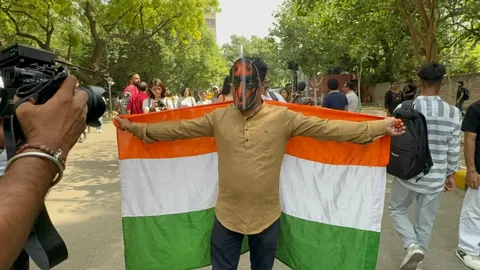
Despite the ban, thousands of supporters arrived through the night at the protest site. The crowd included students, professionals, and families with young children, many of whom had traveled from other cities to be part of the demonstration. Protesters carried food and water, prepared for a long standoff.
Television footage showed police striking some protesters with batons after they tried to breach security barricades. Delhi Police, however, denied any excessive use of force, stating that “the protest is being handled professionally.” The contradiction between official statements and the footage broadcast on national television only added to the public anger surrounding the day’s events.
Abhijeet Dipke Speaks: “The Times Are Changing”
Abhijeet Dipke, the face of the Cockroach Janata Party, has become one of the most recognized youth voices in Indian politics in recent months. His transition from political strategist to protest leader has been rapid and, by any measure, remarkable.
“We have to understand that five years ago nobody was ready to speak up against Modi or the government,” Dipke said in a recent interview. “The times are changing.” He has consistently framed the Cockroach Janata Party not as a traditional political party chasing votes, but as a channel for genuine public frustration that had no other outlet.
“Nothing of this was intentional,” Dipke said. “It is the younger people who were actually very frustrated. They don’t have any outlet. They were really angry at the government.”
On the day of the march, Abhijeet Dipke took a significant step by sending Cockroach Janata Party representative Saurav Das and another member to meet Health Minister J.P. Nadda in what appeared to be the first formal contact between the government and the movement’s leadership. The government did not immediately confirm the meeting.
Sonam Wangchuk’s Hunger Strike Fuels the Fire
A key catalyst for Monday’s massive turnout was the forced hospitalization of activist Sonam Wangchuk on Saturday, July 18. Wangchuk had been on a hunger strike for 22 days in solidarity with the Cockroach Janata Party protesters, demanding accountability over the exam paper leaks. Police forcibly moved him to a hospital on Saturday, which galvanized the movement and brought hundreds more supporters to Jantar Mantar through the night ahead of the march. Wangchuk was expected to join the march if his health permitted, though his condition remained uncertain as of Monday morning.
His treatment by authorities was widely condemned on social media, with the Cockroach Janata Party Instagram account sharing updates that were reshared millions of times. The incident transformed what might have been a moderately sized protest into one of the largest youth demonstrations New Delhi has seen in years.
What the Cockroach Janata Party Is Demanding
The Cockroach Janata Party has built its platform around several core demands that resonate deeply with India’s large, frustrated young population. The central demand at Monday’s march was the resignation of Education Minister Dharmendra Pradhan, who has been under fire for presiding over repeated, large-scale exam paper leaks including the controversial NEET examination scandal that have undermined trust in India’s educational system and robbed thousands of students of fair competition.
Beyond the Education Ministry, the Cockroach Janata Party campaigns broadly against unemployment, institutional corruption, and what it describes as the silencing of dissent under the current government. The movement, while not registered with the Election Commission of India, functions as a vehicle for holding elected officials accountable through public pressure, social media mobilization, and street protest.
The Cockroach Janata Party logo and merchandise have become widely visible at protest sites across India, with volunteers frequently appearing in cockroach costumes to lean into the satirical identity of the movement. The Cockroach Janata Party followers on Instagram crossed 20 million a number that rivals or exceeds the social media following of many established political parties in India.
Government’s Response: Denial and Hard Line
Senior leaders within Prime Minister Narendra Modi’s government have not softened their stance toward the Cockroach Janata Party or its demands. Education Minister Pradhan himself accused the protesters of acting against the nation, while other ministers have acknowledged students’ concerns but insisted there is no need for talks or negotiations with the movement.
Delhi’s Deputy Commissioner of Police, Sachin Sharma, told Reuters that meetings had been held with Cockroach Janata Party members but that no consensus had been reached. “The protest site has already run out of space and this can lead to an untoward situation,” he said, adding that approximately 10,000 protesters were present at Jantar Mantar by Monday morning a number that grew significantly as the day progressed.
Protesters have argued that space for dissent has shrunk under Modi, whose government has been criticized for suppressing public protests by jailing activists and, in some cases, using forceful police crackdowns. The scenes of baton charges on Monday did little to counter that narrative.
Regional and Global Impact
The Cockroach Janata Party and the cockroach revolution in India have attracted coverage from international outlets including the Associated Press, Reuters, France 24, NBC News, and dozens of others. What began as an internet meme in May 2026 is now being analyzed as a serious indicator of political discontent among India’s youth a demographic that forms one of the largest voting blocs in the world’s most populous democracy.
The protests have become a rare public challenge to Modi’s Hindu nationalist government in its third term, drawing support from opposition parties, rights activists, and some Bollywood celebrities. Opposition MPs joined protesters at Jantar Mantar on Monday, giving the movement a parliamentary voice for the first time.
The Cockroach Janata Party news has sparked discussions internationally about the state of democratic space in India, the future of youth-led protest movements in South Asia, and whether satirical political organizing can translate into genuine policy change. Analysts watching the CJP note that its rapid growth in Cockroach Janata Party followers on social media particularly the Cockroach Janata Party Instagram account represents a new kind of political mobilization that bypasses traditional party structures entirely.
What Comes Next
As of Monday afternoon, the situation at Jantar Mantar remained tense. The first confirmed government outreach the meeting between CJP’s Saurav Das and Health Minister Nadda suggested that the government may be reconsidering its refusal to negotiate. Whether that leads to substantive dialogue or is simply a tactical move to de-escalate the march remains to be seen.
Abhijeet Dipke and the Cockroach Janata Party leadership have stated publicly that the movement will not stand down until Education Minister Pradhan resigns and concrete accountability mechanisms are introduced for the exam paper leak scandal. The coming days will likely determine whether the government chooses to engage seriously with these demands or continues to dismiss the movement as an organized nuisance.
What is clear is that the Cockroach Janata Party, born from an insult barely two months ago, has become a genuine force in Indian public life. Its website, its Instagram, its logo, and most importantly, the people who showed up on the streets of New Delhi on July 20, 2026 — all of them have made that undeniable.
FAQs
What is the cockroach revolution in India?
The cockroach revolution in India refers to a rapidly growing youth-led protest movement that emerged in May 2026 after Chief Justice of India Surya Kant compared unemployed young people to “cockroaches” during a Supreme Court hearing. Rather than accepting the insult, political strategist Abhijeet Dipke founded the Cockroach Janata Party the very next day, reclaiming the label as a badge of identity for India’s frustrated, unemployed, and marginalized youth. The movement quickly evolved beyond social media satire into a serious street-level protest force, gathering tens of millions of followers on the Cockroach Janata Party Instagram account and mobilizing thousands of people for protests in cities across India. By July 2026, the cockroach revolution had become what many analysts describe as the biggest public challenge to Prime Minister Narendra Modi’s government in his third term in office, with the “Chalo Sansad” march on Parliament representing its boldest action to date.
Are Indian cockroaches harmful?
In biological terms, cockroaches found in India including the common German cockroach and the American cockroach can pose public health concerns when present in large numbers in homes and food environments, as they carry bacteria and can trigger allergic reactions. However, in the political context of 2026, “Indian cockroaches” has taken on an entirely different meaning. The term now represents a generation of young Indians who were compared to cockroaches by a senior judicial authority and who responded by organizing themselves into one of the country’s most viral and disruptive protest movements. The Cockroach Janata Party has effectively transformed a derogatory biological comparison into a symbol of defiance, resilience, and political energy among India’s youth.
What is the anti-Hindi movement in India?
The anti-Hindi movement in India refers to a series of historical and ongoing protests primarily in South Indian states particularly Tamil Nadu against the perceived imposition of Hindi as a dominant national language at the expense of regional languages. The most significant episodes occurred in 1937-1940 and again in 1965, when protests in Tamil Nadu against Hindi being made compulsory led to violence, deaths, and ultimately a government retreat on mandatory Hindi imposition. The movement is rooted in concerns about linguistic equality, cultural identity, and federalism, with speakers of Tamil, Telugu, Kannada, Malayalam, and other languages arguing that Hindi-imposition policies undermine their constitutional right to education and governance in their own languages.