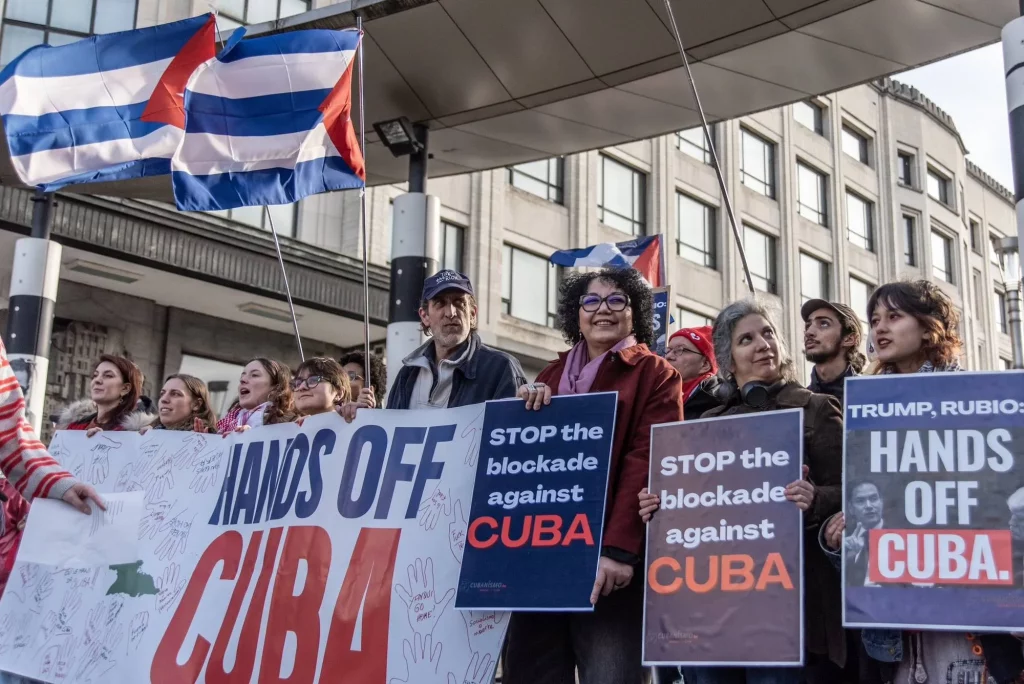
Cuba is once again asking the world to pay attention to what it calls an economic war, the decades-old US blockade that Havana blames for everything from fuel shortages to blackouts. The government says ordinary Cubans are the ones absorbing the impact: less fuel, less medicine, less reliable electricity.
Washington sees it differently, framing the restrictions as leverage aimed at the Cuban government rather than its people. That gap in interpretation is that this pressure on a regime or punishment of a population is really what keeps the argument alive year after year.
How We Got Here
The Cuba-US standoff goes back to 1959, when the Cuban Revolution upended the island’s politics and, not long after, its relationship with Washington. The US response was to cut off trade and financial ties, a blockade Cuban officials still describe as a form of warfare by other means.
The American position has stayed fairly consistent over the decades: the restrictions exist because of concerns about human rights and how Cuba is governed. Neither side has really budged from its founding argument, which is part of why this remains one of the longest-standing disputes in modern diplomacy.
Cuba has taken its case to the United Nations repeatedly, and for years has won broad support there; most member states have voted in favor of resolutions urging the US to lift the embargo, even if that vote carries no binding weight.
What’s Changed Recently
The blockade argument used to be mostly rhetorical. Lately, it’s gotten sharper teeth. Cuba produces only a fraction of the fuel it consumes, and the picture got worse after the United States moved against Venezuela, including the capture of Nicolás Maduro in January 2026, which cut off a key source of Venezuelan oil that Havana had relied on. Díaz-Canel called the US action “state terrorism” at the time.
Since then, fuel shortages and blackouts have hit the island hard, straining hospitals, businesses, and households already stretched thin. President Trump has said publicly that Cuba could be next on his list once other regional matters are settled, and Washington has added fresh sanctions on Díaz-Canel and his wife as recently as June 2026.
Even so, there have reportedly been quiet contacts between Cuban officials and the Trump administration, including Secretary of State Marco Rubio. Havana released 51 political prisoners earlier this year as what was described as a goodwill gesture. Díaz-Canel, for his part, told NBC News in April that he has no plans to step down, insisting his mandate comes from the Cuban people, not from Washington.
Money, Blackouts, and Daily Life
Cuba’s currency troubles aren’t new, but they’ve compounded. Inflation, limited access to foreign currency, and a series of economic reforms that haven’t quite landed have left households squeezed. Basic goods are harder to find, and prices for what is available keep climbing.
Electricity is the more visible crisis. Islandwide blackouts have made international headlines, particularly after fuel imports dried up. The government blames the blockade for making it nearly impossible to maintain power infrastructure or buy spare parts and equipment. Critics, including some figures within Cuba’s own political system, have pushed back on that framing. Oscar Pérez-Oliva Fraga, a rising figure in Cuban politics, said publicly during a February blackout that “we don’t want to justify ourselves with the blockade; there are a number of internal deficiencies,” a rare admission from someone close to the government that domestic mismanagement is part of the story too.
What Cuban Officials Are Saying
Havana’s message hasn’t changed much in substance, even as the pressure has intensified: the blockade is unjust, it hurts civilians more than the government, and it should end. Díaz-Canel was re-elected to a second five-year term in June 2026, with the National Assembly voting almost unanimously in his favor, a result that tells you more about Cuba’s political system than about his popularity, which independent surveys have suggested is fairly low.
Officials continue to argue that Cuba wants normal relations and open trade, not conflict. But Díaz-Canel has also struck a more combative tone recently, saying Cuba doesn’t want war with the US but is prepared to defend itself if it comes to that.
The International Reaction
Cuba’s position still draws sympathy at the UN and among many governments that see the embargo as outdated or disproportionate. The US maintains its own read on the situation, and that disagreement isn’t close to resolving.
There’s also a more skeptical camp inside and outside Cuba that argues the blockade, real as its effects are, doesn’t fully explain the island’s economic troubles. Decades of centralized economic policy and, more recently, internal admissions like Pérez-Oliva’s add weight to that view. It’s not really a debate with a clean answer; both forces are probably at work.
Cuban Identity, Beyond the Politics
None of this erases what Cuba is known for outside the headlines: its music, its baseball culture, its classic cars, its history, its contribution to fields like medicine. Spanish is the everyday language, carrying the imprint of Cuba’s colonial history and its place in the wider Latin American world.
Millions of Cubans have left the island over the years, particularly amid the more recent economic strain, but many keep close ties to family and culture back home.
Ripple Effects Across the Region
What happens between Havana and Washington doesn’t stay contained to the two countries. Cuba’s fortunes affect regional trade, migration patterns, and diplomatic alignments across Latin America and the Caribbean. A genuine thaw could open new doors for tourism and investment; continued escalation could deepen isolation and hardship for a population that’s already stretched thin.
It’s also become something of a case study in the broader argument about whether sanctions actually work as a tool of foreign policy, or whether they mostly punish the people least able to influence their own government.
What Might Come Next
Nobody’s expecting a quick resolution. Díaz-Canel has two years left in his term, though speculation about internal succession, including talk of Castro family relatives waiting in the wings, suggests even Cuban insiders aren’t fully confident the status quo holds. On the US side, Trump has hinted that Cuba could become a more direct focus once other regional priorities are resolved.
Quiet diplomatic contact and prisoner releases suggest some door is still open, even amid public hostility. Whether that leads anywhere concrete is hard to predict from the outside.
Bottom Line
Cuba’s campaign against the blockade isn’t just rhetoric at this point; it’s playing out against a real humanitarian strain, worsened by the loss of Venezuelan oil and tightened US pressure. Havana keeps pointing outward, to Washington’s policy; Washington keeps pointing back at Havana’s governance. Both arguments have some truth in them, which is probably why the standoff has outlasted so many other Cold War-era disputes.
FAQs
Is Cuba part of the United States?
No. Cuba is an independent nation in the Caribbean with its own government, currency, and head of state. Geographic proximity to the US hasn’t changed that.
Why is Cuba well-known internationally?
Its music, dance, revolutionary history, cigars, baseball, and classic cars are all part of its global image, along with its outsized reputation in medicine and education relative to its size.
What’s the dominant religion in Cuba?
Roman Catholicism has historically been the largest religious tradition, alongside Protestant communities and Afro-Cuban religious practices like Santería.