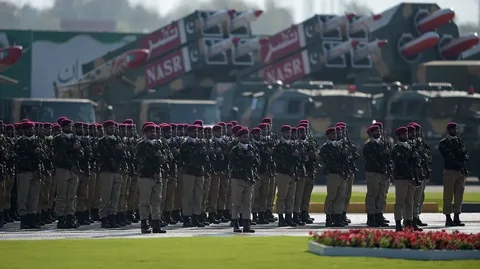
Pakistan marks the first anniversary of Marka-i-Haq with pride and national unity. Senior leaders say the victory over Indian aggression has elevated Pakistan’s global standing like never before. Dil se Pakistan hain hum this ISPR spirit echoed in every speech, every gathering, and every corner of the nation.
Background: A Nation That Chose to Stand Firm
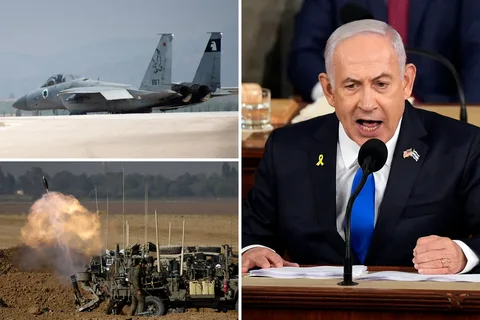
Last year in May 2025, Pakistan faced one of its most serious military challenges when India launched what Pakistani officials described as unprovoked aggression. The Pakistan Armed Forces, backed by the full support of the people, responded with strength and determination.
The episode, officially named Marka-i-Haq by the Pakistan Army, became a turning point in the country’s history. It was not just a military response it was a moment that united the nation from Karachi to Khyber. The sentiment of Dil se Pakistan hain hum was felt across every city and village.
One year later, Pakistan stands not just as a survivor, but as a stronger, more respected nation on the world stage. The ISPR’s spirit, captured in the Dil Se Pakistan ISPR song and its powerful video, became a rallying cry that continues to resonate.
Details: Leaders Speak at First Anniversary
At separate events held to mark the first anniversary of Marka-i-Haq, Deputy Prime Minister Ishaq Dar, Defence Minister Khawaja Asif, and Information Minister Atta Tarar all acknowledged the role of the country’s armed forces, backed by the people, in defending Pakistan’s sovereignty and territorial integrity.
Dar, speaking before ambassadors and members of the diplomatic corps at the Ministry of Foreign Affairs, stressed that Pakistan’s response to India’s unprovoked aggression had reaffirmed its commitment to the principles of sovereignty, territorial integrity, and political independence as enshrined in the UN Charter.
He added that regional peace cannot be held hostage by the politics of hatred and division. Pakistan’s principled stand, he said, was a message to the entire world Shukriya Pakistan for choosing peace over provocation.
The deputy prime minister said the events of last year had brought the region to the brink of disaster, alleging that India’s actions followed a pattern of escalation, including unsubstantiated allegations against Pakistan and inflammatory rhetoric.
India-Pakistan: The Water Dispute and the Red Line
Dar also expressed concern over India’s unilateral decision to hold the Indus Waters Treaty in abeyance, calling it a violation of established norms and a serious threat to regional stability.
He warned that any attempt to stop or divert Pakistan’s share of water would be considered an act of war, pointing to irregular fluctuations in river flows in the Chenab and Jhelum rivers as signs that India was not meeting its treaty obligations.
This India-Pakistan water standoff remains one of the most sensitive and dangerous dimensions of the bilateral relationship. Pakistan has made it clear this is a red line that cannot be crossed.
UAE-Pakistan and Global Diplomatic Outreach
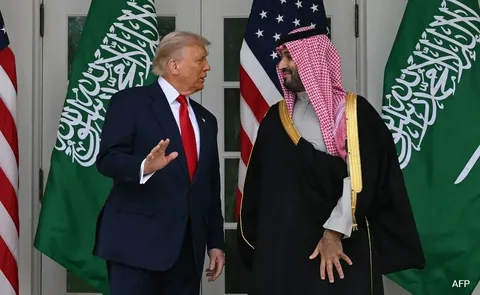
The story of Pakistan’s rise is not just military it is deeply diplomatic. In the months following Marka-i-Haq, Pakistan engaged with over 120 foreign ministers and world leaders. Dar appreciated the role played by US President Donald Trump in helping achieve a ceasefire and acknowledged the contributions of Saudi Arabia and Turkey, along with other friendly nations.
The UAE-Pakistan relationship also strengthened during this period. As Pakistan extended its hand in peace from the Middle East to South Asia UAE stood among the countries that backed Pakistan’s diplomatic efforts. The UAE-Pakistan bond, built on mutual respect and shared interests, proved vital in post-conflict de-escalation.
Dar said that Pakistan had actively maintained extensive diplomatic outreach, engaging with over 120 foreign ministers and global leaders to build consensus for de-escalation between the US and Iran, and facilitating dialogue between key stakeholders.
This was a Pakistan song not of war, but of peace, diplomacy, and strength.
Quotes: Leaders Voice National Pride
Defence Minister Khawaja Asif, speaking at the launch of The Battle of Truth a book and documentary recounting the events of May 2025 said that Pakistan had emerged as a more stable and powerful country, becoming a symbol of stability and a guarantor of peace in the region.
He praised the prompt and decisive response of Pakistan’s armed forces and warned that any future hostility would be met with an even more forceful reply. He added that India’s hegemonic mindset poses a serious challenge to peace and development in South Asia.
Information Minister Atta Tarar said that Pakistan’s principled stance resonated more strongly at the global level, as the international community rejected the Indian narrative due to a lack of credibility and consistency.
These words echo the soul of every patriotic Pakistani Dil se Pakistan hain hum, and this is not just a slogan. It is an identity, a commitment, and a promise.
The ISPR Song: “Dil Se Pakistan” A Nation’s Anthem
No commemoration of Marka-i-Haq would be complete without mentioning the cultural wave it inspired. The ISPR Dil Se Pakistan song became one of the most shared pieces of patriotic content in recent memory. The Dil Se Pakistan song lyrics spoke of sacrifice, love for the homeland, and pride in the armed forces.
The Dil Se Pakistan song video, released by ISPR, moved millions across Pakistan and the Pakistani diaspora worldwide. Phrases like Shukriya Pakistan and images of soldiers, families, and a resilient nation brought tears to the eyes of viewers from Lahore to London, from Karachi to Canada.
This was not just a Pakistan song it was a national prayer. A thank-you. A salute. The Dil say Pakistan song became the unofficial anthem of the post-Marka-i-Haq era, reminding every citizen what it means to love this land with full heart.
The sentiment behind Dil se Pakistan ISPR is simple but profound: we are Pakistani not just by birth, but by choice, by soul, by every breath we take.
Impact: Pakistan’s New Global Role
The victory in Marka-i-Haq has had far-reaching consequences beyond South Asia. Pakistan is now being seen as a serious diplomatic player in the Middle East as well.
Dar stressed that Pakistan’s efforts were aimed at achieving a win-win outcome for all parties, adding that global economic stability, energy prices, and supply chains had been adversely affected by ongoing conflicts.
Pakistan’s growing role as a mediator between Iran and the West, and its vocal support for Palestinian rights and UN resolutions on Gaza, have added new dimensions to its international image. The UAE-Pakistan cooperation in this context has been particularly noteworthy, with both countries working toward a more stable regional order.
Pakistan has consistently played a constructive role in promoting global peace, being one of the leading contributors to United Nations peacekeeping missions.
The world is taking notice. And the message is clear Shukriya Pakistan for being a voice of reason in a world consumed by conflict.
Conclusion: A Stronger Pakistan, A Brighter Future
One year after Marka-i-Haq, Pakistan stands at a historic crossroads. It has defended its sovereignty, strengthened its alliances including with UAE and key Gulf states and earned international respect through principled diplomacy.
The Dil Se Pakistan ISPR spirit is more alive than ever. The Pakistan song of resilience, unity, and love for the motherland plays on. Leaders across the political spectrum have come together to say we are proud, we are strong, we are Pakistan.
As the Dil say Pakistan song continues to echo in hearts across the globe, and as the ISPR video inspires a new generation of patriots, one message stands clear: Pakistan did not just survive it prevailed. Dil se Pakistan hain hum. And that will never change.
Frequently Asked Questions (FAQs)
Q1: Is any Pakistani won the Oscar?
Yes. Pakistani filmmaker Sharmeen Obaid-Chinoy has won the Academy Award (Oscar) twice in 2012 for Saving Face and in 2016 for A Girl in the River: The Price of Forgiveness. She remains the most decorated Pakistani in Oscar history and a source of immense national pride.
Q2: What happened on 5 July 1977 in Pakistan?
On 5 July 1977, General Zia-ul-Haq led a military coup that overthrew the elected government of Prime Minister Zulfikar Ali Bhutto. The operation was called “Operation Fair Play.” It marked the beginning of Zia’s eleven-year military rule and fundamentally reshaped Pakistan’s political, social, and religious landscape.
Q3: Who first declared martial law in Pakistan?
General Ayub Khan was the first to declare martial law in Pakistan on 7 October 1958. He overthrew President Iskander Mirza (who had abrogated the constitution just days before) and became the country’s first military ruler. His era, lasting until 1969, included both development initiatives and growing authoritarian control.