
A Srinagar court has issued a rare death certificate for a man who vanished into Indian army custody nearly three decades ago, reopening painful questions about enforced disappearance in India and the thousands of Kashmir disappearances that remain unresolved. The ruling marks one of the few times a family has received official closure after decades of searching.
Background
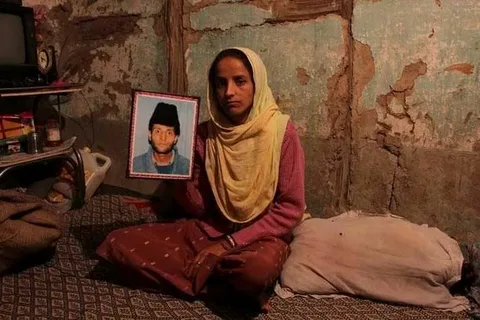
Abdul Rashid Wani, a timber trader from Srinagar, was taken into custody by soldiers of the 2/8 Gorkha Rifles on July 7, 1997, while carrying cash to pay suppliers. His wife and two children waited that evening, dressed for a wedding they never attended together. He never came home.
Wani’s case sits within a much larger pattern of enforced disappearance in India’s Jammu and Kashmir region. According to the Association of Parents of Disappeared Persons, known as APDP Kashmir, as many as 8,000 people have vanished since an armed insurgency erupted against Indian rule in 1989. Most disappearances occurred during the 1990s and early 2000s, when the conflict was at its most intense.
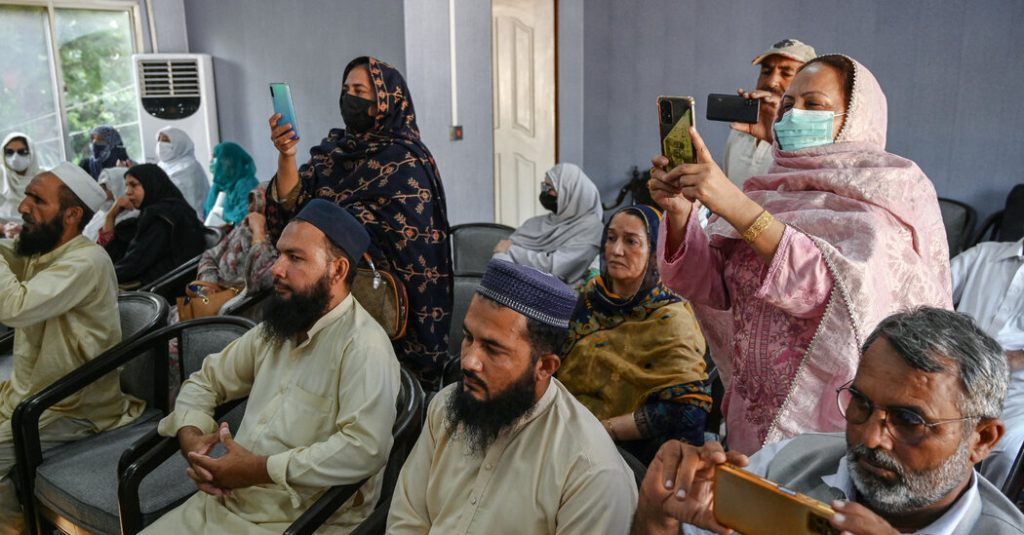
Families of the disappeared have spent years moving between police stations, army camps, courts, and government offices in search of answers. Many of these Kashmir disappearances share a common thread: witnesses who say loved ones were picked up by security forces, followed by decades of official silence.
Details
Wani’s family first filed a habeas corpus petition in 1997, which led the Jammu and Kashmir High Court to order a judicial inquiry. That inquiry identified the army officer involved and confirmed the abduction, yet the case dragged on for years without resolution. A police investigation later concluded that the officer had killed Wani in custody and disposed of his body.
Unable to obtain closure through the missing-persons process, Wani’s wife, Farida Shabnum, and their two sons petitioned a Srinagar court in 2024 to have him formally declared dead. On April 4, 2026, a judicial magistrate ruled in the family’s favor, ordering the issuance of a death certificate under a legal provision allowing presumption of death after seven years of no contact.
The ruling points to a broader problem in enforced disappearance in India cases: even when investigations identify those responsible, accountability rarely follows. Legal experts point to the Armed Forces Special Powers Act, which requires central government approval before security personnel can be prosecuted, as a major obstacle in Kashmir disappearances cases.
Kashmir’s now-defunct State Human Rights Commission had earlier examined unmarked graves identified by APDP Kashmir, finding bodies at 38 locations, with authorities able to identify only a small fraction of the corpses recovered. DNA testing recommended at the time was never carried out, and the commission itself was shut down in 2019 after New Delhi took direct administrative control of the region.
Quotes
A senior lawyer who has represented many affected families, speaking to AFP on condition of anonymity, described the systemic nature of the problem, saying “impunity is built into the system of governance in Kashmir.” The comment reflects a frustration widely shared among families still waiting for answers decades later.
Parveena Ahangar, who founded APDP Kashmir after her own son disappeared in the early 1990s, has spoken publicly for years about the emotional toll of not knowing a loved one’s fate. She has said that unlike death, disappearance denies families the ability to properly mourn, since there is no grave and no certainty.
The United Nations issued its first human rights report on Kashmir in recent years, stating that there is “almost total impunity for enforced or involuntary disappearances,” and noting little progress on investigating complaints, including allegations of mass graves across the valley and Jammu region.
Impact
The Wani ruling could open a path for other families pursuing similar cases of enforced disappearance in India, though legal experts caution that death certificates address only administrative burdens, not accountability. Widows in many of these Kashmir disappearances cases, sometimes called “half-widows” locally, have faced years of legal and religious barriers to remarriage or inheritance without formal proof of death.
Rights groups say the broader climate around Kashmir disappearances has grown more restrictive in recent years. Public vigils once held monthly by APDP Kashmir families in a Srinagar park have stopped since a 2019 crackdown on civil liberties, and part of the site where they once gathered has since been repurposed as a memorial for police killed in the conflict.
Human rights defenders tied to APDP Kashmir have also faced legal pressure themselves. Activists associated with documenting enforced disappearance in India have been arrested under anti-terrorism laws in recent years, a development critics say has further silenced families seeking accountability.
Conclusion
For Wani’s family, the death certificate closes one chapter but leaves the central question of justice unanswered, since no soldier has yet been prosecuted despite an internal probe identifying the officer allegedly responsible. Advocates say the case will likely be cited in future Kashmir disappearances proceedings as families press courts to grant similar recognition.
Whether this ruling encourages broader reform remains uncertain. Rights groups continue to call for India to ratify the international treaty against enforced disappearance, which it signed in 2007 but has never ratified, arguing that doing so would finally criminalize the practice under domestic law and offer families a clearer path to justice.
Frequently Asked Questions
What is an example of an enforced disappearance?
An enforced disappearance occurs when state agents, or people acting with state authorization or support, detain or abduct a person and then deny holding them or conceal their fate, leaving family members without any official information. The case of Abdul Rashid Wani is a clear example: he was taken into custody by army personnel in 1997, and despite a judicial inquiry confirming the abduction and identifying the officer involved, his family received no official confirmation of his fate for nearly 29 years. This pattern, detention followed by official silence or denial, is what distinguishes an enforced disappearance from an ordinary missing-persons case, and it is considered a serious human rights violation under international law.
Who was the last Hindu king of Kashmir?
Historical accounts generally identify Udyan Dev, also spelled Udayanadeva, as the last Hindu ruler of Kashmir, reigning in the early 14th century. However, real power during his reign rested with his wife, Kota Rani, who acted as the de facto ruler and continued governing after his death. Kota Rani was eventually overthrown and killed in 1339 by Shah Mir, a former court official who then founded the Muslim Sultanate of Kashmir, ending centuries of Hindu rule and beginning a new era in the region’s political and religious history.
Who is Parveena Ahangar?
Parveena Ahangar is a Kashmiri human rights activist widely known as the founder of the Association of Parents of Disappeared Persons, or APDP Kashmir. She began organizing after her own teenage son disappeared in the custody of security forces in the early 1990s, and she has spent more than three decades since campaigning alongside other affected families for truth and accountability. Her advocacy has made her one of the most recognized voices on enforced disappearance in India, and she continues to push for investigations into Kashmir’s unresolved missing-persons cases, despite facing ongoing legal and political pressure for her activism.