
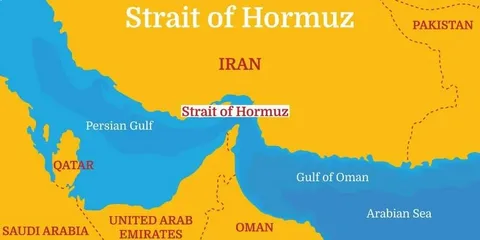
Europe Japan Strait of Hormuz shipping readiness is now officially on record after six of the world’s most powerful economies issued a landmark joint statement pledging to act.
Leaders from the UK, France, Germany, Italy, the Netherlands, and Japan signalled their readiness to support efforts to ensure the safe passage of commercial vessels through the Strait of Hormuz, following recent attacks by Iran in the Gulf.
The Europe Japan Strait of Hormuz shipping declaration is the strongest coordinated international response to the strait crisis since Iran effectively closed it to most commercial traffic at the start of the war.
Background
Europe Japan Strait of Hormuz Shipping — How the Crisis Built
The Europe Japan Strait of Hormuz shipping declaration emerged from a crisis that has been building since the first day of the conflict.
The Strait of Hormuz has been virtually paralysed by the Middle East war, which erupted when the US and Israel began bombing Iran. Since the conflict began, at least 21 commercial vessels including 10 tankers have been attacked or reported incidents in the Gulf, the Strait of Hormuz, or the Gulf of Oman, according to the British naval maritime security agency UKMTO.
In March 2026, threats and attacks by Iran on ships passing through the strait led to a 97 percent drop in traffic, leading to the biggest disruption ever in the global oil supply and a surge in the price of other critical commodities.
The trigger for the Europe Japan Strait of Hormuz shipping joint statement was Iran’s strike on Qatar’s Ras Laffan energy complex — the world’s largest LNG facility — which produced “extensive damage” and pushed energy markets to breaking point.
Details
Europe Japan Strait of Hormuz Shipping — The Joint Statement
The leaders said in their joint statement that they express their readiness to contribute to appropriate efforts to ensure safe passage through the strait. They welcomed the commitment of nations that are engaging in preparatory planning.
The joint statement condemned in the strongest terms recent attacks by Iran on unarmed commercial vessels in the Gulf, attacks on civilian infrastructure including oil and gas installations, and the de facto closure of the Strait of Hormuz by Iranian forces.
The Europe Japan Strait of Hormuz shipping statement also covered energy market stabilisation. The nations said they would take other steps to stabilise energy markets, including working with certain producing nations to increase output, and welcomed the International Energy Agency decision to authorise a coordinated release of strategic petroleum reserves.
The statement did not specify whether the Europe Japan Strait of Hormuz shipping contribution would involve military force, minesweepers, naval escorts, or diplomatic pressure alone.
France’s Contradiction
The Europe Japan Strait of Hormuz shipping declaration arrived despite France’s own leader having taken a contradictory public position just days earlier.
French President Emmanuel Macron said that France is not a party to the conflict and would never take part in operations to reopen or liberate the Strait of Hormuz. Despite this, France signed the joint statement expressing readiness to contribute to appropriate efforts.
The gap between Macron’s statement and France’s signature on the Europe Japan Strait of Hormuz shipping declaration reflects the intense diplomatic pressure the six nations are navigating — caught between not wanting to enter the war and not being able to ignore the economic damage the strait closure is inflicting.
Japan’s Constitutional Constraint
Japan’s inclusion in the Europe Japan Strait of Hormuz shipping statement carries particular significance given its constitutional limitations on military action.
Japanese Prime Minister Takaichi has sought to move Japan away from a pacifist constitution imposed by Washington after World War II, but with the Iran war unpopular at home she has so far not offered to assist in clearing the Strait of Hormuz. The Japanese prime minister told parliament that Tokyo had received no official request from the US but was checking the scope of possible action within the limits of its constitution.
Japan’s signing of the Europe Japan Strait of Hormuz shipping readiness statement represents a significant diplomatic commitment for a country navigating an active constitutional debate about military engagement.
Trump’s Reaction
The Europe Japan Strait of Hormuz shipping pledge follows weeks of US pressure on allies to contribute to reopening the strait.
US President Donald Trump had previously said the US does not need NATO after several member countries declined his request to form a multinational naval force to reopen the Strait of Hormuz. Speaking from the Oval Office, Trump called the refusal a very foolish mistake, claiming that while many countries agree with the US position they are unwilling to contribute. He said he had expected European nations to deploy minesweepers to assist in securing the strait.
The Europe Japan Strait of Hormuz shipping declaration — while carefully worded to avoid confirming military participation — represents a partial response to that pressure.
What Is Actually Moving Through the Strait
Despite the de facto closure, the Europe Japan Strait of Hormuz shipping crisis has produced a more complex picture than a simple blockade.
At least 89 ships crossed the Strait of Hormuz between March 1 and 15 — including 16 oil tankers — down from roughly 100 to 135 vessel passages per day before the war. More than one-fifth of the 89 vessels were believed to be Iran-affiliated, while Chinese and Greek-affiliated ships made up the rest. Vessels with ties to India and Pakistan have also successfully crossed the strait as governments stepped up negotiations.
Iran may have effectively created a safe corridor with some ships passing close to the Iranian coast. The strait is better understood as closed selectively against some traffic, while still functioning for Iranian exports and a narrow set of tolerated non-Iranian movements.
This selective closure is precisely the context that makes the Europe Japan Strait of Hormuz shipping readiness statement significant — six nations are now formally positioning themselves as potential guarantors of free passage for the commercial shipping that Iran is currently choosing to block.
Impact on Japan Shipping and Africa Routes
The Europe Japan Strait of Hormuz shipping crisis has had cascading effects on global trade routes far beyond the Gulf.
With the strait effectively closed to most traffic, global shipping companies including Maersk have suspended cargo bookings in and out of Middle Eastern ports. This has forced rerouting of vessels around the Cape of Good Hope — adding significant time and cost to the japan shipping schedule to africa that connects Japanese manufacturers and exporters with East and West African markets.
For companies and importers tracking routes involving a ship from japan to kenya or other East African destinations, the cape route adds approximately 14 to 21 days compared to the Suez Canal and Red Sea path. The cost of a ship from japan to kenya or any East African port has risen sharply as fuel costs, insurance premiums, and rerouting charges compound the impact of the strait closure.
The japan shipping schedule to africa — across both container and bulk cargo routes — has been significantly disrupted, with delays affecting electronics, vehicles, machinery, and industrial goods moving from Japan to African markets via the Indian Ocean.
Quotes
“We express our readiness to contribute to appropriate efforts to ensure safe passage through the Strait. We welcome the commitment of nations that are engaging in preparatory planning.” — Joint Statement of the UK, France, Germany, Italy, the Netherlands and Japan
“We condemn in the strongest terms recent attacks by Iran on unarmed commercial vessels in the Gulf, attacks on civilian infrastructure including oil and gas installations, and the de facto closure of the Strait of Hormuz by Iranian forces.” — Joint Statement of the Six Nations
“We are not a party to the conflict, and therefore France will never take part in operations to reopen or liberate the Strait of Hormuz.” — French President Emmanuel Macron, days before signing the joint statement
“Hopefully China, France, Japan, South Korea, the UK, and others that are affected by this artificial constraint will send ships to the area so that the Hormuz Strait will no longer be a threat.” — Donald Trump, US President
“In addition to the Strait of Hormuz being blocked, we now have a severe disruption to the basic production of oil and gas.” — James Meadway, economist, on the Qatar LNG strike
“It is better understood as closed selectively against some traffic, while still functioning for Iranian exports and a narrow set of tolerated non-Iranian movements.” — Kun Cao, Client Director, Reddal consulting firm
Impact
For global energy markets, the Europe Japan Strait of Hormuz shipping readiness statement provides some stabilising signal to markets rattled by the Qatar LNG strike. Brent crude was trading above $113 per barrel before the joint statement — any credible commitment to restore passage holds the potential to cap further price rises.
For the six signatory nations, the Europe Japan Strait of Hormuz shipping declaration commits them publicly to a position without yet committing them to specific military or naval action. It buys diplomatic time while the conflict continues.
For Asia’s energy security, the Europe Japan Strait of Hormuz shipping crisis exposes a vulnerability that no strategic reserve release can fully address. Japan, South Korea, and China together account for nearly 60 percent of all oil flowing through the strait. Every week the Europe Japan Strait of Hormuz shipping route remains closed costs Asian economies billions in higher energy costs and rerouting charges.
For African trade routes, the disruption to Europe Japan Strait of Hormuz shipping has pushed cargo onto the Cape of Good Hope route, adding weeks to the japan shipping schedule to africa and significantly increasing the cost of a ship from japan to kenya and other East African destinations. East African importers of Japanese goods face extended wait times and higher landed costs that will take months to normalise even after the strait reopens.
FAQs
Which countries control the Strait of Hormuz?
Iran controls the strait north of the shipping lanes and Oman controls the south. The shipping lanes themselves are located primarily in Omani territorial waters and are governed by international maritime law and the United Nations Convention on the Law of the Sea.Iran’s powerful naval forces have the ability to exert significant control over the strait, but international forces including the US Navy’s Fifth Fleet stationed in Bahrain also operate in the region. The Europe Japan Strait of Hormuz shipping readiness statement is a direct response to Iran’s current exercise of that control.
What countries ship oil through the Strait of Hormuz?
Saudi Arabia dominates oil shipments through the Strait of Hormuz, accounting for more than a third of all exports passing through the corridor. Iraq is the second-largest exporter responsible for nearly a quarter of shipments. The UAE accounts for about 13 percent, Iran itself ships more than 10 percent, and Kuwait rounds out the top five exporters.Together these five countries account for more than 90 percent of crude oil shipments passing through the strait. The Europe Japan Strait of Hormuz shipping crisis directly affects all of them.
How much global shipping goes through the Strait of Hormuz?
The Strait of Hormuz, through which an average of 20 million barrels per day of crude oil and oil products were shipped in 2025, is one of the world’s most critical oil transit chokepoints. With around 25 percent of the world’s seaborne oil trade transiting the strait, and options to bypass it being limited, any disruption to flows through the strait has huge consequences for world oil markets.Around 20 percent of global LNG trade also transits the strait. The closure that prompted the Europe Japan Strait of Hormuz shipping declaration has caused the biggest disruption to global oil supply ever recorded.
Conclusion
The Europe Japan Strait of Hormuz shipping readiness declaration is the most significant multilateral response to the strait crisis since it began.
Six of the world’s largest economies have now formally aligned themselves against Iran’s selective closure of the world’s most important oil chokepoint — even if the precise form of their contribution remains undefined.
The five European countries and Japan expressed readiness to contribute to ensuring passage through the Strait of Hormuz, pledging to take steps to stabilise global energy markets and support the countries most affected by the crisis through the United Nations.
The gap between readiness and action is where this story now lives. The Europe Japan Strait of Hormuz shipping statement has been made. The world is watching to see what follows.