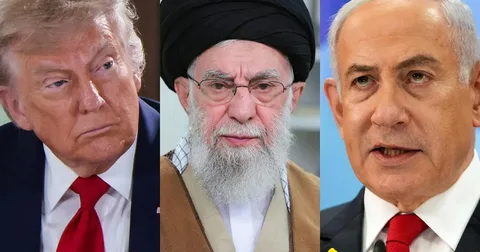
The global multipolar world order is no longer a theoretical framework — it is the operating reality of international politics in 2026. The global multipolar world order has accelerated dramatically in the past 12 months as the Iran war exposed the limits of American unilateral power, BRICS expanded to include nine new members representing 45 percent of the world’s population, and the US dollar’s share of global reserve holdings fell to its lowest level since the Bretton Woods era. The global multipolar world order transition from a US-dominated unipolar system to a more inclusive arrangement of competing and cooperating powers is the defining geopolitical story of the 21st century — and the events of 2025 and 2026 have compressed what analysts expected to be a decade-long transition into a single transformative period.
Background: What Is the Global Multipolar World Order and Where Did It Come From?
The global multipolar world order describes an international system in which power — military, economic, diplomatic, and normative — is distributed among multiple major states rather than concentrated in one dominant power. The global multipolar world order contrasts with the unipolar moment that followed the Soviet Union’s collapse in 1991 — when the United States stood as the world’s sole superpower with no peer competitor capable of challenging its military reach, economic dominance, or ideological influence.
The multipolar world order in 21st century analysis typically identifies the seeds of the current global multipolar world order in four developments: China’s rapid economic ascent from the late 1990s onward, Russia’s reassertion of great power ambitions under Putin from the mid-2000s, the rise of regional powers including India, Brazil, Turkey, and Saudi Arabia as independent actors unwilling to defer automatically to Washington, and the gradual erosion of American credibility following the Iraq and Afghanistan wars.
The global multipolar world order was accelerated by the 2008 global financial crisis — which revealed the fragility of the American-led economic model and gave China the opportunity to demonstrate that state-directed capitalism could deliver growth even when Western markets were collapsing. Multipolar world countries including Brazil, India, and South Africa used the 2008 crisis to expand their international economic footprint and reduce their dependence on Western financial institutions.
The multipolar world order in 21st century framework was further accelerated by Russia’s 2022 invasion of Ukraine — which fractured the post-Cold War European security order and forced every country in the world to choose, consciously or reluctantly, where it stood in a system that was no longer organised around a single American-led consensus.
Details: Global Multipolar World Order — The 2026 Transition
Global Multipolar World Order — The Iran War as Unipolarity’s Breaking Point
The global multipolar world order’s transition from theory to operating reality accelerated sharply with the 2026 Iran conflict. The United States launched Operation Epic Fury and Operation Midnight Hammer — strikes on Iranian nuclear and military infrastructure — without United Nations Security Council authorisation, without a meaningful international coalition, and without the support of traditional European allies including the United Kingdom and France.
The global multipolar world order implications of that diplomatic isolation were immediately visible. Unlike the 2003 Iraq invasion — which assembled 49 countries into a Coalition of the Willing however reluctantly — the 2026 Iran strikes were conducted with only Israel as a full partner. The United Kingdom refused to allow the US to use Diego Garcia for strikes. Germany and France publicly condemned the military action without UN authorisation. The Arab League issued a statement calling for immediate de-escalation.
The global multipolar world order response to the Iran war demonstrated that even America’s closest allies are no longer willing to automatically endorse unilateral American military action — a shift that would have been unthinkable in 1995 but reflects the normalisation of the global multipolar world order in which American decisions must now be negotiated rather than simply announced.
Multipolar World Countries — The BRICS Expansion
The global multipolar world order’s institutional architecture was significantly strengthened in 2024 and 2025 by BRICS expansion — the addition of Saudi Arabia, the UAE, Iran, Ethiopia, Egypt, and Argentina to the original Brazil-Russia-India-China-South Africa grouping. BRICS now encompasses multipolar world countries representing approximately 45 percent of the world’s population and over 35 percent of global GDP at purchasing power parity.
The multipolar world countries within BRICS are not a military alliance — they do not have mutual defence commitments or a unified command structure. The global multipolar world order that BRICS represents is economic, diplomatic, and normative rather than military — a coalition of states that collectively assert the right to organise their economic relationships, their governance models, and their international alignments without American approval.
The global multipolar world order BRICS component is most tangible in trade finance. Multipolar world countries within BRICS have significantly expanded the use of bilateral currency arrangements — reducing dependence on the US dollar in intra-BRICS trade. Russia and China now conduct over 90 percent of their bilateral trade in roubles and yuan rather than dollars. India and Saudi Arabia have expanded rupee-riyal direct payment arrangements. The global multipolar world order is being built one currency swap agreement at a time.
Global Multipolar World Order — The Dollar’s Diminishing Role
The global multipolar world order’s most economically consequential dimension is the gradual erosion of the US dollar’s dominance as the world’s reserve currency. The dollar currently represents approximately 58 percent of global foreign exchange reserves — down from 71 percent in 2000. The global multipolar world order’s reserve currency diversification reflects multipolar world countries’ desire to reduce their exposure to US financial sanctions — which have been used as a geopolitical weapon with increasing frequency and which create sovereign vulnerability for any country holding substantial dollar reserves.
The global multipolar world order implications of dollar erosion are profound for American power. The dollar’s reserve status gives the United States what French President Valéry Giscard d’Estaing famously called an exorbitant privilege — the ability to borrow internationally at artificially low rates, to fund military operations without immediate tax cost, and to impose financial sanctions by controlling access to the dollar clearing system. As the global multipolar world order progresses and more trade is conducted in alternative currencies, that privilege erodes — and with it, a significant dimension of American structural power.
Multipolar World Order in 21st Century — China’s Belt and Road Initiative
The global multipolar world order’s most ambitious institutional project is China’s Belt and Road Initiative — a multi-trillion-dollar infrastructure investment programme spanning more than 140 multipolar world countries across Asia, Africa, Europe, and Latin America. The BRI is not merely an economic programme — it is the global multipolar world order’s most systematic attempt to build an alternative infrastructure to the US-dominated international economic system.
The multipolar world order in 21st century analysis identifies the BRI as the physical embodiment of China’s vision for the global multipolar world order — a network of ports, railways, highways, digital infrastructure, and energy pipelines that connects multipolar world countries to each other through Chinese-financed and Chinese-built systems rather than through Western institutions.
The global multipolar world order BRI dimension has faced significant criticism — from debt sustainability concerns to governance standards to the environmental impact of Chinese-financed infrastructure in developing multipolar world countries. But its scale is undeniable: the BRI has committed over $1 trillion in investments, involves more than 140 multipolar world countries, and has become the global multipolar world order’s most visible alternative to the World Bank and IMF-led development finance model.
Global Multipolar World Order — The Role of the Global South
The global multipolar world order cannot be understood without centring the Global South — the group of developing and emerging economies in Africa, Asia, Latin America, and the Middle East that represent the majority of the world’s population and an increasing share of its economic output. The global multipolar world order is fundamentally about whether these multipolar world countries can move from the periphery of international decision-making to genuine participation in shaping global rules.
The multipolar world order in 21st century framework acknowledges that the previous unipolar order — while delivering real benefits including trade liberalisation, institutional stability, and human rights norms — was designed primarily by and for Western interests. The global multipolar world order transition reflects multipolar world countries demanding that international institutions — the UN Security Council, the IMF, the World Bank, the WTO — be reformed to reflect the actual distribution of global economic and demographic weight rather than the post-World War II power balance.
India’s push for permanent UN Security Council membership, Africa’s demand for dedicated UNSC representation, and BRICS countries’ calls for IMF voting share reform are all expressions of the same global multipolar world order aspiration — an inclusive international system in which the rules are made by all who must live under them, not only by those with the power to impose them.
Multipolar World PDF — Key Academic and Policy Frameworks
For readers seeking multipolar world PDF resources for deeper academic or policy research, the global multipolar world order is extensively documented in the following frameworks. John Mearsheimer’s offensive realism framework in The Tragedy of Great Power Politics analyses why multipolar world countries inevitably compete for regional dominance — a key theoretical foundation for understanding global multipolar world order dynamics.
Fareed Zakaria’s The Post-American World provides the most accessible multipolar world PDF-level analysis of how the global multipolar world order in 21st century reflects the rise of the rest rather than the decline of the West. The Carnegie Endowment for International Peace publishes extensive multipolar world PDF reports on BRICS, BRI, and global governance reform. The Council on Foreign Relations’ multipolar world PDF output covers US strategic responses to the global multipolar world order transition. The Brookings Institution provides multipolar world PDF analysis of the economic and financial dimensions of the global multipolar world order.
Quotes
Vladimir Putin, on the global multipolar world order, St. Petersburg Economic Forum 2025: “The era of Western dominance is definitively over. The global multipolar world order is not a Russian project or a Chinese project — it is the natural result of historical development. The world is returning to a more natural state of diversity.”
Chinese Foreign Minister Wang Yi, on the global multipolar world order and UN reform: “The global multipolar world order requires reformed multilateral institutions that give equal voice to developing countries. The current international architecture reflects the power distribution of 1945 — not 2026.”
Indian Prime Minister Narendra Modi, on India’s role in the global multipolar world order: “India is not non-aligned — India is multi-aligned. We are a proud partner of every multipolar world country that shares our commitment to a fairer, more inclusive international order.”
UN Secretary-General António Guterres, on the global multipolar world order transition: “The world is moving toward a multipolar order faster than our institutions can adapt. The risk is not multipolarity itself — it is multipolarity without multilateralism. Without reformed global institutions, a multipolar world is a more dangerous world.”
Former US National Security Advisor, on managing the global multipolar world order: “American foreign policy must adapt to a world in which we are the leading power but not the only power. The global multipolar world order is a reality — the question is whether we engage it strategically or resist it futilely.”
Kenyan President William Ruto, speaking for African multipolar world countries: “Africa is not choosing between the United States and China. Africa is choosing Africa. The global multipolar world order gives us options we never had — and we intend to use them to develop our continent on our terms.”
Impact: What the Global Multipolar World Order Means
For International Security
The global multipolar world order’s security implications are the most contested in the academic and policy literature on multipolar world PDF research. Classical realist theory — most associated with Mearsheimer — argues that the global multipolar world order is inherently more dangerous than bipolarity because multiple competing powers create more potential flashpoints, more alliance instability, and less predictable deterrence dynamics. The historical record of the multipolar world order in 21st century’s 19th century predecessor — the Concert of Europe — shows both the stability and fragility of multipolar management.
The global multipolar world order’s 2026 security landscape is defined by three simultaneous great power tensions: the Iran war testing US-China-Russia triangular dynamics, the Ukraine conflict reshaping European security, and the Taiwan Strait remaining the most dangerous potential flashpoint in the global multipolar world order system.
For Global Economic Governance
The global multipolar world order’s economic implications centre on the future of the dollar, the reform of the IMF and World Bank, and the contest between the BRI and Western-led development finance. Multipolar world countries in the Global South are the key swing actors — their decisions about which global multipolar world order economic framework to participate in will determine whether the 21st century sees genuine economic multipolarity or a bifurcated global economy split between US-led and China-led spheres.
For International Law and Norms
The global multipolar world order poses fundamental questions for international law. The rules-based international order — a phrase Western governments use to describe the post-1945 institutional framework — is contested by multipolar world countries that argue the rules were never genuinely universal and were selectively enforced in ways that reflected Western interests. The global multipolar world order transition requires either reform of existing institutions or the emergence of parallel normative frameworks — both of which involve significant uncertainty for the stability of international relations.
For Developing Nations Including Pakistan
For developing multipolar world countries like Pakistan, the global multipolar world order offers both opportunities and risks. The global multipolar world order’s opportunity is real — more competition among major powers for developing country partnerships means more bargaining power, more financing options, and less conditionality than the unipolar order imposed. Pakistan’s ability to work simultaneously with the IMF, China’s BRI programme, the Gulf states, and Russia on energy imports reflects the practical value of the global multipolar world order for a country that would have faced far more constrained choices in the unipolar era.
Conclusion
The global multipolar world order is not a future prospect — it is the present geopolitical reality. The multipolar world countries driving this transition represent the majority of humanity, a growing share of global GDP, and an increasingly assertive claim to equal participation in shaping the rules of international life.
The global multipolar world order is not without risks. The multipolar world order in 21st century academic literature is clear that multipolarity without effective multilateral institutions — without a functioning UN, a representative IMF, and enforceable international law — creates instability rather than fairness. The global multipolar world order’s promise of inclusion can only be realised if the transition from unipolarity produces reformed institutions rather than institutional collapse.
The multipolar world PDF of academic research on this transition runs to thousands of pages. The multipolar world countries making this transition represent billions of lives. The global multipolar world order question of whether the 21st century delivers a more inclusive international system — or a more dangerous one — is the defining geopolitical question of our era.
The answer will be shaped by whether the major powers of the global multipolar world order — the United States, China, Russia, India, the European Union — choose to build the institutions that multipolarity requires, or whether each pursues its own interests in a system that has lost its organising principle without finding a replacement.
The global multipolar world order has arrived. The inclusive global order it promises is still being built — or broken.
FAQs
What is a multipolar world order?
Multipolarity is a distribution of power in which more than two states have similar amounts of power.
What are the features of a multipolar world?
A multipolar world is distinguished by a diffusion of power across several actors, preventing any single state from dominating international affairs. Key features include: Multiple power centres: Economic, military, and diplomatic power is distributed among various nations or regional blocs.
What is the concept of world order?
Prescriptively, world order refers to a preferred arrangement of power and authority that is associated with the realization of such values as peace, economic growth and equity, human rights, and environmental quality and sustainability.