
The world is facing its most severe global oil supply disruption in recorded history. The closure of the Strait of Hormuz has sent oil price levels to record highs, drained global oil inventories at an alarming rate, and placed the entire global economy on the edge of a full-blown energy catastrophe.
Background: How Did We Get Here?
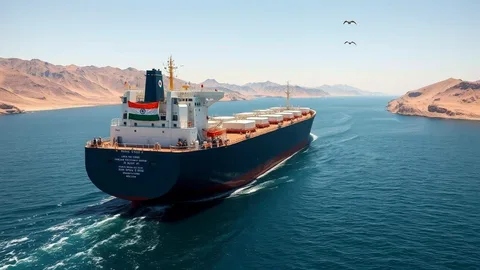
For decades, the Strait of Hormuz has served as the world’s most critical oil transit chokepoint. About 25% of the world’s seaborne oil trade and 20% of the world’s liquefied natural gas passed through it before the crisis began.
That changed on 28 February 2026, when the United States and Israel launched air strikes on Iran. In retaliation, Iran launched missile and drone attacks on Israel, US military bases, and US-allied Gulf states, and the Iranian Revolutionary Guard Corps issued warnings forbidding passage through the strait, boarded and attacked merchant ships, and laid sea mines.
The consequences have been catastrophic for global oil production, global oil stocks, and global oil demand worldwide.
The Scale of the Global Oil Supply Disruption
This is not a regional shock. This is a global emergency. The IEA’s Executive Director has said the combined impacts amount to “the greatest threat to global energy security in history.”
Global oil supply plummeted by 10.1 million barrels per day to 97 mb/d in March, with continued attacks on energy infrastructure in the Middle East and ongoing restrictions to tanker movements through the Strait of Hormuz leading to the largest disruption in history.
Crude and oil product flows through the Strait of Hormuz plunged from around 20 million barrels per day before the war to just over 2 mb/d in March. The numbers are staggering and unprecedented in the history of global oil markets.
Oil Price Hits Record Levels
The collapse in global oil production has had a direct and devastating impact on the oil price. Physical crude oil prices surged to record levels near $150 per barrel, far above prices in futures markets, with the physical-futures disconnect becoming increasingly acute.
Brent futures finished April more than 55% above their pre-conflict levels. Some markets for oil products were particularly affected, including diesel and jet fuel, whose benchmark prices more than doubled after the war began.
For ordinary consumers, this oil price explosion means higher fuel costs at the pump, rising food prices, and broader inflation that threatens livelihoods globally.
Global Oil Inventories Under Severe Pressure
The drawdown of global oil inventories has been dramatic. Global observed oil inventories fell by 85 million barrels in March, with stocks outside of the Middle East Gulf drawn down significantly.
Global observed oil stocks stood at 8,210 mb in January their highest level since February 2021. The OECD accounted for 50%, Chinese crude stocks 15%, oil on water 25%, with the remainder in other non-OECD countries. Those cushions are now rapidly being consumed.
In response, IEA member countries unanimously agreed on 11 March to make 400 million barrels of oil from their emergency reserves available to the market to address disruptions stemming from the war in the Middle East. This represents the largest emergency release in IEA history.
Global Oil Production Collapses Who Is Most Affected?
The disruption to global oil production has been unevenly distributed but universally felt. OPEC+ production fell 9.4 mb/d month-on-month to 42.4 mb/d, while non-OPEC+ supply declined 770 kb/d.
With traffic through the Strait severely disrupted and limited capacity to bypass the crucial waterway, Gulf countries have cut total oil production by more than 14 mb/d.
Producers outside the Gulf have tried to fill the gap. Exports via alternative routes most notably from the west coast of Saudi Arabia and the port of Fujairah in the UAE increased from 3.9 mb/d in February to 6.4 mb/d on average. But this falls far short of replacing lost volumes.
Expert Quotes on the Crisis
The IEA has been unambiguous about the severity of this situation. IEA Executive Director Fatih Birol stated: “The war in the Middle East is creating a major energy crisis, including the largest supply disruption in the history of the global oil market. In the absence of a swift resolution, the impacts on energy markets and economies are set to become more and more severe.”
Analysts from institutions like Barclays and Goldman Sachs highlighted risks of sustained high oil prices if the strait is restricted over a longer period, with disruptions also raising concerns over inflation and potential economic downturns in oil-importing nations.
Global Oil Demand Destruction Is Now Underway
High oil prices are now beginning to destroy global oil demand, which is a grim economic signal. Widespread flight cancellations in the Middle East and large-scale disruptions to LPG supplies are expected to curb global oil demand by around 1 mb/d during March and April.
Airlines are being affected by the shortage of jet fuel in parts of Asia and Oceania. Meanwhile, economies of most countries are expected to be adversely affected by the crisis, leading to inflation and heightened risks of stagflation and recession.
The IEA Oil Market Report notes that soaring oil prices are functioning as the main driver of demand destruction, especially in the OECD where the pass-through into retail fuel prices is already well underway.
Global Impact Who Suffers Most?
Asia is bearing the brunt of this global oil supply disruption. In 2024, around 84% of the crude oil and 83% of LNG passing through the Strait went to Asia; nearly 70% of the oil went to China, India, Japan, and South Korea.
Countries such as Zimbabwe, Pakistan, Bangladesh, Nigeria, and Vietnam face severe shortages of fuel. Europe, though somewhat buffered by alternative supply routes, faces rising costs for diesel, jet fuel, and LPG.
The British think tank The Food Policy Institute warned of long-term increases in food prices due to disruption in fuel and fertiliser markets, as over 30% of global urea widely used in agriculture and produced from natural gas is exported from Gulf countries through the Strait.
What Does the IEA Oil Market Report Say About the Future?
The IEA Oil Market Report (OMR) remains cautiously optimistic but warns of severe downside risks. The IEA’s April report presents a forecast that assumes a resumption of regular deliveries of oil and gas from the Middle East to international markets by mid-year, although not back to pre-conflict levels.
The report also presents an alternative case where risks to energy production and trade in the Middle East remain high due to a prolonged conflict in this case, energy markets and economies around the world need to brace for significant disruptions in the months to come.
The IEA also confirms that resuming flows through the Strait of Hormuz remains the single most important variable in easing the pressure on energy supplies, prices, and the global economy.
Opinion This Crisis Exposes the World’s Energy Vulnerability
This global oil supply disruption is not just a geopolitical event. It is a mirror held up to decades of complacency about energy security. The world built a globalised oil system around a single, narrow chokepoint and now that chokepoint is closed.
For years, analysts warned that dependence on the Strait of Hormuz was the Achilles heel of the global energy system. Iran had repeatedly threatened to close the key Strait of Hormuz if attacked, and closure even for a limited period was always known to have a major impact on global oil and gas markets.
Those warnings went unheeded. Now global oil inventories are falling fast, global oil production has collapsed, and oil price records are being broken weekly. The IEA Oil Market Report is sounding the alarm clearly and governments must respond with urgency and coordination.
Conclusion What Happens Next?
The path forward depends almost entirely on diplomacy and the restoration of shipping through the Strait of Hormuz. Even after Iran and the United States announced a ceasefire on 8 April, ship traffic through the Strait of Hormuz remained far below pre-war levels.
Global oil stocks continue to be consumed. Oil prices remain dangerously elevated. Global oil demand is contracting under economic pressure. And the IEA Oil Market Report continues to serve as the world’s most critical guide through this unprecedented storm.
The world must act on emergency reserves, on diplomatic resolution, and on accelerating the energy transition before this global oil supply disruption permanently reshapes the economic order.
FAQs
Is the global oil supply going down?
Yes. According to the IEA Oil Market Report, global oil supply dropped sharply in early 2026 due to the conflict in the Middle East and the near-closure of the Strait of Hormuz. Global oil production fell by over 10 million barrels per day in March 2026 alone the largest single-month drop in recorded history. Global oil inventories are being drawn down rapidly as a result.
Who holds 80% of the world’s oil?
The vast majority of the world’s proven oil reserves are concentrated in OPEC+ member nations. Saudi Arabia, Iran, Iraq, the UAE, Kuwait, Venezuela, and Russia collectively hold the largest share of global oil stocks and production capacity. The Middle East alone accounts for a dominant portion of global oil supply, which is precisely why the current disruption to the Strait of Hormuz has had such a devastating effect on oil price and global oil demand.
What was the biggest oil disruption in history?
The current 2026 Strait of Hormuz crisis is now officially the largest oil supply disruption in history, surpassing the 1973 Arab oil embargo and the 1979 Iranian Revolution. The IEA has described it as “the largest supply disruption in the history of the global oil market,” with global oil production losses exceeding 10 million barrels per day and global oil inventories falling at a record pace. Oil price levels have reached near $150 per barrel historic highs driven by the collapse in global oil supply through the Strait.