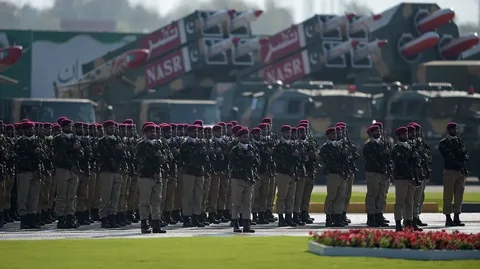


Gulf nations are rapidly upgrading their military arsenals, forging international defense partnerships, and activating regional security frameworks as tensions with Iran continue to intensify across the Middle East. The question on every analyst’s mind is whether Gulf countries defense capabilities are strong enough to withstand a direct or proxy conflict with Tehran.
Background: Why Gulf Countries Are on High Alert
The Middle East has entered one of its most volatile security cycles in recent memory. Iran’s nuclear ambitions, its network of proxy forces stretching from Yemen to Iraq and Lebanon, and its increasingly aggressive posture in the Strait of Hormuz have placed Gulf Cooperation Council (GCC) nations on a sustained war footing.
Experts in Middle East affairs say that the threat is no longer theoretical. Iranian ballistic missiles, armed drones, and naval provocations have already demonstrated the Islamic Republic’s willingness to use force. This has forced Saudi Arabia, the UAE, Qatar, Kuwait, Bahrain, and Oman to reassess their defense strategies at the highest levels of government.
The Middle East Council and regional security bodies have repeatedly flagged the widening military imbalance between Iran’s asymmetric warfare capabilities and the Gulf’s conventional defense posture. Defense strategists, including voices close to Rashid Al Mohanadi and other Gulf security advisors, have called for a unified Gulf defense doctrine that goes beyond bilateral agreements with Western powers.
Gulf Countries Defense Weapons: What Are They Working With?
When examining Gulf countries defense weapons, the picture is one of massive investment and rapid modernization, though with significant gaps that Iran continues to exploit.
Saudi Arabia operates one of the largest defense budgets in the world, spending over $75 billion annually on its military. Its arsenal includes American-made Patriot PAC-3 air defense missile systems, F-15 fighter jets, and an expanding fleet of naval vessels. Saudi Arabia has also invested heavily in its missile defense capabilities following repeated Houthi drone and ballistic missile attacks launched from Yemen with Iranian support. The question of whether will Saudi Arabia go to war with Iran has moved from academic debate to active strategic planning in Riyadh.
The United Arab Emirates fields the THAAD (Terminal High Altitude Area Defense) system, one of the most advanced missile interception platforms in the world. The UAE also operates a sophisticated air force equipped with F-16 Block 60 Desert Falcon jets, which are considered among the most advanced variants of that aircraft anywhere globally. The UAE’s defense cooperation with the United States, France, and increasingly with Israel through the Abraham Accords has significantly elevated its military readiness.
Qatar hosts the largest American military base in the Middle East, Al Udeid Air Base, making it a cornerstone of Western defense posture in the region. Qatar has also invested substantially in advanced combat aircraft, including the Eurofighter Typhoon and the American F-15QA.
Kuwait, Bahrain, and Oman maintain smaller but strategically important forces. Bahrain hosts the US Navy’s Fifth Fleet headquarters, giving the entire Gulf region a permanent American naval presence that serves as a powerful deterrent against Iranian naval aggression in the Persian Gulf and the Strait of Hormuz.
The 7 Khaleej Countries and Their Collective Defense Architecture
Understanding Gulf security requires clarity on the composition of the region. The seven Khaleej, or Gulf, countries are Saudi Arabia, the United Arab Emirates, Qatar, Kuwait, Bahrain, Oman, and Iraq. While Iraq is geographically a Gulf nation, it operates outside the GCC framework due to its complex internal political situation and Iranian influence over significant portions of its government and military.
The six GCC members have attempted to build a collective defense framework, though analysts in Middle East affairs consistently note that true military integration remains elusive. Each state maintains its own command structure, procurement preferences, and strategic calculations, making unified operations a significant challenge in any real conflict scenario.
The Middle East Council has long advocated for deeper institutional military cooperation among GCC members, arguing that fragmented defense structures are precisely the vulnerability that Iran’s asymmetric warfare strategy is designed to exploit.
Rashid Al Mohanadi and the Push for Gulf Defense Modernization
The conversation around Gulf countries defense has been shaped significantly by figures in regional security and policy circles. Rashid Al Mohanadi, associated with defense and technology policy in Qatar, represents the broader push among Gulf technocrats and security professionals to modernize not just the hardware of Gulf defense but the strategic thinking behind it.
The argument advanced by analysts close to this school of thought is that Gulf countries cannot rely indefinitely on Western security guarantees, particularly as American strategic attention shifts toward the Indo-Pacific and domestic political dynamics in Washington make long-term Middle East commitments increasingly uncertain. This view is pushing Gulf states to invest in indigenous defense industries, cybersecurity capabilities, and artificial intelligence applications for military use, all of which represent a significant evolution in how Gulf countries defense doctrine is being shaped for the coming decade.
Will Saudi Arabia Go to War With Iran?
The question of whether will Saudi Arabia go to war with Iran is perhaps the most consequential security question in the Middle East today. The latest with Iran war analysis from regional experts suggests that both sides are acutely aware of the catastrophic consequences of direct military confrontation and are, for now, choosing to fight through proxies and economic pressure rather than direct engagement.
Saudi Arabia and Iran came perilously close to outright conflict following the September 2019 drone and cruise missile attacks on Saudi Aramco facilities at Abqaiq and Khurais, which temporarily knocked out nearly five percent of global oil supply. Iran denied direct involvement, but American and Saudi intelligence assessments pointed firmly to Iranian-origin attacks.
Since then, a fragile diplomatic process has produced a 2023 Chinese-brokered normalization agreement between Riyadh and Tehran. However, military experts caution that diplomatic engagement has not resolved the fundamental strategic rivalries between the two powers, particularly over Yemen, Iraq, Lebanon, and Bahrain. The latest with Iran war concerns center on whether Iran’s accelerated nuclear enrichment program will eventually force a military response, either from Saudi Arabia, Israel, or the United States.
Riyadh has made clear in private diplomatic channels that a nuclear-armed Iran would be an existential threat requiring a Saudi nuclear deterrent of its own, a prospect that would fundamentally reshape the security landscape of the entire Middle East.
Latest With Iran War: Where Does the Threat Stand in 2026?
The latest with Iran war assessments paint a picture of escalating pressure without immediate all-out conflict. Iran has continued to accelerate its nuclear enrichment activities, bringing it closer than at any previous point to weapons-grade uranium production. International negotiations have stalled, and the window for a diplomatic resolution is narrowing.
Iran’s proxy network remains active and dangerous. Hezbollah in Lebanon, Hamas in Gaza, the Houthis in Yemen, and various Shia militias in Iraq continue to operate as instruments of Iranian strategic pressure against Israel, Saudi Arabia, and American interests across the region. This proxy warfare model allows Iran to impose costs on its adversaries while maintaining a degree of plausible deniability.
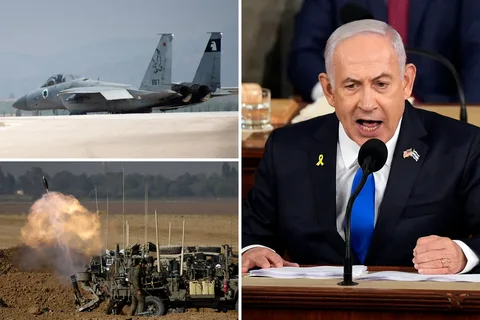
Gulf countries are responding by accelerating their own military readiness. Saudi Arabia has increased its air defense deployments along its northern and western borders. The UAE has expanded its intelligence-sharing arrangements with both the United States and Israel. And the GCC as a whole is investing in early warning systems and integrated air defense networks designed to provide layered protection against the kind of mass drone and missile salvos that Iran has demonstrated it can deploy.
Quotes: What Experts Are Saying
Regional defense analysts and policymakers have weighed in extensively on the state of Gulf countries defense and the Iranian threat.
Anthony Cordesman, a senior Middle East affairs analyst at the Center for Strategic and International Studies, has argued that Gulf states have made “remarkable progress in acquiring advanced defense systems” but that “no amount of hardware can substitute for integrated command, training, and battle management systems that treat the GCC as a single defensive entity.”
Former NATO officials consulting on Gulf security have noted that the introduction of THAAD in the UAE and Patriot upgrades across Saudi Arabia have meaningfully improved the upper-tier missile defense picture, but that low-flying cruise missiles and swarming drones remain a persistent vulnerability that no current system fully addresses.
Gulf-based security analysts close to institutions such as the Middle East Council have stressed that the Abraham Accords, which normalized relations between Israel, the UAE, and Bahrain, have opened previously unthinkable defense cooperation channels, including intelligence sharing and potential coordination on Iranian threat monitoring that enhances the overall defensive posture of the region.
Global Middle East Impact: What a Gulf-Iran Conflict Would Mean for the World
The stakes of this military confrontation extend far beyond the borders of the Gulf. Global Middle East analysts consistently identify a Gulf-Iran conflict as among the most economically and geopolitically disruptive scenarios facing the international order.
Approximately 20 percent of the world’s oil supply passes through the Strait of Hormuz daily. Any conflict that closes or seriously disrupts this waterway would trigger an immediate global energy crisis, with oil prices potentially spiking to levels not seen since the early 1970s oil embargo. The economic consequences for energy-importing nations in Asia, Europe, and beyond would be severe and long-lasting.
Beyond energy markets, a Gulf conflict would draw in external powers. The United States, which maintains approximately 40,000 military personnel across Gulf bases, would face immediate pressure to intervene. China, which has deepened its economic and diplomatic ties with both Iran and the Gulf states, would face a painful strategic dilemma. Russia, already engaged in its own military adventures in Ukraine, would likely seek to exploit any Western distraction in the Gulf to advance its own interests.
From a Global Middle East perspective, the region is at a genuine historical inflection point. The decisions made in Riyadh, Abu Dhabi, Tehran, and Washington over the coming months and years will determine whether the Gulf enters a new era of managed security competition or slides toward a conflict with global consequences.
Conclusion: The Road Ahead for Gulf Security
Gulf countries defense capabilities have advanced dramatically over the past decade. The combination of American-supplied advanced systems, growing indigenous defense industries, expanding regional cooperation under frameworks like the Middle East Council, and new partnerships enabled by the Abraham Accords has produced a Gulf security posture that is significantly stronger than it was a generation ago.
However, significant vulnerabilities remain. Drone warfare, cyber attacks, and Iran’s asymmetric proxy strategy continue to pose challenges that conventional military hardware alone cannot fully address. The question of whether will Saudi Arabia go to war with Iran, and whether Gulf countries can truly defend themselves against a sustained Iranian offensive, ultimately depends as much on political unity and strategic coordination as it does on weapons systems.
Frequently Asked Questions (FAQs)
Does the UAE have any defense system?
Yes, the UAE operates one of the most sophisticated layered defense networks in the entire Middle East region. At the top tier, the UAE deploys the THAAD (Terminal High Altitude Area Defense) system, which the country acquired from the United States and which is capable of intercepting ballistic missiles during their final descent phase at very high altitudes. Beneath this, the UAE operates Patriot missile batteries for medium-range threats, the French-designed Crotale system for short-range air defense, and an advanced radar and early warning network that provides continuous coverage of its airspace. The UAE Air Force, equipped with F-16 Block 60 Desert Falcon aircraft, widely regarded as the most advanced F-16 variant ever exported, also provides offensive and defensive air power.
Does Saudi Arabia have a good defense system?
Saudi Arabia maintains one of the largest and most extensively funded defense systems in the world, supported by a military budget that consistently ranks among the top ten globally and exceeds $75 billion per year. The Kingdom operates an extensive Patriot PAC-3 missile defense network, which has been battle-tested against real Houthi drone and ballistic missile attacks launched from Yemen, many of which were equipped with Iranian-supplied technology. Saudi Arabia also fields a large and capable air force built around F-15 Strike Eagle jets, with hundreds of advanced aircraft available for both offensive strikes and defensive operations.
What are the 7 Khaleej countries?
The term Khaleej refers to the Gulf region in Arabic, and the seven countries geographically situated along or near the Arabian Gulf are Saudi Arabia, the United Arab Emirates, Qatar, Kuwait, Bahrain, Oman, and Iraq. Of these seven, six Saudi Arabia, the UAE, Qatar, Kuwait, Bahrain, and Oman are members of the Gulf Cooperation Council, the primary political and economic bloc that also serves as the framework for regional security cooperation. Iraq, while geographically a Gulf country, is not a GCC member due to its distinct political trajectory, the significant Iranian influence within its government and armed forces, and the lasting instability created by decades of conflict. Each of the six GCC members maintains its own national armed forces and defense relationships, while also participating in the Peninsula Shield Force, the GCC’s collective military structure.