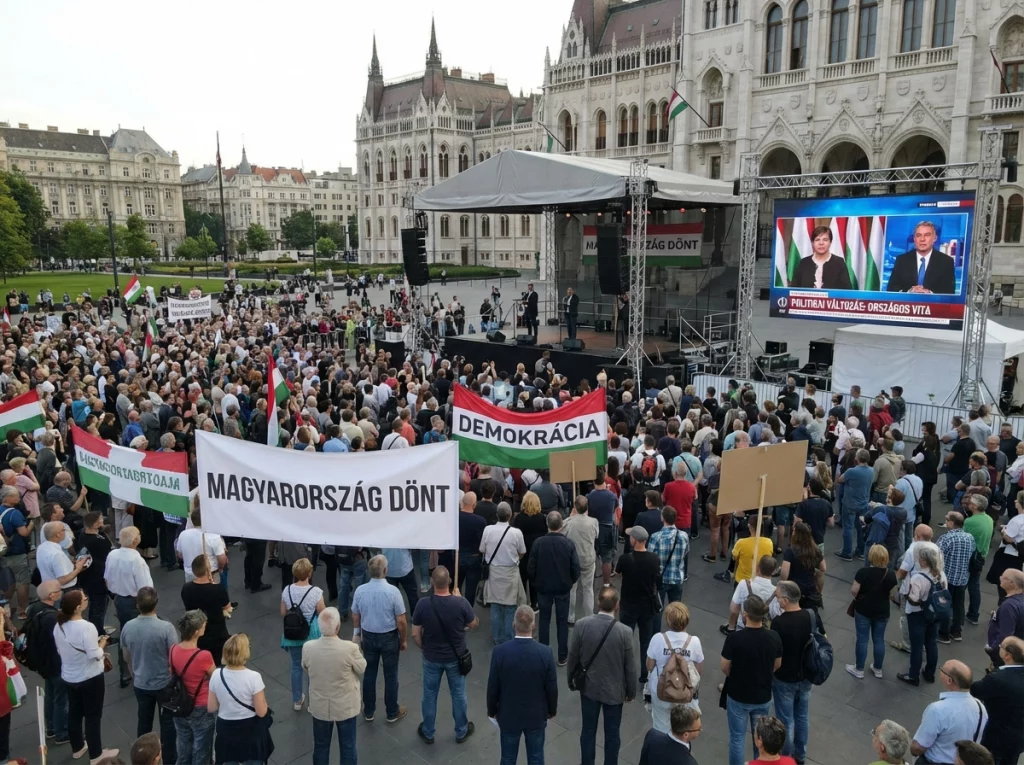
Hungary political change has become a central topic as the country experiences shifting political dynamics and rising public engagement. With evolving leadership debates and growing opposition voices, many citizens are questioning the future direction of governance in Hungary. The discussion reflects a broader demand for transparency, reforms, and accountability.
Election Results Reflect Shifting Public Sentiment
Recent hungary election results have highlighted changing voter preferences and increasing competition among political forces. While the ruling party continues to hold significant influence, opposition groups are gaining momentum. These results suggest that Hungary political change is not just a possibility but an ongoing process driven by public opinion.
Rise of Péter Magyar in Politics
A key figure in the current landscape is Péter Magyar, who has emerged as a strong voice advocating for reform. His growing popularity reflects a desire among many Hungarians for new leadership and fresh ideas. As discussions around Hungary political change intensify, his role continues to attract attention both domestically and internationally.
Political Views and Reform Agenda
Péter magyar political views focus on transparency, anti-corruption measures, and strengthening democratic institutions. His approach appeals to voters seeking accountability and modernization of governance. These ideas align with broader calls for Hungary political change, especially among younger and urban populations.
Current Political Landscape in Hungary
Hungary’s political environment is currently shaped by a dominant ruling party alongside a fragmented opposition. While stability has been maintained, critics argue that reforms are needed to ensure balanced governance. Hungary political change discussions often center on how to achieve this balance while maintaining economic and social stability.
Public Demand for Accountability
Citizens across Hungary are increasingly vocal about issues such as governance, economic opportunities, and institutional transparency. Public demonstrations and debates indicate a growing awareness and participation in political processes. This engagement is a key driver behind Hungary political change.
Impact on Europe and International Relations
Hungary’s political developments are closely watched across Europe. Changes in leadership or policy direction could influence the country’s relationship with the European Union. Hungary political change may also affect regional cooperation and broader European policies.
Challenges Facing Political Transformation
Despite growing momentum, Hungary political change faces several challenges, including political polarization and institutional resistance. Achieving meaningful reform requires consensus, strategic planning, and sustained public support.
Conclusion
Hungary political change represents a critical moment in the nation’s political journey. With emerging leaders like Péter Magyar and evolving voter sentiment, the country is at a crossroads. The coming years will determine how these changes shape Hungary’s future governance and role in Europe.
FAQs
What is Hungary’s current political situation?
Hungary currently has a dominant ruling party, but opposition movements and public demand for reforms are increasing.
What political party is in power in Hungary?
The ruling party in Hungary is led by Prime Minister Viktor Orbán and his political alliance.
Who is the new Hungarian leader?
While Viktor Orbán remains in power, emerging figures like Péter Magyar are gaining attention as potential future leaders.