

Summary
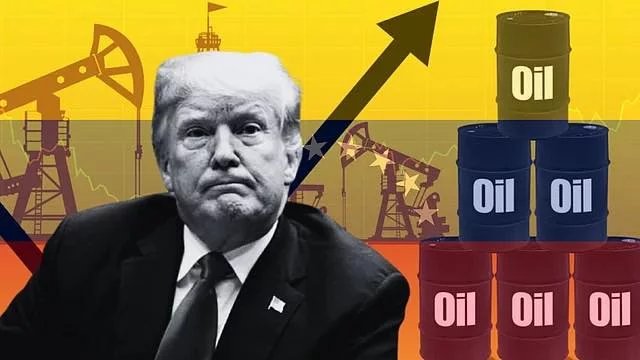
Venezuela oil reserves worth trillions of dollars on paper, based on the country’s 303 billion barrels of proven crude. The new US partnership, covering more than 65 billion of those barrels, has revived global interest in exactly how much that oil could be worth in practice. The real figure, analysts say, depends heavily on extraction costs, crude quality, and years of missing investment.
Background
Venezuela’s reputation as an oil superpower dates back to the early twentieth century, when the country became one of the first major non-Middle Eastern oil exporters. That legacy carried into the OPEC era, and by 2007 reclassified reserves in the Orinoco Belt pushed Venezuela’s official numbers past Saudi Arabia’s for the first time. On paper, the country has led global rankings ever since.
Turning that paper wealth into cash has always been the harder part. Years of state control, underinvestment, and international sanctions steadily eroded Venezuela’s production capacity, even as its reserve figures kept climbing. The latest US partnership, announced this week, is the most significant attempt yet to close that gap between theoretical and realised value.
Details
At current global oil prices, Venezuela’s 303 billion barrels would carry a theoretical market value running into the tens of trillions of dollars. However, that headline number rarely survives contact with reality, since a large share of Venezuela oil reserves consists of extra-heavy crude from the Orinoco Belt, which costs far more to produce than lighter conventional oil found in Saudi Arabia or the Gulf states.
Industry estimates put Venezuela’s production cost at close to 28 dollars per barrel, compared with under 9 dollars per barrel in Saudi Arabia and around 23 dollars per barrel for US shale. That cost gap eats directly into the real-world value of each barrel extracted, which is why raw reserve size tells only part of the story when assessing Venezuela oil reserves worth.
The new US agreement covers more than 65 billion barrels, roughly a fifth of the country’s total reserves, through a partnership structure with private companies rather than outright government ownership. Secretary of State Marco Rubio said the deal is expected to draw close to 100 billion dollars in fresh private investment into Venezuela’s oil sector, money that would be needed to rebuild ageing infrastructure, pipelines, and refining capacity before any of the reserves can generate meaningful returns.
Quotes
Energy economist Francisco Monaldi has argued that Venezuela’s officially reported reserves overstate what is realistically recoverable using current technology, suggesting a more conservative figure closer to 100 to 110 billion barrels rather than the full 303 billion often cited. That distinction matters enormously for anyone trying to estimate Venezuela oil reserves worth in real financial terms, since unrecoverable barrels have no practical market value.
Secretary Rubio, in his public comments on the deal, framed the investment figure as transformative for Venezuela’s economy, saying it would support thousands of high-paying jobs and help fund the country’s broader reconstruction. Analysts covering the energy sector have been more cautious, noting that similar promises of major investment have stalled in the past due to legal uncertainty and Venezuela’s difficult operating environment.
Impact
If even a portion of the promised 100 billion dollars in investment materialises, it could meaningfully boost Venezuela’s oil output over the next several years, moving production closer to the country’s technical potential. That would matter globally too, since additional Venezuelan barrels could ease pressure on oil prices at a time when US strategic reserves have fallen and gas prices remain elevated.
For global energy markets, the deal is a reminder that reserve rankings and real economic value are two very different things. Iran and Saudi Arabia, despite holding smaller reserves than Venezuela, have historically extracted far more value from their oil because of lower production costs and more stable investment climates, something Venezuela will need to replicate if this deal is to succeed.
Domestically, the psychological and economic impact could be significant even before major output increases materialise. Signs of renewed foreign investment often improve investor confidence and currency stability, both of which have been in short supply in Venezuela for years.
Conclusion
Whether Venezuela oil reserves worth trillions on a balance sheet ever translates into that much real economic value will depend on execution rather than geology. The country has never lacked oil in the ground; what it has lacked is the capital, technical expertise, and stability needed to bring that oil to market efficiently. The coming months, as details of the US partnership become clearer, will offer the first real test of whether this latest deal can finally close that long-standing gap.
FAQs
Is Venezuela the richest oil country?
By reserve volume, Venezuela is the richest oil country in the world, holding an estimated 303 billion barrels, ahead of Saudi Arabia and Iran. In terms of realised national wealth, however, Venezuela ranks far lower than many smaller oil producers, since high extraction costs and years of underinvestment have prevented the country from converting its Venezuela oil reserves worth into broad economic prosperity.
Who holds 80% of the world’s oil?
OPEC member nations collectively hold close to 80 percent of the world’s proven oil reserves, with Venezuela, Saudi Arabia, Iran, Iraq, and Kuwait among the largest holders within the group. Non-OPEC nations like Canada and Russia also hold substantial reserves, but the majority of the world’s known crude oil sits within OPEC borders, giving the organisation outsized influence over long-term global supply.
Why is Venezuela not rich from oil?
Venezuela has struggled to turn its oil wealth into national prosperity because much of its crude is extra-heavy oil from the Orinoco Belt, which is expensive to extract and refine compared with lighter conventional crude. Add to that decades of state mismanagement, corruption within the national oil company, and international sanctions that limited access to capital and technology, and the result is a country with enormous reserves but chronically underdeveloped production and revenue.