

Summary
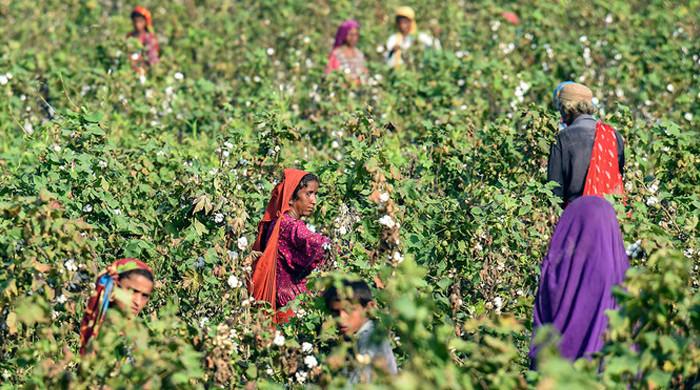
Cotton production in Pakistan 2026 remains well below the levels the country recorded a decade ago. National output has slipped to roughly 5 million bales this season, and average yields have fallen to around 14 to 16 maunds an acre in many belts. Growers in Punjab and Sindh say better returns from rice and sugarcane are pulling land away from cotton every year.
Background
Pakistan was once counted among the world’s top cotton producers, with a peak harvest close to 14 million bales. That era is gone. Output has been sliding for close to ten years now, squeezed by pest attacks, water shortages, and a string of policy decisions that never quite stuck.
The country’s textile industry still depends on local cotton for a large share of its raw material. When the crop falls short, mills lean harder on imports, and that adds pressure to an economy already watching its dollar reserves closely.
Details
Government and industry estimates for the 2026/27 season put national cotton production in Pakistan 2026 at close to 5 million bales, roughly flat with the year before. Planted area has stayed stuck near 1.4 million hectares, well short of what officials had hoped to achieve.
Punjab, historically the backbone of the crop, is losing ground fastest. Divisions such as Bahawalpur, once among the country’s leading cotton belts, are now producing a fraction of their old output as sugarcane mills expand into the same districts.
Sindh has had a mixed run. Some seasons show sharp gains in arrivals at ginning factories, driven by timely sowing and better water availability in the lower parts of the province. Other seasons bring the opposite, as water shortages during early Kharif planting cut into the area farmers can actually sow.
Average yields tell the harder story. National averages have dropped to around 14 to 16 maunds an acre, compared with 40 to 50 maunds that farmers in strong cotton years used to pull from the same fields. Pink bollworm, whitefly, and jassid attacks remain a constant threat, and much of the seed in use is not certified, which drags both yield and fibre quality down.
Underreporting is another complication. Ginners and market participants are widely believed to under-declare output to reduce their tax exposure, which means the real production figure may sit somewhat above what official data shows.
Quotes
Officials at the Central Cotton Research Institute in Multan have pointed to timely sowing and improved crop management in parts of Sindh as reasons for stronger early-season arrivals in some years, while cautioning that August and September rains remain the real test for the crop.
Farmer representative bodies, including Pakistan Kissan Ittehad, argue that a lack of investment in research and modern technology is the deeper problem, and that districts which once produced well above a million bales now trail behind entire provinces.
Industry voices at the All Pakistan Textile Mills Association have gone further, calling cotton an “orphan crop” that receives far less policy attention than rice, wheat, or sugarcane.
Impact
The falling crop hits Pakistan’s economy on two fronts at once. Textile mills, which rely on domestic lint for a large share of their raw material, are forced to import more cotton and yarn, adding pressure on foreign exchange reserves.
A recent industry report estimated the cost of the decline at $2 billion to $3 billion a year in additional imports and lost export earnings. That is a significant drag on a sector that still contributes close to a quarter of the country’s GDP and employs more than a third of its workforce.
Farmers feel the impact just as directly. Lower per-acre returns from cotton, against more stable income from rice and sugarcane, are the main reason growers keep shifting their land away from the crop season after season.
Conclusion
Cotton production in Pakistan 2026 is unlikely to turn around quickly. Hybrid seed imports have been approved after a long-standing ban, and provinces are exploring cotton cultivation in Balochistan and parts of Khyber Pakhtunkhwa, where pest pressure is comparatively lower.
Whether these steps translate into real gains will depend on water availability, weather during the picking season, and whether the government can offer growers a price that actually competes with rice and sugarcane. For now, the trend line still points down.
FAQs
Where is most cotton grown in Pakistan?
Punjab and Sindh together account for almost all of Pakistan’s cotton output, with Punjab historically contributing the larger share. Within Punjab, districts across the southern belt, including Multan, Vehari, Bahawalpur, and Rahim Yar Khan, have traditionally been the leading cotton-growing areas in Pakistan. In Sindh, districts such as Sanghar, Ghotki, and parts of the lower Indus belt remain important producers, though water availability during early sowing plays a big role in how much area actually gets planted each season.
Which country is No. 1 in cotton?
China remains the world’s largest cotton producer by volume, followed by India, Brazil, and the United States. Pakistan usually ranks among the top five to six producers globally, though its position has slipped in recent years as output has fallen sharply from its earlier peak. World production figures are typically tracked and published by bodies such as the USDA’s Foreign Agricultural Service, which also monitors Pakistan’s crop each season.
Which city is famous for cotton in Pakistan?
Multan is often described as Pakistan’s cotton hub, home to major ginning factories, the Central Cotton Research Institute, and a large share of the textile processing tied to the crop. Faisalabad, known as Pakistan’s textile city, is also closely linked to cotton because of its spinning and weaving industry, even though the raw crop itself is grown in surrounding districts rather than within the city.