
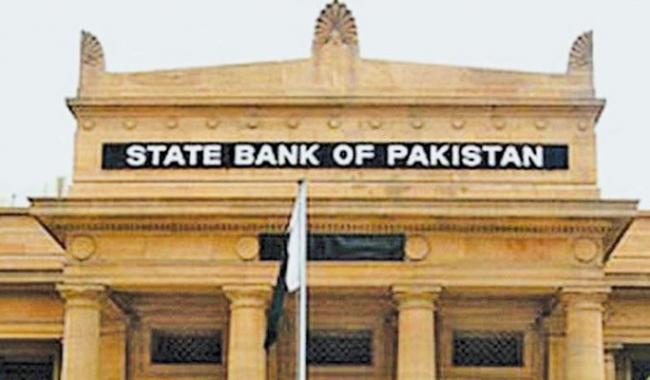

A quiet but significant change has reshaped how banking information moves inside Pakistan’s financial system. SBP bank data access, once blocked by strict confidentiality law, is now written into the Income Tax Ordinance 2001, and it is already affecting how banks report large transactions.
Background
Pakistan’s banking confidentiality framework goes back decades, built on laws such as the Banking Companies Ordinance 1962 and the Protection of Economic Reforms Act 1992. Those laws made customer banking records largely off-limits to outside authorities, including tax officials, unless a specific legal process was followed.
The Finance Act 2026 changed that balance for a defined category of transactions. It added Section 165AB to the Income Tax Ordinance, titled “Reporting of Financial Transaction Data by Banking Companies and Financial Institutions,” and the provision came into force on July 1, 2026.
Details
The core of the law is straightforward. Any banking company or electronic money institution must electronically send transaction data to a Central Data Hub whenever an account holder’s deposits or withdrawals exceed Rs100 million in a reporting period.
Data points banks must submit
Reported information includes account opening and closing balances, total deposits and withdrawals, and peak credit levels reached during the period. The requirement applies across all of a person’s accounts, not just one, which closes a gap that previously let large sums be split across multiple banks.
The cross-matching safeguard
Rather than handing raw data straight to tax officers, the law builds in an automated step. The uploaded figures are compared against declared tax information using algorithms, and the law specifically states this comparison happens without human access to the underlying banking details. A case only reaches a tax official once the system detects a mismatch large enough to warrant a closer look, at which point it goes to the FBR’s Compliance Risk Management system and then to the National Faceless Centre for further handling.
SBP’s separate repository power
Beyond the reporting rule, the amendment gives SBP the authority to build its own centralised virtual repository of banking records, structured around unique identifiers rather than names alone. This is a distinct power from the bank-to-FBR reporting chain, and it positions SBP as a long-term custodian of consolidated banking data rather than just a pass-through for tax purposes.
Quotes
Lawmakers did not accept every part of the original proposal. When a wider version would have let the FBR share full tax declaration data with SBP for two-way cross-referencing, the National Assembly’s Standing Committee on Finance and Revenue rejected that piece during Finance Bill review, while still approving SBP’s narrower repository-building power. Committee members, including PPP MNA Sharmila Faruqui, raised concerns about how the data could be misused if oversight was not tight enough, and FBR’s Tax Policy Unit responded that the analysis would run through the automated Compliance Risk Management process rather than direct manual review.
Impact
The immediate impact falls on high-value account holders: businesses moving large sums, high-net-worth individuals, and anyone whose banking activity regularly crosses the Rs100 million threshold in a reporting period. For everyone else, day-to-day banking is not directly touched by this provision.
More broadly, the law shifts Pakistan’s tax enforcement model toward automated data-matching rather than case-by-case audits. That can make it harder to under-report income tied to large bank transactions, though it also puts more responsibility on FBR and SBP to keep the Central Data Hub secure and to make sure confidentiality safeguards work as written.
Conclusion
SBP bank data access is no longer a proposal; it is active law, with banks already required to report qualifying transactions. The next phase to watch is implementation: how consistently banks comply, how the Compliance Risk Management system performs on its first real cases, and whether the confidentiality protections hold up under real-world use.
Frequently Asked Questions
How do you remove your name from eCIB?
You cannot request removal simply because you would prefer a cleaner record, since the Electronic Credit Information Bureau reflects your genuine credit and repayment history as reported by banks and lenders. What you can do is dispute specific inaccurate entries, for example a loan marked unpaid after you actually settled it. Start with the lending institution that reported the entry, since only they can submit a correction to SBP. Gather documentation such as bank statements, clearance certificates, or settlement letters before filing the dispute, and if the bank is slow to act, you can raise the matter with SBP’s consumer complaint mechanism for further follow-up.
Where can I find the State Bank of Pakistan dataset?
The most reliable source is SBP’s own website, where the Economic Data section hosts figures on monetary statistics, external sector data, foreign exchange reserves, and banking indicators. For deeper, downloadable time-series data, SBP’s EasyData portal is built specifically for that purpose and is commonly used by researchers, journalists, and financial analysts working with Pakistani economic data.
How much money does the State Bank of Pakistan have?
SBP’s reserves change every week, so any figure is only a snapshot. In its statement covering the week ending August 28, 2026, SBP reported foreign exchange reserves of about $17.12 billion, with Pakistan’s combined liquid reserves, SBP plus commercial banks, at roughly $22.53 billion. For the current number, SBP’s weekly Foreign Exchange Reserves report is the most direct source.