


Summary
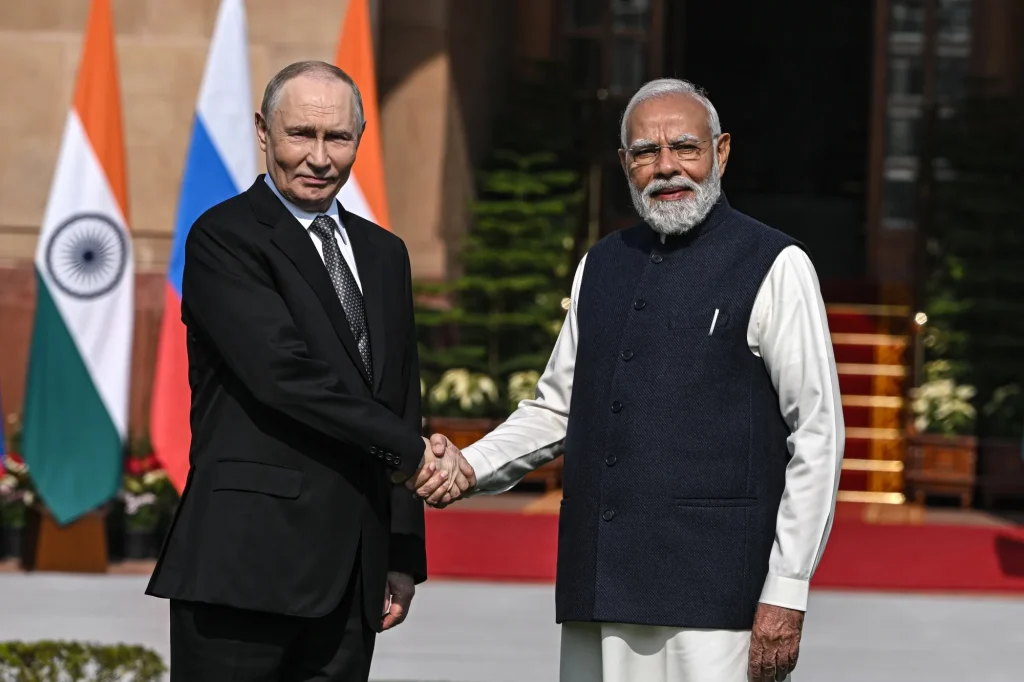
Washington’s newest sanctions bill against Russia puts India in an uncomfortable spot: keep buying discounted Russian crude and risk steep US tariffs, or scale back purchases and pay more for oil elsewhere. New Delhi’s answer, at least publicly, is neither. It’s planning to keep diversifying where its oil comes from while leaning on diplomacy to soften whatever comes next from Washington.
Background
For most of the last decade, India barely touched Russian oil — it made up a tiny sliver of total imports. That changed fast after 2022, when Moscow, cut off from many of its usual customers, started offering steep discounts to whoever would still buy. Indian refiners, always price-sensitive given how much fuel the country needs to import, took the deal. Russian crude went from a rounding error to one of India’s top sources within a couple of years. It was a good trade for Indian consumers and refining margins alike, right up until US lawmakers decided to close the loophole that made it work.
Details
The bill that passed the US House this week is broader than past sanctions packages. It doesn’t just target Russian entities directly — it also threatens tariffs of up to 100 percent on the countries still buying large volumes of Russian oil and gas, with India and China named as the two biggest targets. That’s a different kind of pressure than freezing a Russian bank’s assets. It’s designed to make the cost of doing business with Moscow too high for India’s own economy to absorb quietly.
Layered on top of that is an earlier round of sanctions against Rosneft and Lukoil, Russia’s two biggest oil producers, which together account for roughly 3.1 million barrels a day of exports — close to half the country’s total oil shipments. Indian companies with existing supply deals, Reliance Industries among them, now have until late November to wind down affected transactions or find workarounds that don’t fall foul of US compliance rules.
So what is India actually doing about it? Three things, based on public statements. First, spreading purchases across more countries — Petroleum Minister Hardeep Singh Puri has pointed out that India now sources oil from roughly 40 countries, up from about 27 a few years ago, with African, Middle Eastern and South American suppliers picking up some of the slack. Second, raising the issue directly with US officials at a senior level rather than responding through public confrontation. Third, working with domestic trade and industry groups to plan for tariff scenarios before they actually land.
Quotes
India’s Ministry of External Affairs has kept returning to the same core message across multiple statements this year: energy security for 1.4 billion people comes first, and sourcing decisions will track market conditions rather than any single country’s demands. The ministry has also said the bill’s implications “for not just the bilateral relationship but also the international energy market” have already been made clear to Washington.
Puri, for his part, has framed India’s position less as defiance and more as pragmatism, saying earlier this year that the government buys oil “from wherever it is available at the cheapest price” and isn’t driven by outside pressure.
Impact
If India actually gets hit with tariffs anywhere near the 100 percent ceiling written into the bill, the economic sting would go well beyond oil. Tariffs of that size on a major trading partner tend to spill into other sectors fast, since governments rarely apply that kind of pressure in isolation. Indian exporters in textiles, pharmaceuticals and IT services, none of which have anything to do with Russian oil, could end up paying the price for a dispute that started somewhere else entirely.
There’s a global angle too. India and China together buy a huge share of the Russian crude still moving through global markets. If both countries pull back significantly, and there’s no guarantee they will, that supply doesn’t just vanish; it gets replaced through other channels, some at a higher price. Brent crude already ticked up 3 to 4 percent after the Rosneft and Lukoil sanctions landed, and a broader disruption could push that further, which cuts against Washington’s own interest in keeping fuel costs manageable at home.
For now, most of this remains a threat rather than an active tariff regime, which gives Indian policymakers some room to negotiate before having to make hard choices about supply contracts.
Conclusion
India’s playbook here isn’t new — it’s the same diversification-plus-diplomacy approach New Delhi has used through earlier rounds of sanctions pressure. Whether it holds up this time depends less on India’s own choices and more on how far Washington is willing to go in actually enforcing the tariff powers it just wrote into law. Trade talks between the two countries are still ongoing, and a lot may come down to whether this dispute gets resolved at the negotiating table or ends up testing India’s resolve on the open market.
FAQs
What are the sanctions imposed by India?
None, in the direct sense — the sanctions in question are American measures targeting Russia, not the other way around. India’s role in this story is as a country facing possible US tariffs for continuing to buy Russian oil, not as a country imposing sanctions of its own. India’s response has instead taken the form of economic measures: diversifying its oil suppliers, engaging US officials diplomatically, and coordinating with domestic industry to prepare for potential tariff fallout, rather than mirroring Washington’s sanctions approach.
What is Russia’s view on India?
Moscow regards India as one of its most reliable partners at a time when many other countries have distanced themselves. India’s steady purchases of discounted crude, along with its long history of buying Russian defence equipment, have made it an important economic lifeline for Russia since 2022. Russian officials have publicly credited India’s willingness to keep trading on its own terms as evidence that Western sanctions haven’t succeeded in fully isolating the Russian economy.
Which economic measures is India using to protect itself from the sanctions bill?
India’s main lever is supply diversification — buying oil from a wider spread of countries so that no single sanctions regime can disrupt the bulk of its energy imports at once. Beyond that, the government has been raising its concerns with US counterparts through diplomatic channels rather than public confrontation, and working alongside domestic trade and industry associations to assess how tariffs of up to 100 percent would ripple through sectors well beyond energy if they were ever actually applied.