

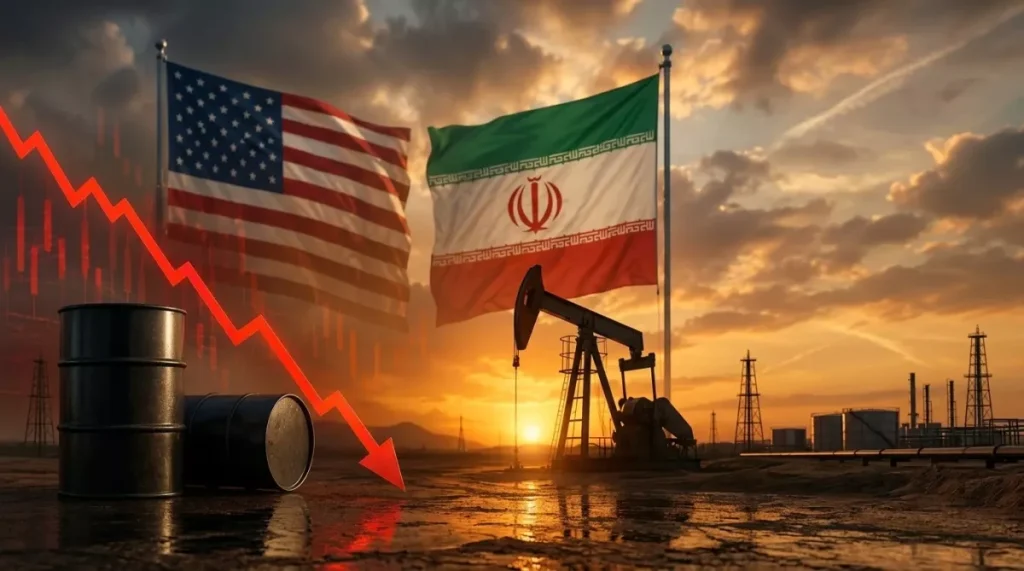

Oil prices fall to their lowest level in more than a week on Monday. Traders are pricing in hopes that diplomacy around the Iran war could gain ground this week. A United Nations meeting in New York is raising expectations of renewed talks between Washington and Tehran.
Brent crude futures dropped to around $101.71 a barrel, down over 2 percent from Friday’s close. US West Texas Intermediate crude slipped to near $98.15 a barrel, also down more than 2 percent. Both benchmarks touched their weakest levels since September 10.
Background: Why Oil Prices Are Under Pressure
The US-Iran war has kept the oil market on edge for months, with repeated attacks on tankers, energy infrastructure, and naval assets driving sharp price swings. Yemen’s Houthi movement, which backs Iran, has widened the conflict by striking targets inside Saudi Arabia, one of the world’s largest crude exporters.
Despite that, the market has started pulling back some of its “war premium.” Investors are betting that a partial recovery in Saudi export shipments, along with a chance for dialogue at the UN General Assembly this week, could ease supply fears in the near term.
Details: What Happened on Monday
Brent crude fell as much as 2.08 percent to touch $101.71 a barrel in early trading, while WTI broke below the key psychological level of $100 a barrel. Both benchmarks had already declined in the previous session, meaning Monday’s slide marked a fourth straight day of losses for Brent.
Market watchers pointed to a mix of factors driving the move: growing optimism over possible US-Iran contact, signs that Saudi Arabia is restoring some disrupted export capacity through the Strait of Hormuz, and traders rolling over October contract positions ahead of expiry.
Even so, the security picture on the ground remains tense. Houthi forces claimed fresh missile and drone attacks on sites in Riyadh and on an Aramco facility in the Red Sea port city of Yanbu over the weekend, underlining how fragile the current calm really is.
Quotes: What Analysts Are Saying
A Singapore-based broker cited by Reuters offered a note of caution about the diplomatic optimism driving the sell-off. “Whether that hope proves to be warranted or not is another question,” the broker said, adding that only time would tell if talks actually materialize.
Separately, reports indicate China has urged Iran to help restrain Houthi attacks on Saudi Arabia, after Riyadh appealed directly to Beijing following the weekend strikes — a sign that regional diplomacy is widening beyond just Washington and Tehran.
Impact: What This Means for Markets
A sustained pullback in oil prices would offer some relief to consumers and importing economies that have absorbed months of elevated energy costs. For oil-producing nations and exporters, however, a fast retreat in prices could squeeze revenues if diplomatic progress actually takes hold.
Global markets, including gasoline and heating oil futures, moved lower alongside crude on Monday, suggesting the pullback is broad-based rather than limited to headline Brent and WTI contracts. Refiners and shippers are also watching Strait of Hormuz traffic closely, since any real de-escalation would ease insurance and logistics costs tied to the conflict.
Conclusion: What to Watch Next
The coming days at the UN General Assembly could prove decisive for oil markets. If US and Iranian officials engage in real talks, prices may extend their slide. If tensions flare again, particularly with Houthi attacks continuing against Saudi targets, the war premium could return quickly.
For now, traders remain cautious rather than convinced, watching both diplomatic signals and battlefield developments before committing to a longer-term view on where oil prices are headed next.
FAQs
What are the oil prices today?
As of Monday, September 21, 2026, Brent crude is trading near $101.71 a barrel and US West Texas Intermediate (WTI) crude is near $98.15 a barrel, both marking a more than 2 percent drop and the lowest levels seen in over a week. Prices have fallen for four straight sessions as traders react to hopes of renewed US-Iran diplomacy tied to this week’s UN General Assembly meeting in New York, alongside signs of a partial recovery in Saudi Arabian export shipments despite continuing regional attacks.
What is Pakistan’s petrol price today?
Under Pakistan’s current daily pricing mechanism, the Oil and Gas Regulatory Authority (OGRA) last notified petrol (Motor Spirit) at Rs343.87 per litre, effective from September 2, 2026, up Rs1.08 from the previous rate. High-speed diesel stood at Rs370.92 per litre. Because Pakistan now revises fuel prices daily, readers should check the latest OGRA notification for the most current rate, since figures can shift with global crude price movements like the ones seen this week.
Why are oil prices dropping today?
Oil prices are dropping mainly because traders are unwinding some of the “war premium” built into crude prices during months of US-Iran conflict. Hopes for diplomatic engagement around this week’s UN meeting, combined with signs that Saudi Arabia is restoring disrupted export capacity through the Strait of Hormuz, have encouraged investors to price in a lower probability of a near-term supply shock, even though on-the-ground tensions, including Houthi attacks on Saudi targets, have not actually eased.