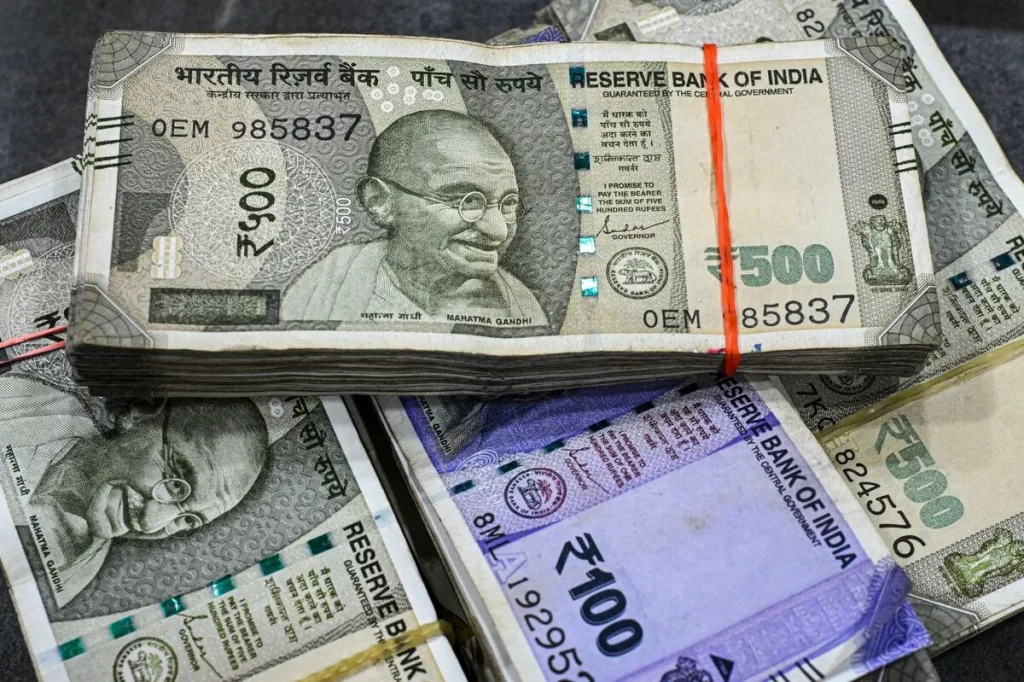
Indian financial markets opened sharply lower on Monday, May 11, 2026, as Prime Minister Narendra Modi’s call for national austerity and a sudden spike in global crude oil prices sent the Indian rupee and stock markets into a tailspin. The rupee touched 94.88 per US dollar in early trade, continuing its long and painful slide that has defined India’s currency story for over a decade.
Background: A Currency in Steady Decline
The Indian rupee depreciation history is one of the most discussed topics in South Asian economics. The rupee traded around ₹60 to the dollar back in 2014. By the end of 2024, it had weakened to around ₹85–86. It then slipped past ₹90 in late 2025 and is now hovering around ₹94–95 in May 2026.
This long-term Indian rupee value chart tells a story of structural vulnerability. India runs a persistent trade deficit, imports nearly 85–90% of its crude oil needs, and remains highly sensitive to global capital flows. Each of these factors contributes to the ongoing Indian rupee depreciation that investors and economists now track closely.
What Happened Today: Modi’s Austerity Appeal
Prime Minister Modi made a rare public appeal on Sunday, urging Indian citizens to reduce consumption of petrol, diesel, cooking oil, and gold. He also called on people to avoid unnecessary foreign travel for the next year. Government sources linked the appeal to the West Asia crisis, where tensions between the US and Iran have pushed oil prices sharply higher.
Brent crude jumped more than 4.5% to around $106 per barrel after US President Donald Trump rejected Iran’s response to Washington’s peace proposals. For India, which imports the vast majority of its oil, this kind of price spike directly widens the current account deficit and puts downward pressure on the dollar to rupee exchange rate.
Market Reaction: Stocks, Rupee Both Slide
The Indian stock market reacted immediately and sharply. The BSE Sensex fell around 1,200 points or 1.3%, while the NSE Nifty 50 dropped over 1.1% to around 23,894. The rupee opened 40 paise lower and declined nearly 0.7% to below 95 per dollar, with the Reserve Bank of India (RBI) reportedly stepping in to limit further losses.
All 16 major sectors of the Indian market logged losses on the day. Oil marketing companies Indian Oil, BPCL, and HPCL fell around 2.6%. Travel-linked stocks including Indian Hotels, IndiGo, and Thomas Cook dropped between 1.2% and 5.3%. Jewellery stocks such as Titan, Kalyan Jewellers, and Senco Gold also fell sharply after Modi urged people to avoid gold purchases, especially at weddings.
Expert Quotes: What Analysts Are Saying
VK Vijayakumar, Chief Investment Strategist at Geojit Investments, said the market was hit harder by the austerity call than by the geopolitical situation with Iran. “The Prime Minister urged people to cut down on petrol, diesel, gold and even foreign travel. Such a call has negative implications for economic growth and, consequently, for corporate earnings as well,” he said.
Vijayakumar also noted that the industries most directly tied to the austerity call petroleum, chemical fertilisers, gold, air travel, hotels were “sentimentally impacted,” while sectors like pharmaceuticals would likely remain resilient.
Critics of the Modi government, including analysts cited in The Wire, have pointed out that the rupee has been the worst-performing currency in Asia over the past year. They argue that the austerity appeal came conveniently after major state elections concluded, and that the burden of currency mismanagement was now being shifted to ordinary citizens.
Indian Rupee Depreciation History: Last 10 Years
Understanding the dollar to rupee graph over the last 10 years reveals a consistent trend of rupee weakness. Here is a simplified overview:
- 2015–2016: ₹62–68 per dollar
- 2017–2018: ₹64–74 per dollar
- 2019: Around ₹69–72
- 2020 (Indian rupee depreciation 2020): Rupee weakened sharply during COVID-19, touching ₹76–77 as global risk aversion surged and FPIs pulled money out of emerging markets
- 2021–2022: Recovery to ₹73, then slide back to ₹81–82
- 2023–2024: Hovering between ₹82–86
- 2025: Breached ₹88 in September 2025, then crossed ₹90 by December 2025
- 2026 (Current): Now hovering around ₹94–95
The Indian rupee depreciation in 2020 was particularly notable. The COVID-19 pandemic triggered massive global capital outflows from emerging markets. India was no exception, with FPIs selling heavily and the rupee touching multi-year lows amid extreme uncertainty.
Why Has the Rupee Fallen So Far?
Several structural and global factors explain the Indian rupee depreciation:
Trade Deficit: India consistently imports more than it exports. This creates a constant need for foreign currency, particularly US dollars, which pushes up demand for the dollar and depresses the rupee.
Oil Imports: India imports nearly 85–90% of its crude oil. When global oil prices rise, India’s import bill swells, worsening the current account deficit and putting fresh pressure on the Indian rupee value chart.
FPI Outflows: Foreign portfolio investors have been net sellers in Indian equity markets in recent periods, particularly after US tariffs on Indian goods were announced. FPI outflows reduce dollar inflows and increase rupee weakness.
US Tariffs: The US announced a 50% tariff on Indian goods in August 2025. This reduced confidence in India’s export outlook and triggered further currency depreciation.
Strong Dollar: The US Federal Reserve’s interest rate policy has kept the dollar strong globally. A strong dollar automatically makes all emerging market currencies, including the rupee, relatively weaker.
Impact: What This Means for Indians
The Indian rupee depreciation directly affects the lives of ordinary people. When the dollar to rupee rate rises, the cost of all dollar-denominated imports goes up. This includes crude oil, electronics, machinery, and even certain food items.
Higher oil import costs translate into higher fuel prices, which in turn raise transportation costs and feed into broader inflation. The rupee’s slide raises the cost of foreign education and travel for Indian families. It also increases the cost of imports for Indian businesses, squeezing profit margins and raising the risk of imported inflation becoming entrenched.
For exporters, however, a weaker rupee is a mixed blessing. Their earnings in dollars convert to more rupees, making their goods more price-competitive globally. IT and software exporters, which earn in dollars, tend to benefit from rupee depreciation.
RBI’s Response: Walking a Tightrope
The Reserve Bank of India has been trying to manage the rupee’s fall without directly fixing a target level. The RBI Governor previously stated that the central bank does not target specific price levels and believes markets are efficient over the long run. However, the RBI has been active in using forward contracts and direct interventions to prevent excessive volatility in the dollar to rupee exchange rate.
On Monday, the RBI reportedly stepped in to support the rupee as it fell toward 95, preventing a sharper decline. The central bank’s limited foreign exchange reserves already stretched by years of intervention constrain how much it can do in the face of persistent structural deficits.
Indian Rupee Value in 2050: What Experts Predict
Looking further ahead, projections for the Indian rupee value in 2050 vary widely. Forecasting models that factor in India’s persistent current account deficit, inflation differentials with the US, and long-term growth trajectory suggest the rupee could weaken further over the coming decades. Some models project the dollar-rupee rate could approach ₹120–150 by 2040–2050 if structural reforms are not implemented.
However, optimists argue that a growing Indian economy, rising export competitiveness, and possible shifts in global supply chains could slow or even partially reverse the trend. The Indian rupee value in 2050 will ultimately depend on whether India can reduce its import dependency, particularly for energy, and develop a more balanced external sector.
Conclusion: Short-Term Pain, Long-Term Questions
The immediate trigger for today’s market fall is a combination of the Modi austerity call and rising crude oil prices driven by the West Asia crisis. But the Indian rupee depreciation story runs much deeper than a single news cycle.
As the dollar to rupee graph over the last 10 years clearly shows, this is a long-term structural trend. Whether India can reverse it will depend on policy decisions on energy independence, export promotion, attracting sustainable foreign investment, and maintaining macroeconomic discipline. In the near term, markets will closely watch how the West Asia situation develops, whether oil prices stabilise, and how the RBI manages the rupee in the weeks ahead.
Frequently Asked Questions (FAQs)
Why is the Indian Rupee depreciating?
The Indian rupee is depreciating due to a combination of factors including a persistent trade deficit, high crude oil import costs, foreign portfolio investor outflows, US tariffs on Indian goods, a stronger US dollar driven by Fed policy, and geopolitical uncertainty. In 2026, PM Modi’s austerity call and a fresh spike in crude oil prices to over $106 per barrel have added fresh pressure on the rupee.
What is the depreciation rate of rupees in India?
The Indian rupee has depreciated by over 10% in recent periods, from around ₹85–86 at the end of 2024 to around ₹94–95 in May 2026. Over the long term, the rupee has fallen from approximately ₹60 per dollar in 2014 to its current levels, representing a decline of over 55% across roughly 12 years.
How much is $1 US in India today?
As of May 11, 2026, one US dollar is approximately equal to ₹94–95 Indian rupees. The rupee opened at 94.88 in morning trade and fell further as markets reacted to rising crude oil prices and PM Modi’s austerity measures. The RBI has been intervening to limit further losses.