
Iran has formally accused the United States of violating their fragile ceasefire agreement after fresh US strikes on Iran targeted two vessels near the Strait of Hormuz and hit civilian coastal areas. The US Iran war has entered a dangerous new phase, with both sides exchanging fire even as peace negotiations continue. Iran war news coming out of the region signals that the ceasefire brokered by Pakistan in early April is hanging by a thread.
Background: How the US Iran War Began
The current US Iran war has its roots in a dramatic escalation that began on February 28, 2026. Israel and the United States began a series of strikes against Iran, saying they aimed to induce regime change and target Iran’s nuclear and ballistic missile programme. Iran’s Supreme Leader, Ali Khamenei, was killed in the strikes.
Iran responded by launching waves of retaliatory strikes across the Middle East and effectively closing the Strait of Hormuz. Weeks before the war broke out, the Trump administration had amassed the largest US military buildup in the Middle East since the invasion of Iraq in 2003.
The Strait of Hormuz is a critical global trade route, with around 20% of global petroleum and 20% of liquefied natural gas passing through it each year. Pre-conflict, around 3,000 vessels used the strait each month a figure that has now fallen to around 5% of that level. The closure has triggered a global energy crisis with far-reaching economic consequences.
Details: Iran Accuses US of Violating Ceasefire
The most explosive development in the ongoing US Iran news came in the second week of May, when Iran accused the US of violating the ceasefire in a direct and detailed military statement.
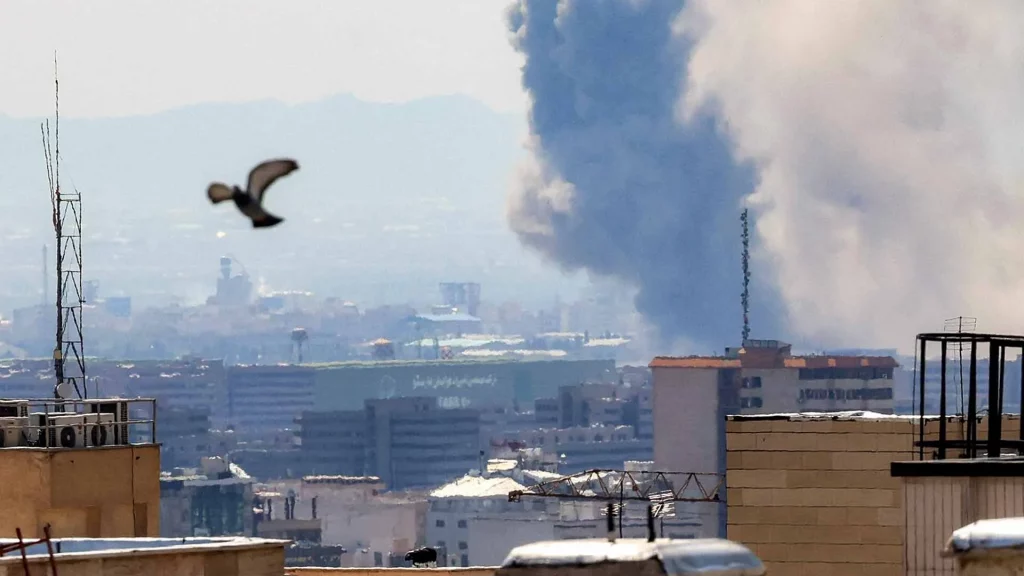
Iran accused the United States of violating the ceasefire by targeting two ships at the Strait of Hormuz and attacking civilian areas. A spokesperson for Iran’s Khatam al-Anbiya Central Headquarters said the US targeted “an Iranian oil tanker traveling from Iran’s coastal waters near Jask toward the Strait of Hormuz, as well as another vessel entering the Strait of Hormuz near the Emirati port of Fujairah.
The spokesperson added: “At the same time, with the cooperation of some regional countries, they carried out air attacks on civilian areas along the coasts of Bandar Khamir, Sirik, and Qeshm Island.”
The US military said it carried out retaliatory strikes on Iran, targeting sites it said were responsible for attacking US forces in what it called unprovoked hostilities by Tehran. The US said Iran had launched multiple missiles, drones, and small boats as three US Navy destroyers transited the Strait of Hormuz, and that no US military assets were hit.
US Strikes Iran: What Happened at the Strait of Hormuz
The US strikes on Iran near the Strait of Hormuz have become the defining flashpoint of the entire conflict. Even amid ceasefire talks, military exchanges have not stopped.
The US military fired on Iranian forces and sank six small boats targeting civilian ships as it moved to reopen the Strait of Hormuz. The United Arab Emirates, a key American ally, said it had come under attack from Iran for the first time since the fragile ceasefire took hold in early April. The UAE Defense Ministry said its air defenses had engaged 15 missiles and four drones fired by Iran.
Authorities in the eastern emirate of Fujairah said one drone sparked a fire at a key oil facility, wounding three Indian nationals. Schools in the UAE shifted to remote learning out of concern for student safety amid the escalating attacks.
US President Donald Trump told reporters the ceasefire with Iran remained in place despite the new strikes, calling them just a “love tap” a dismissive characterization that drew sharp criticism from Iranian officials.
Is the US Sending Troops to the Middle East?
One of the most widely asked questions throughout this conflict has been whether the US is sending troops to the Middle East in significant numbers.
The 31st Marine Expeditionary Unit deployed to the Middle East this weekend, giving President Trump further military options in the war against Iran, even as Trump officials engaged in peace talks in Pakistan.
The Pentagon considered sending up to 10,000 more ground soldiers to the Middle East, according to Department of Defense officials with knowledge of the plans. The move was intended to provide President Trump with more military options while he considers peace negotiations with Tehran.
The combination of US troops in the Middle East alongside ongoing US Iran war ceasefire talks has raised fears about escalation with critics arguing that deploying more forces contradicts the stated goal of reaching a diplomatic resolution.
Quotes: What Officials Are Saying
Iran’s parliamentary speaker, Mohammad Bagher Ghalibaf, accused the US of violating the ceasefire, stating: “The deep historical distrust we hold toward the United States stems from its repeated violations of all forms of commitments a pattern that has regrettably been repeated once again.
Iran’s parliament speaker also warned: “Our enemy speaks publicly of negotiations while secretly planning a ground attack, without realizing our forces are waiting for the Americans to enter.”
A US official described the ongoing negotiations with a firm stance, saying: “The important part of how this is structured is, if Iran doesn’t perform, they don’t get anything. No dust? No dollars. As the Strait opens, the blockade loosens proportionately. This is ‘trust but verify’ on steroids.”
Iran War News: The Peace Talks and Where They Stand
Despite the military exchanges and Iran accusing the US of violating the ceasefire, diplomatic efforts have not completely collapsed.
Talks between the US and Iran are being mediated by Pakistan, with issues under discussion including freedom of navigation through the Strait of Hormuz, Iran’s nuclear and ballistic missile programme, reconstruction, sanctions, and a long-term peace framework.
A regional source with knowledge of the negotiations said the deal is expected to unfold in two phases, with the first focused on reopening the Strait of Hormuz and the second, lasting 30 to 60 days, focusing on detailed negotiations over the nuclear issue and other concerns.
Iran’s state-backed news agency quoted a senior Iranian diplomat as saying that Iran has not made any commitment in negotiations on the initial agreement on nuclear issues, including highly enriched uranium. The US has pressed Iran to send its highly enriched uranium out of the country for safekeeping.
Impact: Global Consequences of the US Iran War
The US Iran war and Strait of Hormuz crisis have sent shockwaves far beyond the Middle East.
The joint US-Israeli strikes on Iran, which killed Supreme Leader Ayatollah Ali Khamenei, resulted in thousands of deaths and caused damage to dozens of museums, historic buildings, and cultural sites across Iran, according to Iranian media outlets and officials.
Several Arab states were forced to cut or suspend oil production due to Iranian attacks. Global oil and gas prices have surged, benefiting both Russia and, temporarily, Iran. China and Russia vetoed a draft UN Security Council resolution calling for an end to Iranian attacks on the Strait.
The crisis is also affecting countries far from the conflict zone. Myanmar’s farmers struggling with a civil war are now facing the added impact of the US-Iran war and the closure of the Strait of Hormuz, with fuel and fertilizer supplies stranded thousands of miles away.
Conclusion: What Comes Next in Iran War News
The situation between the US and Iran remains one of the most volatile flashpoints on the planet. The ceasefire Iran violated accusations from both sides suggest that even pauses in fighting are fragile and could collapse without warning.
President Trump and administration officials are tempering expectations of an imminent agreement to end the war with Iran, while calling for more countries in the Middle East to normalize relations with Israel as part of any deal.
With US troops in the Middle East still present in large numbers, peace talks ongoing through Pakistani mediation, and the Strait of Hormuz still effectively closed, the Iran war news landscape remains deeply uncertain. The world is watching closely, knowing that the outcome of these negotiations will shape global energy markets, Middle Eastern stability, and the future of US-Iran relations for decades to come.
FAQs
Who buys most of Iran’s oil?
China has historically been by far the largest buyer of Iranian oil, purchasing the vast majority of Iran’s crude exports despite US sanctions. Before the 2026 conflict, China was estimated to be taking in over 90% of Iran’s oil exports at discounted prices, often through shadowy intermediaries and ship-to-ship transfers that obscured the origin of the crude. Other smaller buyers included Syria and some private buyers in Southeast Asia. Since the 2026 US Iran war and the closure of the Strait of Hormuz, Iran’s oil exports have been severely disrupted, and the US naval blockade has made it significantly harder for Chinese tankers to access Iranian crude.
Why has the US attacked Iran?
The US launched military strikes on Iran on February 28, 2026, alongside Israel, citing Iran’s advanced nuclear weapons programme and its alleged threat to regional stability. President Trump had been demanding Iran’s “unconditional surrender” and an end to its support for armed proxy groups across the Middle East, including Hezbollah in Lebanon and Hamas in Gaza. The strikes killed Iran’s Supreme Leader Ali Khamenei and targeted military, nuclear, and missile infrastructure. The Trump administration framed the action as a pre-emptive strike to prevent Iran from developing a nuclear weapon, though critics argued it violated international law and risked a catastrophic regional war.
How much is a bottle of Coke in Iran?
Before the 2026 conflict, a standard 500ml bottle of Coca-Cola in Iran cost roughly 50,000 to 80,000 Iranian tomans, which translated to around $0.10 to $0.15 USD at the unofficial market exchange rate extremely cheap by international standards, primarily because of Iran’s heavily devalued currency. However, with the ongoing US Iran war, fresh US and international sanctions, and the collapse of the Strait of Hormuz trade route, Iran’s economy has deteriorated sharply in 2026. Inflation has surged, the rial has weakened further, and the cost of imported goods including soft drinks has risen dramatically in real terms for ordinary Iranians.