
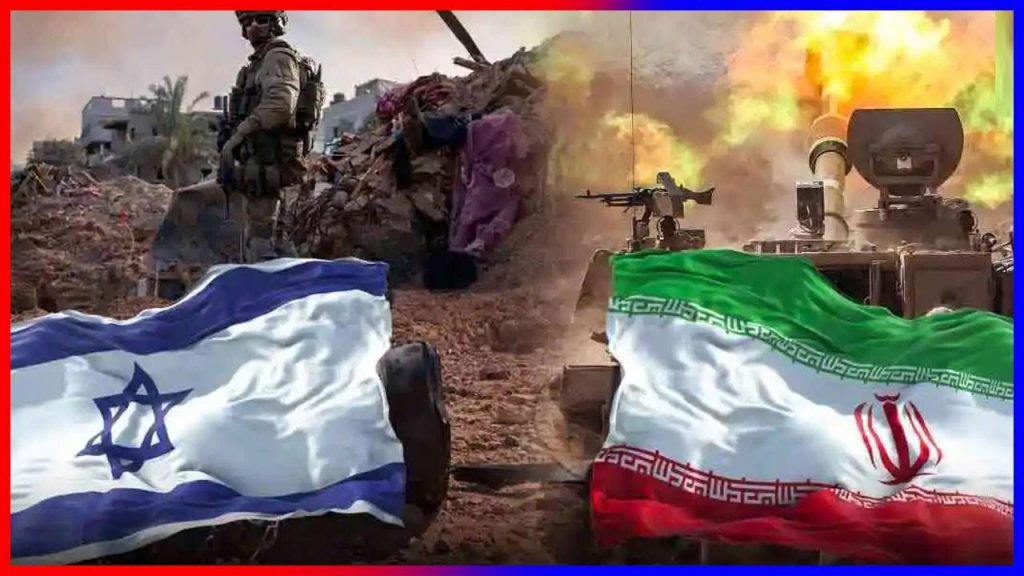

The fragile ceasefire in the Iran Israel war has been extended by President Donald Trump, buying more time for diplomacy but peace remains elusive. As Iran war news live updates confirm, a dangerous standoff continues in the Strait of Hormuz, with both the US and Iran seizing ships in tit-for-tat actions. Negotiations in Pakistan have stalled, and Tehran is refusing to engage while a US naval blockade remains in place.
Background: How Did This War Start?
On 28 February 2026, Israel and the United States launched a war against Iran, conducting joint airstrikes that damaged military bases, government buildings, schools, hospitals, and heritage sites, resulting in significant civilian casualties.
In retaliation, Iran launched hundreds of drones and ballistic missiles at Israel and at US military bases in neighbouring Arab countries including Bahrain, Jordan, Kuwait, Qatar, Saudi Arabia, and the United Arab Emirates.The conflict rapidly spread across the region, pulling in multiple countries and proxy forces.
The conflict between Hezbollah and Israel also escalated into a full-scale Lebanon war, killing more than 2,000 civilians and militants. This multi-front war has since defined global headlines and sparked a major humanitarian and diplomatic crisis.
Details: The Ceasefire, the Blockade, and the Breakdown
The Pakistan-Brokered Ceasefire
On 8 April 2026, the United States and Iran agreed to a two-week ceasefire in the 2026 Iran war, mediated by Pakistan.The deal initially raised hopes that a path to peace could be found. However, the Iran ceasefire end date came and went without a permanent agreement in place.
Trump announced he would extend the ceasefire with Iran until its leaders “can come up with a unified proposal,” while also confirming that the naval blockade of Iran’s ports would continue.Iran’s senior adviser Mahdi Mohammadi dismissed the announcement, saying it “means nothing.”
Islamabad Talks: A Failed First Round
The Islamabad talks lasted 21 hours between 11 and 12 April 2026, involving three rounds of negotiations the first indirect, and the second and third direct. The teams reportedly agreed on the main points of the 10-point ceasefire framework, with the exception of the issues regarding the Strait of Hormuz and the Iranian nuclear program. The talks ended with no agreement reached and no memorandum of understanding issued.
Following the failure, the situation escalated sharply. After the failure of the Islamabad Talks, Trump said he no longer cared about negotiations and announced a naval blockade of Iran to start on 13 April.
The Iran War Blockade: Seizing Ships in the Hormuz
The Iran war blockade has become one of the most volatile flashpoints in the conflict. Before the war, approximately 25% of the world’s seaborne oil trade and 20% of the world’s liquefied natural gas passed through the Strait of Hormuz. By 18 April, the US stated it had intercepted a total of 23 vessels.
Iran’s Revolutionary Guard Corps also released footage showing its own seizure of vessels in the Strait of Hormuz. Iranian media said two container ships were seized after coming under fire, while a third vessel was also targeted.
The Strait has been largely blocked for more than seven weeks due to Iran’s threat to shipping, which it lifted briefly but then reimposed after President Trump imposed a US military blockade of Iranian ports and ships.
Iran War Attack Today: Mines in the Strait
The Iran war attack today situation has escalated further. On 23 April, Trump ordered the US Navy to destroy any Iranian boats laying mines in the Hormuz Strait.The move signals that direct military confrontation at sea has not ended despite the wider ceasefire on land.
Iran War News Al Jazeera: Lebanon Front Continues
According to Iran war live Al Jazeera reporting, the conflict is not limited to Iran’s borders. Lebanese President Joseph Aoun said planned talks with Israel were “separate” from the broader Iran negotiations, while Israeli attacks had killed at least 2,454 people since fighting escalated six weeks ago.
Trump announced a three-week extension of the Lebanon ceasefire as part of broader diplomatic efforts to contain the conflict.However, the situation on the ground remains highly unstable.
Retired US Army Brigadier General Mark Kimmitt told Al Jazeera that talks aimed at reinforcing the fragile ceasefire between Israel and Lebanon are undermined by the absence of Hezbollah. “We have Israel, Lebanon and the United States there. We don’t have Hezbollah,” he said.
Quotes: Officials and Experts Speak Out
Iran war news live has been dominated by strong statements from all sides.
Iran’s parliament speaker Mohammad Bagher Ghalibaf said reopening the strait would be “impossible” while the US naval blockade remains in place, calling it a “blatant violation” of the ceasefire.
Iranian President Masoud Pezeshkian also blamed Washington for the stalemate, saying “bad faith, siege and threats are the main obstacles to genuine negotiation.”
Iran’s UN envoy said he believes negotiations will be held in Pakistan’s capital once the United States ends its blockade of Iranian ports.
Pakistan’s Prime Minister Shehbaz Sharif thanked Trump for the ceasefire extension on social media, saying: “With the trust and confidence reposed in Pakistan, we shall continue our earnest efforts for a negotiated settlement of the conflict.”
Impact: Global Energy Markets and Regional Stability
The US Iran war news carries consequences far beyond the Middle East. The prolonged blockade of the Strait of Hormuz is causing serious disruption to global energy supplies.
Trump said Americans can expect to spend more money on gas “for a little while,” offering little clarity on a timeline to end the war with Iran.
Preliminary figures show 3,375 people dead in Iran, 2,294 dead in Lebanon, and 28 killed in Gulf states.The humanitarian toll continues to rise as every day of the conflict passes without a permanent deal.
Israeli and US airstrikes damaged military bases, government buildings, schools, hospitals, and heritage sites in Iran, resulting in significant civilian casualties.International pressure for a negotiated solution is growing, with France, Pakistan, and other nations calling for urgent diplomatic engagement.
US Iran War: What About American Losses?
The US Iran war news also includes costs on the American side. On 2 March, Kuwait’s Ministry of Defence said several US warplanes had crashed in the country, though all crews survived. CENTCOM confirmed three F-15 jets were downed in friendly fire from Kuwaiti air defences. Official US military casualty figures in the direct conflict remain limited and have not been comprehensively disclosed publicly.
Conclusion: What Comes Next?
The Iran Israel war live situation remains deeply uncertain. A second round of talks in Islamabad may or may not happen. Pakistan has yet to receive a formal response from Iran on whether it would send a delegation for a second round of talks with the US.Iran says it wants talks but blames US “breach of commitments, the blockade, and threats” for stalling negotiations. Without a lifting of the naval blockade, Tehran has made clear it will not come to the table.
The world watches closely. A miscalculation in the Strait of Hormuz, a collapsed Lebanon ceasefire, or a hardening of positions in Washington or Tehran could reignite full-scale hostilities at any moment. The coming days are critical.
FAQs
Who is more powerful, Iran or Israel?
Israel holds a significant military edge in terms of advanced air power, precision weapons, and intelligence capabilities bolstered further by direct US military support in the 2026 conflict. Iran, however, has a much larger military force in terms of manpower, a vast missile and drone arsenal, and regional proxies like Hezbollah that extend its reach across multiple countries. Neither side can be easily described as simply “more powerful” the answer depends heavily on the dimension of comparison.
Why is Israel at war with Iran?
The Trump administration gave diverse and inconsistent explanations for starting the war: to forestall Iranian retaliation after an expected Israeli attack, to stop an imminent Iranian threat, to destroy Iran’s missile capabilities, and to prevent Iran from building a nuclear weapon.
Long-standing tensions over Iran’s nuclear program, its support for Hezbollah, and its repeated calls for Israel’s destruction formed the deeper backdrop.
How many US killed in the Iran war?
Official comprehensive US casualty figures have not been fully disclosed. In the Gulf states, at least 28 people were killed, with some incidents involving US military assets.CENTCOM has confirmed specific incidents such as the loss of three F-15 jets in Kuwait due to friendly fire, with crews surviving. Detailed US military death tolls remain a sensitive and not fully public matter at this stage of the conflict.