Iran missiles Gulf nations attacks have put the entire GCC region on high alert, with Iran launching several waves of drone and missile strikes across seven Gulf states in response to continued attacks by the United States and Israel. The latest Iran war updates confirm that for the first time in history, all GCC states were targeted by the same actor within 24 hours. Iran news this week has been dominated by a dramatic split at the top of the Iranian government — Iran President Masoud Pezeshkian apologised to Gulf neighbors, the IRGC ignored him, and the strikes continued.
Background: How the Iran War Began
Iran war escalation began on February 28 when Israel’s Defence Minister Israel Katz announced a pre-emptive attack on Iran. Prime Minister Benjamin Netanyahu echoed President Trump, saying Iran was seeking to rebuild its nuclear programme and missile capabilities and that operations would continue as long as necessary.
Iranian forces reacted within hours with Operation True Promise IV — the Iran war’s opening counterstrike. Iran struck Israeli targets in Tel Aviv and Haifa as well as multiple countries throughout the Persian Gulf. Iran war |, confirmed major targets included Bahrain’s capital Manama, Kuwait International Airport, Abu Dhabi, Riyadh, Eastern Province in Saudi Arabia, Erbil International Airport, the US Consulate General in Erbil, and US bases at Al Udeid Air Base in Qatar, Ali Al Salem Air Base in Kuwait, Al Dhafra Air Base in the UAE, and the US Navy Fifth Fleet headquarters in Bahrain.
Details: The Scale of Iran Missiles Gulf Nations Assault
Iran Missiles Gulf Nations — By the Numbers
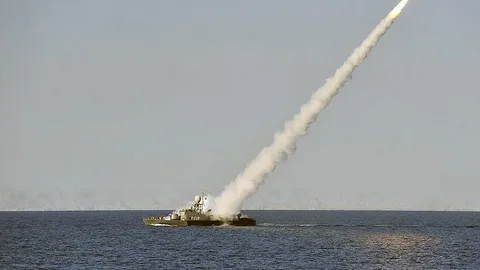
Iran missiles Gulf nations strikes involved thousands of ballistic missiles and drones launched at seven Persian Gulf states in the first five days of the Iran war. Iran news figures show the attacks targeted US bases and infrastructure but also hit hotels, shopping centres, and residential buildings on a far larger scale than Iran’s assault on Israel.
The Iran missiles Gulf nations country-by-country statistics:
Bahrain’s air defence systems destroyed 73 missiles and 91 drones. The UAE Defence Ministry confirmed 186 missiles launched — 172 destroyed — and 812 Iranian drones monitored with 755 intercepted. Qatar’s Ministry of Defence confirmed 101 ballistic missiles detected with 98 intercepted, and 39 drones detected with 24 intercepted. Jordan intercepted 13 ballistic missiles and 49 drones. In Iraq, the US-led coalition shot down several missiles and kamikaze drones.
Iran news analysts noted that on the first day of the Iran war alone, nearly as many missiles and drones were fired at the UAE as were fired at Israel — the country actually attacking Iran.
Iran Missiles Gulf Nations — Civilian Infrastructure in the Crosshairs
Iran missiles Gulf nations strikes hit landmark buildings and airports across the region. On Saturday, Iran fired 137 missiles and 209 drones across the UAE alone, with fires and smoke reaching the Dubai landmarks of Palm Jumeirah and Burj Al Arab. Videos showed smoke emerging from the entrance of the Fairmont The Palm hotel.
In Bahrain, Iran war strikes hit the country’s main oil refinery, sparking a fire that was quickly brought under control. Saudi Arabia shut down operations at its Ras Tanura plant — its biggest domestic oil refinery operated by Saudi Aramco — after a fire broke out caused by debris from the interception of two Iranian drones. Iran missiles Gulf nations strikes also hit the Hayat Palace Hotel in Bahrain — clearly not a US military base.
Iran President Pezeshkian Apology — and the IRGC’s Rejection
The most dramatic Iran news of the Iran war so far came when Iran President Masoud Pezeshkian delivered a public apology exactly one week into the conflict. Pezeshkian said he personally apologised to neighbouring countries attacked by Iran missiles Gulf nations strikes, adding that from that point forward they should not attack neighbouring countries or fire missiles at them unless attacked first, and that the situation should be solved through diplomacy.
Iran President Pezeshkian explained that Iran’s commanders and Supreme Leader lost their lives following what he called barbaric aggression, and that armed forces fired at will because their commanders were absent.
But the IRGC rejected the Iran President’s apology outright. Shortly after Pezeshkian spoke, the IRGC warned that should hostile actions continue, all military bases and interests of the US and Israel across the region would become primary targets for crushing strikes.
Iran news confirmed the apology was effectively meaningless on the ground — just hours after Iran President Pezeshkian’s speech, Dubai airport was attacked by an Iranian drone and Qatar reported intercepting an Iranian ballistic missile.
Quotes on Iran Missiles Gulf Nations and the Iran War
Hardline cleric and lawmaker Hamid Rasai addressed Iran President Pezeshkian directly on social media, saying his stance was unprofessional, weak, and unacceptable.
Ali Vaez, director of the Iran project at the International Crisis Group, told Al Jazeera that in wartime, rhetorical missteps by civilian officials are beside the point, adding that the only voice that truly matters in this Iran war is the IRGC’s.
Iran’s foreign minister called the Qatari foreign minister to say Iran was not attacking the Gulf but only the American presence there. The Qatari foreign minister responded that this was completely untrue — that Iran missiles Gulf nations attacks were dragging the Gulf into a war that was not their own.
Defence analyst Sinem Cengiz from Qatar University’s Gulf Studies Center told Breaking Defense that by hitting civilian infrastructure in GCC capitals, Iran had crossed a dangerous line, and that the calculus risked pushing GCC states closer to the US camp in the Iran war.
Defence expert Frank Bohl warned that if Iran missiles Gulf nations attacks continued, Gulf Arab states would eventually participate in counter-attacks on Iran, with the UAE and Saudi Arabia the ones to watch most closely.
Impact: What Iran Missiles Gulf Nations Strikes Mean for the Region
Iran War — The Gulf’s Impossible Choice
Even as smoke rose over their skylines, Gulf states urged restraint — warning they must not be pulled into an Iran war they never wanted. Despite decades of heavy defence spending, Iran news analysts confirmed that Gulf states remain highly exposed to missile and drone warfare at scale.
Sultan al-Khulaifi, a senior researcher at the Center for Conflict and Humanitarian Studies, wrote that by spreading the Iran war to the Gulf through Iran missiles Gulf nations strikes, Tehran was doing precisely what Israel could not do alone — steering the war away from the Israeli-Iranian axis and transforming it into a confrontation between Iran and its Arab neighbours.
Iran War — Energy Markets Under Siege
Qatar’s Energy Minister Saad al-Kaabi warned that exports from the Gulf region could halt within weeks if the Iran war continues to escalate, telling the Financial Times that if the conflict continues, GDP growth around the world will be impacted and everybody’s energy prices will go up.
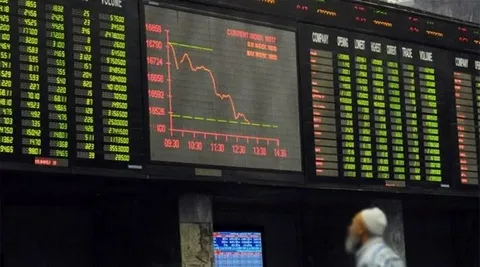
Iran news confirmed the attacks on tourism, hotels, airports, and suspension of three of the largest air traffic hubs in the world for nearly a week had already cost over a billion dollars in losses — with oil Iran war prices surging past $100 a barrel.
Iran War — Trump’s Response
Iran war news Trump updates show the US president issuing a maximalist demand for Iran’s unconditional surrender. Iran President Pezeshkian rejected the demand, saying that unconditional surrender was a dream Trump must take with him to the grave.
Shortly after, Trump wrote on Truth Social that Iran had surrendered to its Middle East neighbours and would be hit very hard, with areas of the country under consideration for complete destruction. The Trump administration approved a new $151 million arms sale to Israel, and US officials warned of a forthcoming bombing campaign described as the most intense yet in the Iran war. Fox News reported the US was expected to deploy a third aircraft carrier to the Middle East.
Conclusion
What began as a US-Israeli strike on Iran’s nuclear and military infrastructure has spiralled into the most destabilising regional conflict the Gulf has seen in a generation. Iran missiles Gulf nations strikes have exposed every structural vulnerability of the GCC’s air defence architecture. With the IRGC ignoring Iran President Pezeshkian, a new Supreme Leader just named, and Trump threatening the most intense Iran war bombing campaign yet, Iran news points in only one direction — further escalation, with no foreseeable end to the fighting.