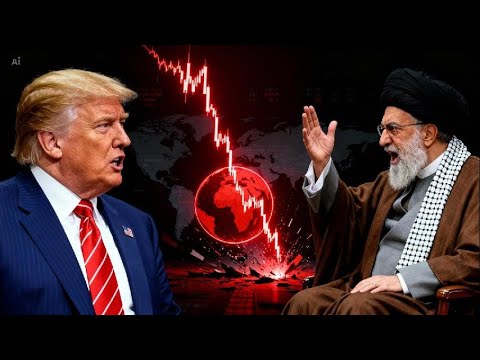

President Donald Trump has officially told the US Congress that the Iran US war terminated, declaring that hostilities between American forces and Iran have ended. Trump wrote to House Speaker Mike Johnson and Senate leader Chuck Grassley stating: “There has been no exchange of fire between the United States Forces and Iran since April 7, 2026. The hostilities that began on February 28, 2026 have terminated.”
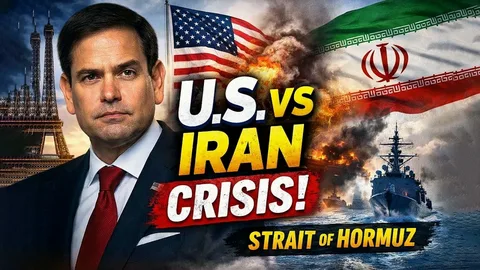
However, the ground reality tells a different story. The Strait of Hormuz remains largely blocked, a dual naval blockade is in place, and Iran continues to threaten commercial vessels. The Iran US war ceasefire is fragile, contested, and deeply complicated.
Background How the Iran US War Began
The roots of this conflict go back years but the immediate trigger came in early 2026. Since 28 February 2026, the United States and Israel have been engaged in a war with Iran and its regional allies. The conflict began when the US and Israel launched airstrikes on Iran, targeting military and government sites and assassinating several Iranian officials, including Supreme Leader Ali Khamenei.
The operation was called “Operation Epic Fury.” Israeli Prime Minister Benjamin Netanyahu had lobbied President Donald Trump for a joint military strike on Iran, specifically targeting its leadership, and following high-level meetings in February, Trump authorized the operation.
Iran was caught off guard. The surprise attacks came while nuclear negotiations were still ongoing a move that outraged Tehran and triggered a massive counter-response.
Iran’s Retaliation Hormuz Shut Down
Iran wasted no time in striking back. Iran launched missile and drone attacks on Israel, US military bases, and US-allied Gulf states. The Iranian Revolutionary Guard Corps (IRGC) issued warnings forbidding passage through the strait, boarded and attacked merchant ships, and laid sea mines in the strait.
The closure of the Strait of Hormuz was Iran’s most powerful economic weapon. Until the US–Israeli war against Iran, the Strait of Hormuz was open and about 25% of the world’s seaborne oil trade and 20% of the world’s LNG passed through it.
Major container shipping companies including Maersk, CMA CGM, and Hapag-Lloyd suspended transits through the strait and related routes such as the Red Sea. The global energy market went into shock almost immediately.
The Iran US War Ceasefire Pakistan’s Role
After weeks of intense fighting, Pakistan stepped in as a mediator. On 8 April 2026, the United States and Iran agreed to a two-week ceasefire in the Iran war, mediated by Pakistan.
But the road to that ceasefire was rocky. Iran had rejected the draft proposal for a 45-day two-phased ceasefire framework introduced on 5 April by Pakistan, instead proposing its own 10-point plan for a peace agreement.
The US presented a detailed 15-point peace plan. The US proposal included an end to Iran’s nuclear program, limits on its missiles, reopening the Strait of Hormuz, restrictions on Iran’s support for armed groups, and sanctions relief for Iran. Iran rejected it outright, calling Trump “deceitful” and insisting Lebanon must be part of any deal.
Iran War Terminated Trump’s Legal Claim
The phrase “Iran war terminated” became headline news when Trump formally notified Congress. The Trump administration argued that a key May 1 deadline it faces to secure congressional approval for the US-Israel war on Iran no longer matters because of the ongoing ceasefire with Tehran.
Defense Secretary Pete Hegseth told lawmakers at a Senate hearing that the ongoing yet fragile ceasefire had effectively paused the clock on the War Powers Resolution deadline.
Not everyone agreed. Democratic lawmakers and legal experts argued that the statute contains no provision allowing for a pause once the deadline has started. Virginia Senator Tim Kaine rejected that interpretation outright, saying he did not “believe the statute would support that.”The Iran war terminated declaration is, in the eyes of many legal experts, a political move not a military or diplomatic reality.
Iran Attack on Israel The Lebanon Complication
Even as ceasefire talks continued, Iran’s attack on Israel via Hezbollah remained a live issue. Israel launched the strongest wave of attacks on Lebanon since the start of the war, and Iranian media later said that Iran paused Hormuz traffic over Israeli attacks in Lebanon.
Iran had targeted the UAE and other US allies in the Persian Gulf with dozens of missiles and drones during open hostilities before the ceasefire came into effect on April 8, but tension rose again as both countries sought to show control of the Strait of Hormuz.
At least 40 people have been killed in Israel by Iranian and Hezbollah missile and drone attacks since the war began at the end of February. The Iran attack on Israel today through proxies and direct missile fire shows no sign of completely stopping.
Strait of Hormuz The Battle for the World’s Most Important Waterway
The Iran news Strait of Hormuz situation remains the central crisis. There is currently a “dual blockade,” with the US Navy blockading Iran and Iran blockading the Persian Gulf. On 4 May, the US Navy began a mission to escort ships out of the Gulf. The Iranian military warned this would be a breach of the truce.
Trump launched what he called “Project Freedom” a US military mission to escort commercial ships through the strait. Iran’s state-run outlets claimed US officials lied about helping two commercial vessels safely transit the Strait of Hormuz. The IRGC warned that “violating vessels will be stopped with force.”
US Treasury Secretary Scott Bessent told Fox News that the US has “absolute control” of the Strait of Hormuz, dismissing Iran’s navy as “a band of pirates.” Tehran, meanwhile, insists it retains sovereignty over the waterway.
Quotes What Officials Are Saying
Vice President JD Vance stated that the US’s “core goal” is for Iran to give “an affirmative commitment that they will not seek a nuclear weapon, and they will not seek the tools that would enable them to quickly achieve a nuclear weapon.”
Democratic Senator Adam Schiff challenged the administration’s claim that the war is over, pointing out that US forces remain active in the region. “Ceasing to use some forces while using others does not somehow stop the clock,” he noted.
At an 8 April press conference, Trump said: “There will be no enrichment of Uranium, and the United States will, working with Iran, dig up and remove all of the deeply buried nuclear ‘Dust.’
Global and Regional Impact
The economic damage from this conflict is staggering. The war’s economic impact includes the world’s biggest oil supply disruption since the 1970s energy crisis, surges in oil and gas prices, disruptions in aviation and tourism, and volatility in financial markets.
The cost of the war to the US military was estimated at US$18 billion by 19 March, and the Pentagon requested a further US$200 billion. By 31 March, the cost to Arab countries was estimated at over US$120 billion. The Iranian government assessed damage to their own economy at least $300 billion.
The 32 members of the International Energy Agency, including the UK, released 400 million barrels of oil in an attempt to lower prices. The disruption has affected energy supplies across Europe, Asia, and beyond.
Conclusion What Happens Next?
The Iran US war ceasefire remains technically in place, but it is extremely fragile. Talks mediated by Pakistan are ongoing, covering five major issues: the Strait of Hormuz, Iran’s nuclear program, its ballistic missile capabilities, sanctions relief, and a long-term peace agreement.
On 21 April, US President Trump said that he had agreed to extend the ceasefire until Iran had submitted a proposal for talks, saying the extension would remain “until discussions are concluded, one way or another.”
The world is watching the Strait of Hormuz. If it does not reopen, the economic pain will deepen. If diplomacy fails, both sides have threatened to resume hostilities. The Iran war news Israel angle adds another layer of complexity, as Hezbollah and Lebanon remain outside the current ceasefire framework.
For now, the Iran US war terminated declaration is more legal strategy than ground truth and the next few weeks will decide whether peace is real or simply a pause before the next escalation.
FAQs
Is Iran stopping the Strait of Hormuz?
Yes. Iran has effectively blocked most commercial shipping through the Strait of Hormuz since 28 February 2026, when the US-Israel strikes began. The IRGC has boarded ships, laid mines, and warned vessels against transit. A small number of ships from countries Iran considers friendly have been allowed through, but global shipping remains severely disrupted.
Did the US close the Strait of Hormuz?
Not exactly. The US launched a counter-blockade targeting Iranian ports from 13 April 2026, but Washington insists it supports freedom of navigation through the strait for non-Iranian vessels. The US Navy’s “Project Freedom” mission aims to escort commercial ships through the waterway, which Tehran has called a ceasefire violation.
Why did Iran threaten to close the Strait of Hormuz?
Iran threatened and then executed closure of the Strait of Hormuz as retaliation for the US-Israeli military strikes launched on 28 February 2026, which killed Supreme Leader Ali Khamenei. Iran views the strait as a strategic leverage point, as roughly 25% of the world’s seaborne oil passes through it. Tehran also demanded that any ceasefire include an end to Israeli attacks in Lebanon before agreeing to reopen the waterway.