
Japan is one of the world’s most fascinating nations. It gave the world anime, bullet trains, and some of the finest technology in history. Yet today, Japan is stuck in a painful cycle of economic stagnation, demographic collapse, and unresolved historical guilt. The question the world is now asking is simple: Is Japan failing and does it even have a future?
Background How Japan Became “Stuck in the 90s”
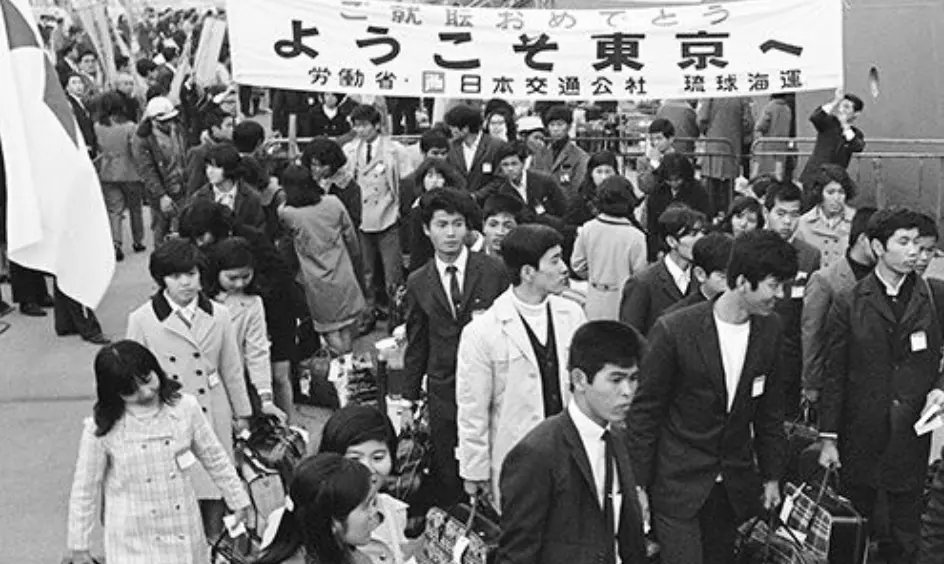
To understand why Japan is stuck in the past, you have to go back to one dramatic moment. In the early 1990s, Japan’s “bubble economy” fueled by inflated stock and real estate prices popped. A deep recession and banking crisis followed, and this period is typically referred to as Japan’s 30-year slump, or “the three lost decades” years during which the country’s GDP showed almost no growth.
Before the crash, Japan was unstoppable. Until the early 1990s, Japan was an economic force to be reckoned with. As it introduced Sony TVs, Canon cameras, and Panasonic camcorders into homes across the world, many in the U.S. began to worry about their country’s status as the leading global economy.
Then, almost overnight, everything changed. Japan went from being one of the fastest-growing countries in the world to one of the slowest. This economic stagnation went on for decades.
Details Is Japan Really Failing Economically?
The numbers tell a grim story. Over the period of 1995 to 2025, Japan’s nominal GDP fell from $5.55 trillion to $4.27 trillion, real wages fell around 11%, and the country experienced a stagnant or decreasing price level.
Perhaps most startling is Japan’s fall in global standing. In 1995, Japan had a nominal GDP per capita of $44,210 the world’s third highest while by 2025, it had fallen to $34,713, ranking 36th in the world.
This is what it means when people say Japan is stuck in the 90s. The economy never truly recovered. Japan’s nominal GDP and GDP per capita remain smaller than their 1995 levels as of 2025.
But experts caution against only reading the negative headlines. According to the Harvard Growth Lab, Japan is ranked No. 1 in the world for the complexity of its export products. So while Japan is failing in some areas, it quietly dominates in others.
Japan’s Population Crisis Will Japan Exist in the Future?
The question of whether Japan will exist in the future is not as dramatic as it sounds. The real threat is slow, silent, and statistical. Japan’s precipitous population decline shows no sign of slowing, with the nation shrinking by more than 900,000 people last year the biggest annual drop on record.
Japan’s population declined for the 16th straight year in 2024, with just 686,061 births the lowest since records began. The country’s total fertility rate fell to 1.15, far below the 2.1 needed to sustain a population.
Prime Minister Sanae Takaichi has called population decline the country’s “biggest problem.” Rural communities are hollowing out. The elderly population is swelling. One in three Japanese residents is now over 65, and demographic projections show a drop to under 117 million by 2030 and to 105 million by 2050.
Immigration could help, but Japan is deeply resistant to it. Foreign residents accounted for just 3.2 percent of the Japanese population in 2025, and Japan would need to consistently accept 500,000 foreign workers a year to stabilize its workforce in the 2040s, according to Oxford Economics.
The future of Japan depends largely on how it resolves this contradiction between cultural identity and demographic survival.
Is Japan Pacifist Or Is That Identity Disappearing?
For decades after World War II, Japan wore its pacifist identity like a badge of honour. Under Article 9 of the U.S.-drafted 1947 constitution, Japan renounced the use of force to settle international disputes, and the right to maintain land, sea and air forces for that purpose.
But that pacifist image is now under serious pressure. A fundamental change came in December 2022 when former Prime Minister Fumio Kishida’s government adopted a security strategy stating the need for Japan to acquire strike-back capability with long-range missiles a major break from Japan’s self-defense-only policy.
Today, Japan is spending like never before on its military. Japan is barreling forward with efforts to significantly boost its military capabilities to stand up to China’s growing threats by doubling annual arms spending. Takaichi’s Cabinet approved a record defense budget plan exceeding 9 trillion yen ($58 billion) for the coming year.
So is Japan pacifist? Japan is now assuming more active international roles, building global defense networks, and shaping global political dynamics. This shift represents a reinterpretation rather than a rejection of its post-war pacifist constitution, replacing idealism with a more pragmatic realism.
In short, Japan is pacifist in name but increasingly less so in practice.
Does Japan Still Deny War Crimes?
This is perhaps the most sensitive question about Japan on the global stage. And the honest answer is: it depends on who you ask.
Japan’s official government position has included formal apologies. But within the country, powerful right-wing forces have worked to soften or erase the historical record. Japan’s right wing has long promoted historical revisionism to “whitewash” wartime crimes. Terms such as “invasion” of China were softened to “advance” or “entry,” while atrocities including the Nanjing Massacre and the forced recruitment of “comfort women” were labeled “questionable.”
In 2015, former Prime Minister Abe claimed that Japan should not let future generations bear the responsibility of continuing to apologize, attempting to sever Japan’s connection to its war crimes.
The Yasukuni Shrine controversy adds another layer. The shrine honors Japan’s 2.5 million war dead, including convicted war criminals. Victims of Japanese aggression, especially China and the Koreas, see visits to the shrine as a lack of remorse about Japan’s wartime past.Japan does not uniformly deny war crimes. But it has never fully confronted them in the way Germany has, and that unresolved history continues to define its relationships across Asia.
Expert Quotes and Perspectives
One professor put Japan’s economic tragedy in a memorable phrase. As Ulrike Schaede, professor of Japanese business at the School of Global Policy and Strategy, summarized the trade-off: “Japan traded in three decades of GDP growth for social stability.”
On the demographic front, a senior Japanese researcher warned against optimism. Takumi Fujinami of the Japan Research Institute said: “These numbers were expected, so there’s no major surprise. We’re unlikely to see a dramatic improvement any time soon. I view these figures as ‘indicators’ that reflect the condition of our society.”
Impact What Does Japan’s Situation Mean for the World?
Japan’s struggles are not just a domestic matter. As Asia’s second-largest economy, its trajectory affects global supply chains, regional security in East Asia, and the balance of power between the US and China.
A weakening, aging Japan may become more dependent on US military protection which could push it further from its pacifist identity. An estimated 17 to 20 million people in their 40s and 50s in Japan remain in non-regular employment, with lower pay, fewer benefits, and limited job security a legacy of the 1990s economic crash.
If Japan fails to address its population crisis and economic rigidity, the consequences will ripple far beyond its borders.
The Future of Japan Collapse or Comeback?
Japan is not finished. It has survived the atomic bomb, postwar occupation, economic devastation, and natural disasters. Its resilience is part of its national DNA. Through concerted efforts, policy shifts, and societal resilience, Japan has embarked on a path of recovery, leveraging its rich cultural heritage from anime to traditional arts to position itself as a top global destination.
Japan is increasingly focusing on sustainability and green technology, eyeing leadership in sectors like electric vehicles, battery technology, and renewable energy.
The future of Japan is not one of inevitable collapse. But it will require Japan to stop being stuck in the 90s mindset to open its borders to immigrants, honestly confront its wartime history, and build an economy fit for the 21st century. Whether Japan has the courage to do that remains the central question of our time.
FAQs
Why is Gen Z so obsessed with Japan?
Gen Z’s fascination with Japan comes from its powerful soft power anime, manga, J-pop, video games, street fashion, and food culture have all become globally dominant. Japan represents a unique blend of futuristic aesthetics and deep tradition that resonates with younger audiences online. Platforms like TikTok and YouTube have brought Japanese culture into living rooms worldwide, making Japan one of the most aspirational travel and lifestyle destinations for the under-30 generation.
What are the famous protests in Japan?
Japan has a long history of public protest. The most significant modern movements include the Anpo protests of 1960 against the US-Japan Security Treaty, the student-led Zenkyoto movement of the late 1960s, anti-nuclear demonstrations following the 2011 Fukushima disaster, and recent protests in 2025 in Tokyo against Prime Minister Takaichi’s military expansion policies. Japan’s protest culture is deeply tied to its pacifist identity and public anxiety about remilitarization.
What was the biggest anti-war protest in Japan?
The largest anti-war protest in Japan’s postwar history was the 1960 Anpo struggle, when millions of Japanese citizens took to the streets to oppose the renewal of the US-Japan Security Treaty. At its peak, hundreds of thousands marched on the National Diet building in Tokyo. The protests were so intense they forced the cancellation of a planned visit by US President Eisenhower and contributed to Prime Minister Kishi’s resignation. Anti-war sentiment remains deeply embedded in Japanese society even today.