
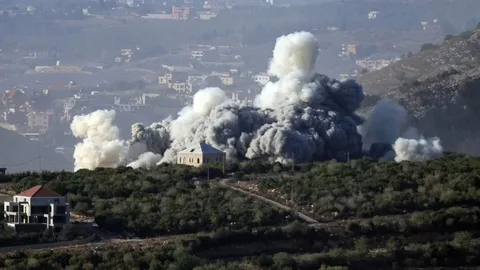

The Israel Lebanon airstrikes war has entered a new phase as Israel launched its heaviest bombardment of Lebanon since the conflict began. The escalation comes at a time when Hezbollah has temporarily paused its attacks, raising questions about strategy, ceasefire prospects, and regional stability.
Background of the Conflict
The Israel Lebanon airstrikes war is rooted in decades of tension between Israel and Hezbollah, a powerful armed group based in Lebanon. The latest escalation follows months of cross-border clashes, missile exchanges, and rising casualties on both sides.
Historically, the israel lebanon war has seen periodic escalations, often triggered by political tensions, territorial disputes, or broader regional conflicts. The situation remains volatile, with both sides maintaining high military readiness.
Details of the Airstrikes
In the latest development, Israeli forces carried out extensive airstrikes targeting multiple locations across southern Lebanon and beyond. Military officials stated that the strikes were aimed at Hezbollah infrastructure, including weapons storage sites and command centers.
The Israel Lebanon airstrikes war has intensified significantly with reports of widespread destruction in targeted areas. Residential neighborhoods near suspected Hezbollah positions were also affected, raising humanitarian concerns.
Meanwhile, Hezbollah announced a temporary pause in its operations. Analysts suggest this could be a tactical decision rather than a sign of de-escalation in the israel lebanon war.
Strategic Implications
The pause by Hezbollah during the Israel Lebanon airstrikes war has sparked debate among experts. Some believe the group is regrouping and assessing damage, while others see it as a calculated move to avoid further escalation.
Israel, on the other hand, appears to be using this window to weaken Hezbollah’s operational capacity. The ongoing strikes indicate a shift toward a more aggressive military strategy in the israel lebanon war.
The israel-lebanon map highlights key areas of conflict, particularly along the southern border, where most clashes have occurred. Control over these مناطق remains a critical factor in the conflict.
Quotes from Experts
Military analysts have offered insights into the current phase of the conflict.
“Israel is attempting to change the balance of power through sustained airstrikes, especially while Hezbollah remains temporarily inactive,” said a regional security expert.
Another analyst noted, “The pause does not necessarily mean peace. In the context of the Israel Lebanon airstrikes war, such pauses often precede renewed and intensified fighting.”
Experts also emphasize that the israel lebanon war is influenced by broader geopolitical dynamics, including regional alliances and international diplomacy.
Humanitarian Impact
The Israel Lebanon airstrikes war has had severe consequences for civilians. Thousands of residents in southern Lebanon have been displaced, seeking safety away from conflict zones. Infrastructure damage has disrupted essential services, including electricity and healthcare.
Human rights organizations have raised concerns about civilian casualties and the destruction of homes. The israel lebanon war continues to pose significant risks to non-combatants, especially in densely populated areas.
The israel-lebanon map shows how close many residential areas are to conflict zones, making it difficult to avoid collateral damage.
International Reaction
Global leaders and organizations have called for restraint amid the escalating Israel Lebanon airstrikes war. Diplomatic efforts are underway to prevent further escalation and encourage dialogue between the parties involved.
Some countries have urged an immediate ceasefire, while others have emphasized Israel’s right to defend itself against threats from Hezbollah. The international response remains divided, reflecting the complexity of the israel lebanon war.
Future Outlook
The future of the Israel Lebanon airstrikes war remains uncertain. While Hezbollah’s pause offers a temporary break in hostilities, it does not guarantee long-term peace. Analysts warn that the conflict could escalate further if tensions are not addressed.
Efforts toward a ceasefire will depend on negotiations, regional stability, and the willingness of both sides to de-escalate. The israel lebanon war continues to be a major concern for global security.
Conclusion
The Israel Lebanon airstrikes war has reached a critical stage, marked by intense Israeli strikes and a temporary halt in Hezbollah attacks. While the pause offers a brief moment of calm, the underlying tensions remain unresolved.
As the situation evolves, the risk of further escalation looms large. The international community’s role will be crucial in shaping the outcome of this ongoing conflict.
FAQs
Why did Israel attack Lebanon?
Israel launched attacks in response to threats and rocket fire from Hezbollah. The Israel Lebanon airstrikes war is driven by security concerns and long-standing tensions.
What is the Israel Lebanon ceasefire understanding?
Ceasefire understandings typically involve halting hostilities and reducing military activity. However, in the israel lebanon war, such agreements are often temporary and fragile.
Who won the Lebanon-Israel war?
There is no clear winner in the israel lebanon war. Both sides claim strategic success, but the conflict has resulted in significant losses and ongoing instability.