The population of Israeli settlers in the West Bank has climbed past the half-million mark outside East Jerusalem, with combined totals including East Jerusalem reportedly nearing 700,000 to 750,000 people. This growth continues even as the International Court of Justice has ruled the settlements unlawful. The debate over West Bank Israel or Palestine sovereignty remains one of the most contested issues in global diplomacy, and understanding who Israeli settlers are is central to following the news from the region.
Background
The story of Israeli settlers in the West Bank begins in 1967. Israel took control of the territory during the Six-Day War, and within a few years, small groups of Israeli citizens began building communities there. Early settlements were framed as military outposts before becoming full civilian towns. The Allon Plan, drafted by Yigal Allon, shaped much of the early settlement strategy, focusing on East Jerusalem, Gush Etzion, and the Jordan Valley.
Over the following decades, list of Israeli settlements grew from a handful of communities to more than 140 officially recognized settlements, plus well over 100 additional outposts that are unauthorized even under Israeli law. The West Bank Israel or Palestine question has never been resolved through a final peace agreement, leaving settlement expansion as one of the most persistent flashpoints in the conflict.
Details
Today, Israeli settlements west bank map data shows settlers spread across roughly 230 communities in what is designated Area C, the zone under full Israeli civil and military control. According to widely cited figures, more than 517,000 to 529,000 Israeli settlers live in the West Bank outside East Jerusalem. When East Jerusalem is included, most recent estimates place the number between 670,000 and over 750,000 people.
Some human rights bodies, including a 2023 United Nations Human Rights Council briefing, put the combined West Bank and East Jerusalem settler population at more than 700,000, up from roughly 520,000 in 2012. That marks significant growth over just a single decade. The Israeli settlers west bank history shows population growth accelerating sharply during the 1980s under Prime Minister Menachem Begin, when the number of settlements more than tripled.
So, how many Israeli settlers live in the West Bank right now? The honest answer is that the number depends on which counting method and year is used. Israeli government figures, UN estimates, and advocacy group tallies all differ slightly, but nearly all trusted sources agree the total is now firmly in the hundreds of thousands and continuing to rise.
Who Are Israeli Settlers?
Who are Israeli settlers, in practical terms? They are Israeli citizens, overwhelmingly of Jewish identity, who live in communities built in the West Bank since 1967. Some settlers are motivated by religious or historical ties to the land, referring to the region by its biblical names, Judea and Samaria. Others moved to settlements for more practical reasons, including lower housing costs and government incentives compared to housing inside Israel’s pre-1967 borders.
Do Jewish settlers in the West Bank work? Yes. Many settlers commute daily to jobs in Israeli cities such as Jerusalem or Tel Aviv, while others work locally in settlement industries, agriculture, education, or municipal services. Some settlements have grown into large towns with their own shopping centers, schools, and public transport systems, functioning much like any Israeli suburb.
Legal Status and International Position
Under international law, the settlements are widely regarded as illegal. In 2024, the International Court of Justice issued an advisory opinion stating that Israel’s occupation was unlawful and that Israel was obligated to halt all new settlement activity and withdraw settlers from the occupied territories. Most countries, along with the United Nations, view the transfer of an occupying power’s civilian population into occupied territory as a violation of the Fourth Geneva Convention.
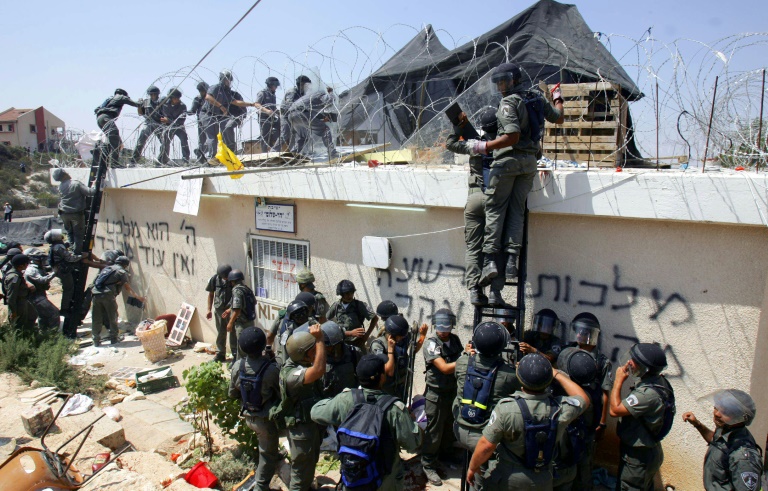
Israel disputes this characterization. Israeli officials argue that the West Bank is disputed rather than occupied territory, citing historical, biblical, and security claims to the land. Successive Israeli governments, including the current one, have continued approving new housing units and, in some cases, moved to retroactively authorize outposts that were built without official permission.
Quotes
Baruch Gordon, a settler leader and resident of the Beit El settlement, described crossing the half-million population mark as a major milestone, adding that settlers intend to remain permanently in the region.
Human rights researchers have taken a starkly different view. Reporting cited by the United Nations found that settler-related violence against Palestinians reached record levels in recent years, with thousands of incidents documented and hundreds of Palestinian communities affected by displacement pressure.
Impact
The growth of Israeli settlements west bank map coverage has practical consequences far beyond population statistics. Settlements fragment Palestinian territory, complicate freedom of movement, and are frequently cited as one of the biggest obstacles to a viable two-state solution. Water access, land use, and security checkpoints are all shaped by where settlements are located.
Regionally, the issue continues to affect diplomatic relations between Israel, Arab states, and Western governments. Internationally, settlement expansion regularly draws criticism from the United Nations, European governments, and human rights organizations, while it remains a politically sensitive but often domestically popular policy inside Israel.
Conclusion
The debate over Israeli settlers west bank policy shows no sign of slowing down. With settler numbers continuing to climb and international legal rulings pushing in the opposite direction, the gap between global legal opinion and on-the-ground reality in the West Bank appears likely to widen further. Future developments, including possible new construction approvals, outpost legalizations, or renewed diplomatic pressure, will shape whether settlement growth continues at its current pace or faces new constraints.
Frequently Asked Questions
How many Israeli settlers live in the West Bank today?
Most recent estimates suggest that between roughly 517,000 and 529,000 Israeli settlers live in the West Bank when East Jerusalem is excluded from the count. When East Jerusalem is included, combined totals reported by various sources range from around 670,000 up to nearly 750,000 people, depending on the year and the counting methodology used by each organization.
What are the 7 types of human security?
Human security is a broader concept used in international relations that goes beyond traditional military security to cover the wellbeing of individuals and communities. The commonly cited seven types are economic security, food security, health security, environmental security, personal security, community security, and political security. Each category addresses a different dimension of the threats and protections that affect ordinary people’s daily lives, rather than focusing solely on state or military security.
What is the international security system?
The international security system refers to the network of institutions, treaties, alliances, and legal frameworks that countries use to manage conflict, prevent war, and address shared threats. It includes bodies such as the United Nations Security Council, regional alliances like NATO, international courts such as the International Court of Justice, and various arms control and human rights agreements. This system is designed to promote cooperation between states while providing mechanisms to respond to violations of international law and threats to global stability.