
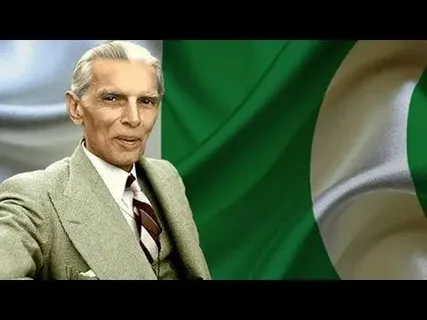
Jinnah Pakistan reforms — the liberal democratic secular vision that Muhammad Ali Jinnah articulated for the nation he created — are being examined with painful honesty in 2026 as Pakistan navigates an economic crisis a constitutional confrontation between the judiciary and executive political polarisation and security challenges that together raise the question that Pakistanis increasingly dare to ask openly: has the dream turned sour?
Jinnah Pakistan reforms vision was specific and documented — a democratic state with equal rights for all citizens regardless of religion a rule of law that applied to rulers and ruled alike an independent judiciary a free press and a government accountable to the people through transparent electoral processes. Pakistan in 2026 presents a complicated and often contradictory relationship with each of these principles.
Muhammad Ali Jinnah religion personal identity the extraordinary story of Rattanbai Jinnah his beloved wife and the remarkable political legacy of Fatima Jinnah his sister who fought for democratic Pakistan after his death together provide the human context for understanding what Jinnah actually believed and what he actually built — and whether what Pakistan has become represents fulfilment or betrayal of the founding vision that Jinnah Pakistan reforms were meant to establish.
Background: Who Was Muhammad Ali Jinnah
The Man Behind Jinnah Pakistan Reforms
Jinnah Pakistan reforms cannot be understood without understanding the extraordinary man who conceived them — a figure whose personal story personal contradictions and political genius together make him one of the most complex and consequential political leaders of the 20th century.
Muhammad Ali Jinnah was born on December 25 1876 in Karachi — then part of British India — into a Khoja Muslim merchant family whose commercial success gave the young Jinnah access to the elite education that would shape his political vision. Jinnah was sent to England at 16 to study law at Lincoln’s Inn — becoming one of the youngest people ever called to the English bar and returning to India with the legal training the secular British liberal values and the constitutional instincts that would define Jinnah Pakistan reforms for the rest of his life.
Jinnah’s early political career was spent within the Indian National Congress — where he was celebrated as the ambassador of Hindu-Muslim unity and where his constitutional approach to Indian independence made him one of the most respected political figures across communal lines. His departure from Congress and eventual leadership of the Muslim League reflected not a religious conversion but a political calculation — that Muslim interests in a democratic India would require constitutional protection that the Congress majority was unwilling to provide.
Jinnah Pakistan reforms vision was always fundamentally constitutional rather than religious — grounded in the liberal democratic principles of British constitutionalism that his legal training had given him and in the specific protections for minorities that his experience of Indian communal politics had taught him were essential to any genuinely democratic state.
Jinnah Pakistan Reforms — His Original Vision
The August 11 1947 Speech — Jinnah’s Most Important Statement
Jinnah Pakistan reforms most complete and authoritative articulation was delivered in Jinnah’s address to the Constituent Assembly of Pakistan on August 11 1947 — 3 days before Pakistan’s formal independence — in a speech that remains the most quoted and most contested document in Pakistani constitutional history.
Jinnah Pakistan reforms August 11 speech stated unambiguously that Pakistan would be a state in which religion was a matter between an individual and their God — that the state would not interfere with citizens’ religious practices — and that Hindus would cease to be Hindus and Muslims would cease to be Muslims not in the religious sense but in the political sense as citizens of the state.
Jinnah Pakistan reforms constitutional framework as articulated on August 11 1947 included religious freedom for all citizens equality of citizenship regardless of faith caste or creed the rule of law applied without discrimination and a democratic parliamentary system in which the government was accountable to an elected legislature representing all Pakistanis.
Jinnah Pakistan reforms economic dimension included his commitment to social justice — with Jinnah having consistently argued that Pakistan’s economic system should serve ordinary Pakistanis rather than the feudal landowning class whose dominance of Pakistani society he recognised as incompatible with genuine democratic development.
Jinnah Pakistan Reforms — The Gap Between Vision and Reality
Jinnah Pakistan reforms implementation challenge began immediately — with the new state facing the catastrophic human tragedy of Partition mass migration economic dislocation and the Kashmir conflict that together consumed the administrative and political energy that building institutions for democratic governance required.
Jinnah Pakistan reforms institutional agenda — an independent judiciary a professional civil service a free press and a democratic political culture — had no time to be established before Jinnah’s death from tuberculosis on September 11 1948 just 13 months after Pakistan’s creation. The speed of his death denied Pakistan’s founding reforms their author’s guidance protection and political authority at the moment when they were most vulnerable to the institutional capture that followed.
Muhammad Ali Jinnah Religion — The Secular Question
Muhammad Ali Jinnah Religion — Personal Faith and Political Identity
Muhammad Ali Jinnah religion is one of the most discussed and most contested dimensions of his personal and political life — with the answer being simultaneously straightforward at the biographical level and deeply complicated at the political level.
Muhammad Ali Jinnah religion personal background was Shia Ismaili Khoja — a community whose interpretation of Islam has historically been among the most liberal and progressive within the broader Muslim tradition. Jinnah’s personal religious practice by most biographical accounts was minimal — he was not observed praying regularly did not observe Ramadan fasting in the manner of devout Muslims and his personal lifestyle including his consumption of alcohol his Western dress and his social integration with British and Hindu elite society reflected the secular Westernised identity of the Anglophone Indian legal elite to which he belonged.
Muhammad Ali Jinnah religion political significance lies not in his personal practice but in his political use of Muslim identity — with Jinnah having deployed the language of Muslim nationhood to mobilise a diverse population for Pakistan’s creation without intending this mobilisation to translate into a theocratic state. The tension between the religious rhetoric used to create Pakistan and the secular constitutional vision that Jinnah Pakistan reforms embodied is the central contradiction of Pakistani state identity that has never been resolved.
Muhammad Ali Jinnah religion question is further complicated by the deliberate efforts of successive Pakistani governments — particularly during the Zia ul-Haq period — to retrospectively reconstruct Jinnah as a devout Muslim whose Pakistan was always intended to be an Islamic state rather than the secular democracy that his August 11 1947 speech unambiguously describes.
Rattanbai Jinnah — The Personal Story
Who Was Rattanbai Jinnah
Rattanbai Jinnah — known as Ruttie — is one of the most poignant figures in Pakistani founding history — a young Parsi woman whose love for Jinnah defied the religious social and familial boundaries of colonial Indian society and whose short tragic life illuminates both the man behind Jinnah Pakistan reforms and the personal costs of his extraordinary political ambition.
Rattanbai Jinnah was born in 1900 as Rattanbai Petit — the daughter of Sir Dinshaw Petit a prominent Parsi industrialist and one of the most socially prominent men in Bombay. Ruttie met Jinnah when she was approximately 16 and he was 40 — a meeting that produced a love that both families opposed intensely. Sir Dinshaw Petit forbade the relationship and sought legal injunctions to prevent Jinnah from seeing his daughter.
Rattanbai Jinnah converted to Islam — taking the name Maryam — to marry Jinnah in 1918 when she was 18 and he was 42. The marriage was the great romantic event of Jinnah’s life — with contemporaries describing Ruttie as one of the most beautiful and intellectually vivid women in Bombay society and their early marriage as a love match of unusual intensity.
Rattanbai Jinnah marriage deteriorated as Jinnah’s political commitment consumed more of his time and emotional energy. Ruttie found herself isolated from the Parsi social world of her upbringing without full integration into Muslim social circles — a woman caught between worlds in a marriage to a man whose political vocation left limited space for personal intimacy. She suffered from deteriorating health — believed to have been exacerbated by depression — and died on February 20 1929 her 29th birthday leaving Jinnah bereft in a way that contemporaries said permanently affected his emotional availability.
Rattanbai Jinnah death produced one of the few documented moments of public emotional vulnerability in Jinnah’s otherwise impeccably controlled public persona — with accounts describing him weeping at her grave in a display of grief that revealed the depth of feeling beneath the formidable public exterior.
Fatima Jinnah — The Sister Who Fought On
Fatima Jinnah — Life and Legacy
Fatima Jinnah is one of the most important and most underappreciated figures in Pakistani political history — a woman who dedicated her life first to supporting her brother’s political mission and then to fighting for the democratic Pakistan that Jinnah Pakistan reforms had promised against the military authoritarianism that was destroying it.
Fatima Jinnah was born on July 31 1893 — the youngest of Jinnah’s siblings and the one who remained closest to him throughout his life. She studied dentistry at the University of Calcutta — becoming one of very few women in British India to obtain a professional dental qualification — before closing her practice to devote herself full-time to her brother’s political career and personal welfare.
Fatima Jinnah’s role in Pakistan’s founding was that of her brother’s most trusted confidante political advisor and public supporter — accompanying him through the most difficult years of the independence campaign and providing the domestic stability and emotional support that his political life required. She was present at his bedside when he died in September 1948 and took on the role of guardian of his legacy and vision in the years that followed.
Fatima Jinnah political career reached its own peak in 1964 to 1965 — when at the age of 71 she challenged General Ayub Khan’s military government in Pakistan’s presidential election under the slogan of restoring democracy that Jinnah Pakistan reforms had promised. The election — conducted under Ayub’s Basic Democracies system rather than direct universal suffrage — produced a result that international observers widely regarded as fraudulent but that demonstrated Fatima Jinnah’s extraordinary popular support particularly among the urban populations and East Pakistanis who saw her as the authentic voice of democratic Pakistan against military rule.
Fatima Jinnah died on July 9 1967 in Karachi — with the circumstances of her death remaining controversial with some accounts suggesting the possibility of foul play that has never been officially investigated. Her death removed the last living link to Jinnah’s personal vision and the most credible voice demanding that Pakistan honour the Jinnah Pakistan reforms that its founder had articulated.
What Did Jinnah Do for Pakistan
Jinnah’s Achievements — Creating a Nation
What did Jinnah do for Pakistan is a question whose most straightforward answer is that he created it — that without Muhammad Ali Jinnah’s unique combination of legal genius constitutional vision personal determination and political skill there would be no Pakistan at all.
Jinnah Pakistan reforms achievement most fundamental is the simple extraordinary fact of Pakistan’s existence — a state of 240 million people with nuclear weapons a significant military a complex economy and a distinct cultural identity that would not exist without Jinnah’s 10-year campaign for Muslim self-determination within the constitutional framework of British India’s independence process.
What did Jinnah do for Pakistan institutionally includes the constitutional framework he established for the new state — with the Constituent Assembly procedures the early civil service structure and the democratic parliamentary architecture of Pakistan’s founding reflecting Jinnah Pakistan reforms constitutional vision in ways that survived his death even as subsequent governments systematically undermined them.
What did Jinnah do for Pakistan diplomatically includes establishing Pakistan’s early international relationships — with Jinnah having personally conducted much of Pakistan’s early foreign policy and having established the framework for Pakistan’s relationship with the United States the United Kingdom and the broader international community in the 13 months before his death.
Jinnah’s 14 Demands — Historical Context
What Were the 14 Demands of Jinnah
Jinnah’s 14 demands were a set of constitutional proposals presented by Muhammad Ali Jinnah to the All-India Muslim League in March 1929 — representing his attempt to secure constitutional protections for Muslim political interests within a united India before he had concluded that Pakistan was the only viable solution.
Jinnah’s 14 demands included federal constitution for India with residual powers in provinces rather than the centre. Separate electorates for Muslims until they chose to abandon them. One-third Muslim representation in the central cabinet. Territorial reorganisation so that Punjab and Bengal would have Muslim majorities. Freedom of religion conscience and worship. Prohibition of bills affecting a community unless three-quarters of that community’s representatives supported it.
Jinnah Pakistan reforms roots in the 14 demands are clearly visible — with the constitutional protections for minorities the federal structure the religious freedom guarantees and the majority-protection mechanisms of the 14 demands prefiguring the Jinnah Pakistan reforms vision that he would eventually implement in a separate state rather than within a united India.
The Congress rejection of the 14 demands — particularly the separate electorates provision — is frequently cited as the political turning point that began Jinnah’s transition from ambassador of Hindu-Muslim unity to advocate of Muslim self-determination and ultimately Pakistan’s creation.
Pakistan Today — Has the Dream Turned Sour
Jinnah Pakistan Reforms vs Pakistan 2026
Jinnah Pakistan reforms measured against Pakistan’s reality in 2026 produce a complex and often painful assessment — with genuine achievements alongside profound failures that together raise the question of whether the founding dream has turned sour or merely been deferred.
Jinnah Pakistan reforms democratic vision has been disrupted by 4 periods of direct military rule totalling approximately 33 years — with generals replacing elected governments in 1958 1969 1977 and 1999 in ways that permanently distorted Pakistan’s institutional development and created the civil-military imbalance that continues to shape Pakistani politics in 2026.
Jinnah Pakistan reforms religious freedom vision has been undermined by the Objectives Resolution’s incorporation into the constitution the Ahmadiyya persecution laws the blasphemy laws and the general Islamisation of state and society that Zia ul-Haq’s period imposed and that subsequent governments have been unable or unwilling to reverse.
Jinnah Pakistan reforms rule of law vision has been tested by the selective application of justice that protects powerful interests while exposing ordinary Pakistanis to a legal system whose independence has been repeatedly compromised by political interference.
Yet Jinnah Pakistan reforms have not been entirely betrayed — with Pakistan’s democratic resilience demonstrated by the repeated return to civilian government after each military period its vigorous free press its independent judiciary that has challenged military and civilian governments alike and the continued vitality of Pakistani civil society that embodies Jinnah Pakistan reforms values even when the state itself does not.
Quotes on Jinnah Pakistan Reforms
Muhammad Ali Jinnah stated in his August 11 1947 address that the great ideal of equality and the equal status of all citizens was Pakistan’s founding principle — adding that religion caste or creed had nothing to do with the business of the state and that all citizens regardless of faith would be equal in the eyes of Pakistan’s law.
Pakistani historian Ayesha Jalal — the most respected scholarly authority on Jinnah — has argued that Jinnah Pakistan reforms vision was systematically distorted after his death — stating that the secular democratic Pakistan Jinnah intended was buried beneath the weight of military authoritarianism feudal politics and religious conservatism that his premature death left without its most effective defender.
Former Chief Justice of Pakistan Jawwad S Khawaja stated that Pakistan’s judiciary had a responsibility to honour Jinnah Pakistan reforms constitutional vision — adding that the rule of law Jinnah had promised required judicial independence that no government military or civilian had the right to compromise.
Pakistani novelist Mohsin Hamid described Pakistan in 2026 as a country still negotiating with its founder’s ghost — stating that Muhammad Ali Jinnah religion and political vision remained contested in ways that reflected Pakistan’s unfinished argument with itself about what kind of country it wants to be.
Fatima Bhutto — granddaughter of former Prime Minister Zulfikar Ali Bhutto — described Jinnah Pakistan reforms as a promissory note that Pakistan had not yet honoured — stating that Jinnah’s promise of equal citizenship religious freedom and democratic accountability remained aspirations rather than achievements that required each generation of Pakistanis to fight for them anew.
Impact: What Jinnah Pakistan Reforms Mean for Pakistan Today
For Pakistani Constitutional Identity
Jinnah Pakistan reforms continue to provide the constitutional reference point against which Pakistani governments are measured and found wanting — with Jinnah’s August 11 1947 speech remaining the most powerful single argument available to Pakistani liberals secularists and democrats in their ongoing struggle for the Pakistan that Jinnah promised.
The continuing political relevance of Jinnah Pakistan reforms in 2026 reflects both their enduring power as a founding vision and their persistent non-fulfilment as a lived reality — with the gap between Jinnah’s promise and Pakistan’s practice providing the political energy that drives Pakistani civil society advocacy judicial activism and democratic reform movements.
For Pakistan’s International Standing
Jinnah Pakistan reforms vision of Pakistan as a modern democratic Muslim state remains the most powerful narrative available for Pakistan’s international positioning — with the secular democratic moderate Muslim state that Jinnah envisioned representing an alternative to both the theocratic models and the authoritarian models that Pakistan’s critics associate with it.
Frequently Asked Questions
What Did Jinnah Do for Pakistan?
Jinnah’s most fundamental achievement for Pakistan was creating it — leading the Muslim League’s campaign for a separate Muslim homeland over 10 years of constitutional negotiation political mobilisation and diplomatic engagement that culminated in Pakistan’s establishment on August 14 1947. Beyond creation Jinnah Pakistan reforms achievements include establishing Pakistan’s constitutional framework through the Constituent Assembly chairing the early sessions that set democratic procedural foundations. Serving as Pakistan’s first Governor-General and providing the personal authority and political direction that the new state required in its most vulnerable early months. Establishing Pakistan’s international diplomatic relationships personally conducting much of the country’s early foreign policy. Articulating a founding vision of democratic secular inclusive governance in his August 11 1947 speech that remains the most important single statement of Pakistani constitutional values ever made. Jinnah’s death 13 months after Pakistan’s creation denied these achievements their architect’s continued protection — leaving Jinnah Pakistan reforms vulnerable to the systematic undermining that followed.
What Were the 14 Demands of Jinnah?
Jinnah’s 14 demands were constitutional proposals presented to the All-India Muslim League in March 1929 seeking protections for Muslim interests within a united India. The key demands included a federal constitution with provincial autonomy and residual powers in provinces rather than the centre. Separate electorates for Muslims. One-third Muslim representation in the central cabinet. Territorial reorganisation to ensure Muslim-majority provinces in Punjab and Bengal. Freedom of religion and conscience for all citizens. Prohibition on legislation affecting a community without three-quarters support from that community’s representatives. Equal rights for Muslims in Sindh Balochistan and the Northwest Frontier Province. Religious instruction in schools for Muslim children. Protections for Muslim-majority provinces against central overriding. The 14 demands represented Jinnah Pakistan reforms constitutional instincts applied to the problem of Muslim minority protection in a united India — with their rejection by Congress accelerating Jinnah’s transition from Indian nationalist to Pakistani founder.
What Were the Achievements of Jinnah?
Jinnah’s achievements span the legal constitutional political and national dimensions of one of the most consequential political careers of the 20th century. His legal achievements include becoming one of British India’s most respected constitutional lawyers and barristers whose legal reputation gave him the authority to negotiate on equal terms with British officials and Congress leaders. His constitutional achievements include the 14 demands the Lucknow Pact and the legislative work through which he sought to create democratic frameworks for communal coexistence. His political achievements include building the Muslim League from a weak elite organisation into the mass movement that created Pakistan. His national achievement — the creation of Pakistan — is the largest single political achievement of the independence era outside Gandhi and Nehru’s creation of democratic India. Fatima Jinnah’s continuation of his democratic legacy and Rattanbai Jinnah’s personal story together add the human dimensions of a life whose public achievement was purchased at significant personal cost. Jinnah Pakistan reforms represent his most enduring achievement — a constitutional vision that Pakistan is still working to fulfil 79 years after his death.
Conclusion
Jinnah Pakistan reforms — the democratic secular constitutional inclusive vision that Muhammad Ali Jinnah articulated on August 11 1947 — have not been achieved in Pakistan in 2026. But they have also not been abandoned. They survive in Pakistan’s constitutional text in its judicial independence movements in its free press in its civil society and in the continuing power of Jinnah’s own words to inspire and indict.
Muhammad Ali Jinnah religion personal complexity Rattanbai Jinnah’s tragic love story and Fatima Jinnah’s lifelong democratic struggle together illuminate a founding vision that was never simply about a Muslim state — it was about a just state a democratic state a state where law protected the weak from the powerful and where every citizen regardless of faith had equal dignity before the law.
Has the dream turned sour? Pakistan in 2026 is not the Pakistan Jinnah envisioned. But it is also not a country that has given up on envisioning it. Jinnah Pakistan reforms endure as aspiration — and aspiration in a democracy is never merely sentimental. It is the most powerful political force there is.