
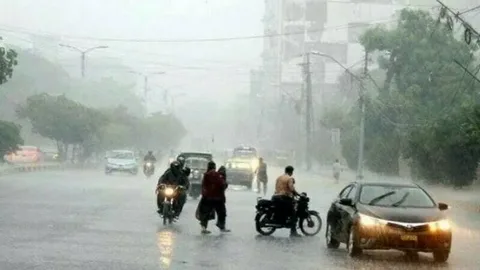

Karachi Rain Emergency Shocks Pakistan’s Largest City
A full-scale Karachi rain emergency has been declared as a series of powerful westerly weather systems unleashed devastating storms on Pakistan’s financial capital leaving dozens dead, hundreds injured, and entire neighbourhoods submerged under floodwaters. The Karachi rain emergency reflects the extraordinary scale of destruction caused by rainfall that meteorologists have described as deeply unusual for March bringing the kind of intensity more typically associated with the monsoon season to a city that was entirely unprepared for its ferocity. Citizens checking weather in Karachi 10 days forecasts and Karachi rain update today hourly feeds have been stunned by the speed and severity with which conditions deteriorated.
Background: What Triggered the Karachi Rain Emergency
The Karachi rain emergency has its meteorological origins in a persistent westerly weather system that entered Pakistan through southwestern Balochistan and intensified dramatically as it moved across Sindh. Pakistan Meteorological Department senior official Ameer Hyder Laghari confirmed that this kind of extreme weather event had not happened for a long time describing the storm system as a significant departure from historical weather patterns for the region and the season.
The Pakistan Meteorological Department had issued warnings ahead of the Karachi rain emergency alerting authorities and citizens to the risk of heavy rain, thunderstorms, strong winds, and potential hailstorms across Karachi Division and multiple Sindh districts. The Provincial Disaster Management Authority placed all districts on high alert and directed staff to ensure all necessary machinery was kept ready as forecasts for weather in Karachi 10 days and weather Karachi 15 days outlooks both signalled a prolonged period of dangerous conditions.
Details: The Human Cost of the Karachi Rain Emergency
The Karachi rain emergency has extracted a devastating human toll from Pakistan’s most populous city. At least 19 people were killed in a single night as the thunderstorm accompanied by gale-force winds lashed the port city with a ferocity that destroyed walls, collapsed roofs, and uprooted trees across multiple districts simultaneously.
In Baldia Town’s Mawach Goth area the most heartbreaking single incident of the Karachi rain emergency unfolded when at least thirteen people sheltering from the storm in an abandoned building were killed when the structure collapsed on them. Separately a wall collapse in Landhi’s Majeed Colony killed two people while a man was struck by lightning near Yaru Goth in the Malir River area. A woman lost her life when the roof of her house collapsed in Korangi’s Sector 3½ and another man was killed when a falling tree crushed him in Korangi No 5.
The Karachi rain emergency also caused widespread infrastructure damage with trees uprooted across major roads, electricity suspended in multiple areas, and stormwater drains overwhelmed by rainfall volumes that the city’s drainage infrastructure was never designed to handle. Areas including North Karachi, North Nazimabad, Federal B Area, Saddar, Clifton, MA Jinnah Road, and the Old City experienced flooding that left residents frustrated and helpless as rainwater entered homes and businesses across the city.
Official Response to the Karachi Rain Emergency
The official response to the Karachi rain emergency mobilised government at every level of Pakistan’s administrative structure. Karachi Mayor Murtaza Wahab declared a formal rain emergency and established a central control room at the KMC building to coordinate operations across the city. Focal persons were placed in constant contact with the control room to ensure rapid response to the most urgent situations created by the Karachi rain emergency.
Sindh Local Government Minister Nasser Hussain Shah issued a high alert across Karachi and the entire province cancelling all Eid holidays for staff of relevant departments to ensure maximum operational capacity during the emergency. The Sindh Chief Minister directed all administrative bodies, municipal authorities, and District Municipal Corporations to remain on high alert throughout the Karachi rain emergency period.
Commissioner Karachi Syed Hassan Naqvi activated the Rescue 1299 helpline as a dedicated resource for citizens affected by the Karachi rain emergency. Additional IG Karachi Azad Khan placed police on high alert across the city especially in low-lying areas and along major roads deploying traffic police to maintain smooth flow and patrol vehicles to respond to emergencies generated by the ongoing crisis.
Weather in Karachi 10 Days and 15 Days Outlook
Citizens and businesses monitoring weather in Karachi 10 days forecasts after the initial emergency found little immediate relief in the projections. The Pakistan Meteorological Department warned that another spell of westerly winds was expected to bring further rain to Karachi and other parts of Sindh within days of the initial deadly storms confirming that the Karachi rain emergency was not a one-time event but part of a sustained and dangerous weather pattern.
Weather Karachi 15 days outlooks available through PMD and international meteorological services including sources tracked through Karachi rain update today BBC coverage suggested that the broader weather system affecting Pakistan would remain active through the end of March and into early April. The weather Karachi 15 days projections indicated temperatures would remain suppressed compared to seasonal norms while the risk of further thunderstorms and heavy showers would persist across the Karachi rain emergency period.
Residents checking Karachi rain update today hourly feeds during the emergency found rapidly changing conditions with light showers in some areas alternating with heavy downpours in others reflecting the patchy and unpredictable nature of the storm system driving the Karachi rain emergency.
Expert Quotes on Karachi Rain Emergency
Pakistan Meteorological Department officials confirmed that the Karachi rain emergency represented a significant and unusual meteorological event for the time of year noting that March rainfall of this intensity was historically rare in Sindh where the climate is typically dry during this period. Meteorologists stated that the westerly weather system driving the Karachi rain emergency was unusually strong and persistent creating conditions that overwhelmed both natural drainage systems and the city’s infrastructure.
Disaster management authorities responding to the Karachi rain emergency warned that the combination of heavy rainfall strong winds and lightning created multiple simultaneous threats that required citizens to take extraordinary precautions including avoiding unnecessary travel staying away from electricity installations and remaining indoors during peak storm activity.
Impact of Karachi Rain Emergency on Daily Life
The Karachi rain emergency disrupted virtually every dimension of daily life in Pakistan’s commercial and financial hub. Several flights at Jinnah International Airport were delayed cancelled or diverted as the storm system made normal flight operations dangerous and unreliable. Power outages swept across multiple areas of the city plunging neighbourhoods into darkness and hampering the emergency response operations that the crisis demanded.
The economic impact of the Karachi rain emergency extended beyond the immediate destruction of property to affect businesses transportation networks and the supply chains that pass through Pakistan’s most important port city. The timing of the Karachi rain emergency during the Eid holiday period added a particularly painful dimension as families who had planned celebrations found themselves managing the consequences of flooding and storm damage instead.
Conclusion: Karachi Rain Emergency Demands Long-Term Solutions
The Karachi rain emergency is both an immediate humanitarian crisis and a warning about the long-term vulnerability of Pakistan’s largest city to extreme weather events. The extraordinary death toll and widespread destruction caused by the storms highlight the urgent need for investment in drainage infrastructure early warning systems and emergency response capabilities that can protect Karachi’s population from the increasingly frequent and intense weather events that climate scientists have long warned are coming.
Citizens are advised to continue monitoring Karachi rain update today hourly forecasts and weather in Karachi 10 days outlooks as the weather system remains active. The Karachi rain emergency has demonstrated that in an era of climate change no city can afford to be unprepared for weather that falls outside historical norms.
FAQs
Is 30% Rain Heavy Rain?
A 30 percent rain probability in a weather forecast does not refer to the intensity of rainfall but to the statistical likelihood that measurable rain will occur in a given area during the forecast period. It means there is a three in ten chance of rain falling at any specific location. In the context of the current Karachi rain emergency the actual rainfall totals recorded were far beyond what a 30 percent probability figure would suggest with Korangi recording 55.6mm of rainfall in a single measurement period. Heavy rain is generally defined as rainfall exceeding 7.6mm per hour while very heavy rain exceeds 50mm in 24 hours making the totals recorded during the Karachi rain emergency definitively in the extreme category.
What Was the Coldest Night in Karachi in 2026?
The coldest nights in Karachi in 2026 were recorded during the January winter period when temperatures dropped to their seasonal lows in the mid-teens Celsius range. The Karachi rain emergency of March 2026 produced some unexpectedly cool nights as the storm system suppressed temperatures below their normal March levels but these rain-induced temperature drops did not approach the coldest readings of the winter months. Citizens monitoring weather in Karachi 10 days and weather Karachi 15 days forecasts have noted the unusual coolness associated with the ongoing storm system but meteorologists have clarified that these are weather-system-driven anomalies rather than new cold temperature records for the city.
What is the Record Rainfall in 24 Hours in Karachi?
Karachi’s record rainfall in a 24-hour period was recorded during the devastating monsoon floods of August 2020 when the city received approximately 484.5mm of rainfall in a single day causing catastrophic flooding that killed scores of people and paralysed the city for days. The rainfall recorded during the current Karachi rain emergency while deadly and destructive did not approach those historic levels with Korangi recording the highest single measurement at 55.6mm during the March storms. However meteorologists tracking Karachi rain update today hourly data and weather in Karachi 10 days projections have warned that sustained multiple rainfall events like those driving the current Karachi rain emergency can cause cumulative damage comparable to single extreme events even when individual daily totals are lower.