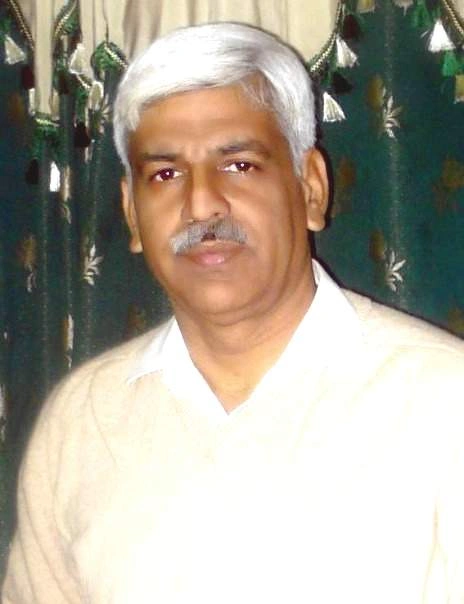
A mentally challenged Kasur man was shot dead by India’s Border Security Force after inadvertently crossing the Pakistan-India border — and was laid to rest in his home village in Kasur district on March 15, 2026, as his family and community demanded accountability for what they described as the cold-blooded killing of a person incapable of understanding where he was or what he was doing. The mentally challenged Kasur man, identified as Mustafa Ahmed, approximately 35 years old, had wandered from his family’s agricultural land near the border fence in Kasur district when he unknowingly crossed into Indian territory. The mentally challenged Kasur man’s family confirmed he had lived with a significant intellectual disability since childhood — a condition that is now clinically referred to as intellectual developmental disorder rather than the older terminology of mental retardation — and had no capacity to comprehend the danger of the border zone.
Background: Who Was the Mentally Challenged Kasur Man and What Is the Pakistan-India Border Situation?
The mentally challenged Kasur man at the centre of this tragedy is Mustafa Ahmed — a resident of a village in Kasur district, Punjab, Pakistan, located in the border belt along the Pakistan-India international boundary. The mentally challenged Kasur man had lived with intellectual disability since childhood — his family described him as having the cognitive understanding of a young child despite his adult age, unable to read, write, understand instructions, or recognise danger.
The mentally challenged Kasur man lived with his family on agricultural land near the border area. Kasur district — known internationally for its agricultural production and historically for the Sufi poet Bulleh Shah’s shrine — sits along a stretch of the Pakistan-India border where the boundary fence runs through or adjacent to farming communities. The mentally challenged Kasur man’s family worked the land in the border belt — an area where local residents have generations of familiarity with the terrain but where the precise location of the boundary is not always visually obvious to someone unfamiliar with official markings.
The Pakistan-India border in Punjab is one of the most heavily militarised land boundaries in the world. India’s Border Security Force patrols the Indian side of the boundary with a shoot-on-sight policy that has resulted in multiple civilian deaths over decades — including several cases involving mentally challenged Kasur and other border district residents who wandered across by mistake. Pakistan has protested such killings repeatedly through diplomatic channels — summoning Indian high commission officials and filing formal objections — but the BSF’s operational doctrine has not changed.
Details: Mentally Challenged Kasur Man — Full Story
Mentally Challenged Kasur Man — What Happened
The mentally challenged Kasur man Mustafa Ahmed left his family’s agricultural land on the Pakistani side of the border on March 13, 2026, in the early afternoon. His family noticed he was missing and began searching for him — a routine occurrence given his intellectual disability, as Mustafa regularly wandered from familiar areas without understanding direction or distance.
The mentally challenged Kasur man crossed through a gap in the border fence — the precise location of which his family confirmed he was completely unaware of — and entered Indian territory. The BSF patrol encountered the mentally challenged Kasur man on the Indian side of the boundary. According to the version of events recounted by Pakistani border authorities and the mentally challenged Kasur man’s family — based on information from villagers who witnessed events from the Pakistani side — the BSF personnel opened fire on Mustafa without warning and without any attempt to detain, question, or communicate with him.
The mentally challenged Kasur man was shot multiple times and died at the scene on the Indian side of the border. Indian BSF personnel subsequently returned the mentally challenged Kasur man’s body to Pakistani rangers through the established border protocol for returning remains — a procedure that itself confirmed India’s acknowledgement that the deceased was a Pakistani national who had entered Indian territory.
Pakistani Rangers received the body of the mentally challenged Kasur man from their Indian counterparts and transferred him to his family in Kasur district. The funeral prayers for the mentally challenged Kasur man were held on March 15, 2026, attended by family, villagers, local religious figures, and district officials who expressed condemnation of the killing.
Mentally Challenged Kasur Man — Family’s Account
The mentally challenged Kasur man’s family confirmed to Dawn that Mustafa Ahmed had lived with intellectual disability since early childhood. His mother told reporters that Mustafa had never attended school, could not speak in complete sentences, did not recognise danger, and regularly wandered away from home — requiring constant family supervision that was not always possible during agricultural working hours.
The mentally challenged Kasur man’s father stated that Mustafa had no capacity to understand the border — that he had no concept of Pakistan and India as separate countries, no understanding of what a border fence represented, and no ability to respond to a command in Hindi or to understand what a uniformed soldier with a weapon meant in that context. The family demanded that the Pakistan government formally protest the killing to India and seek accountability for what they described as the murder of a defenceless person with intellectual disability.
Mentally Disabled Meaning — What Intellectual Disability Is
The mentally challenged Kasur man’s case highlights the importance of understanding mentally disabled meaning in the correct contemporary clinical context. The term mentally retarded — which older media and official documents sometimes use — is considered outdated and stigmatising. Mental retardation is now called intellectual developmental disorder or intellectual disability in current medical and psychiatric classification systems including the DSM-5 and ICD-11.
Mentally disabled meaning in its correct clinical sense refers to significant limitations in both intellectual functioning — reasoning, problem solving, planning, abstract thinking, judgement, academic learning, and learning from experience — and in adaptive behaviour, which covers everyday social and practical skills. Mentally disabled meaning encompasses a wide spectrum of support needs — from mild limitations to profound disability.
Mentally disabled examples in everyday life include difficulty understanding written instructions, inability to manage money or navigate unfamiliar environments, challenges recognising social cues or danger signals, and limited capacity to understand abstract concepts like national borders, laws, and rights. The mentally challenged Kasur man’s intellectual disability meant he fell within the mentally disabled examples of individuals who cannot comprehend geopolitical boundaries — making his presence on the Indian side of the border a function of disability, not intent.
Mental retardation is now called intellectual developmental disorder specifically because the older terminology carries stigma that discouraged families from seeking support and discouraged society from extending appropriate protection to individuals with intellectual disabilities. Pakistan’s legal framework for persons with disabilities — the Special Persons Act and provincial disability legislation — recognises intellectual disability as a category requiring legal protection and social support.
Mentally Challenged Kasur Man — Pakistan’s Diplomatic Response
Pakistan’s Foreign Office summoned the Indian Chargé d’Affaires following the mentally challenged Kasur man’s killing — delivering a formal demarche condemning the shooting as an extrajudicial killing of a civilian with intellectual disability who posed no threat to Indian security or personnel.
The Foreign Office statement on the mentally challenged Kasur man’s death described the BSF’s shoot-on-sight policy as a violation of international human rights norms — noting that the obligation to distinguish between intentional border crossers and vulnerable individuals who cross inadvertently is a basic requirement of proportionate use of force under international law. The statement demanded a formal Indian inquiry into the mentally challenged Kasur man’s killing and called on the BSF to revise its operational protocols to prevent future killings of civilians, particularly those with disabilities.
India’s BSF and Indian government had not formally responded to Pakistan’s demarche at the time of publication.
Mentally Challenged Kasur Man — History of BSF Civilian Killings on the Border
The mentally challenged Kasur man’s killing is not an isolated incident. The BSF’s Pakistan border patrol has a documented history of shooting civilians who cross the boundary — including cases involving farmers who accidentally strayed across while working their fields, children who crossed while playing, and previous cases involving mentally challenged Kasur and other border district residents. Human rights organisations including Human Rights Watch have documented BSF killings of civilians on both the Bangladesh and Pakistan borders — describing a pattern of extrajudicial killings that consistently go unaccountable within India’s security establishment.
The mentally challenged Kasur man’s death follows a pattern in which Pakistani diplomatic protests produce formal Indian acknowledgements but no operational change to the BSF’s border protocols. The Pakistan-India relationship in 2026 — already strained by the broader regional conflict context following the Iran war — makes meaningful diplomatic progress on the mentally challenged Kasur man’s case unlikely in the near term.
Quotes
Mustafa Ahmed’s mother, on the mentally challenged Kasur man’s intellectual disability: “My son did not know what a border was. He did not know India and Pakistan were different countries. He wandered away because he always wandered away — since he was a child. They shot him like an animal. He was my son.”
Mustafa Ahmed’s father, demanding accountability for the mentally challenged Kasur man’s killing: “I want to know what threat my son posed to the soldiers of India. He was a mentally challenged man who did not know where he was. They had guns. They could have stopped him, held him, returned him. They chose to shoot him.”
Pakistan Rangers spokesperson, on receiving the mentally challenged Kasur man’s body: “The body of Pakistani national Mustafa Ahmed was returned through established protocols. Pakistan strongly condemns the unprovoked killing by BSF of a civilian with intellectual disability who posed no security threat.”
Pakistan Foreign Office statement, on the mentally challenged Kasur man’s case: “The killing of Mustafa Ahmed, a Pakistani national with intellectual disability, by the Indian Border Security Force is a grave violation of international human rights norms and the basic principles of proportionate use of force. Pakistan demands accountability.”
Kasur district resident, attending the mentally challenged Kasur man’s funeral: “This is not the first time. It will not be the last. Our children, our farmers, our most vulnerable people — they are shot for wandering near a fence. What kind of neighbour does this to a mentally challenged person who cannot even understand what a border is?”
Disability rights advocate, on the mentally challenged Kasur man’s case and mentally disabled meaning: “Intellectual disability — what mental retardation is now called — means a person cannot understand danger signals, boundaries, or instructions the way a person without disability can. Shooting a person with intellectual disability for inadvertently crossing a line they do not understand is not border security. It is a human rights violation.”
Impact: What the Mentally Challenged Kasur Man’s Killing Means
For Pakistan-India Relations
The mentally challenged Kasur man’s killing adds another layer of tension to the Pakistan-India relationship at an already volatile regional moment. The Iran war context — with US-Israeli military operations reshaping the Middle East security environment and Pakistan managing complex relationships with all regional players — makes meaningful diplomatic progress on the mentally challenged Kasur man’s case even less likely than in normal circumstances. Pakistan’s Foreign Office protest is the appropriate institutional response — but without sustained international attention, it is unlikely to produce operational change in BSF protocols.
For Persons With Intellectual Disability in Border Areas
The mentally challenged Kasur man’s case has drawn attention to the particular vulnerability of persons with intellectual disability in Pakistan’s border belt communities. The mentally disabled meaning — the inability to understand boundaries, danger signals, and institutional authority — makes individuals with intellectual disabilities uniquely vulnerable in border areas where wandering across an invisible line can be fatal. Pakistan’s disability advocacy community has called for specific protocols to protect intellectually disabled individuals in border belt communities — including registration systems, family support programmes, and diplomatic agreements with India for the return rather than shooting of civilians who cross inadvertently.
For Mentally Disabled Examples in Public Discourse
The mentally challenged Kasur man’s case has raised awareness of mentally disabled meaning and the appropriate terminology in Pakistan’s public discourse. Media coverage of the mentally challenged Kasur man’s story has prompted discussion of what mental retardation is now called — intellectual developmental disorder — and the importance of using accurate, non-stigmatising language when discussing cases involving persons with intellectual disability. Mentally disabled examples in public reporting should always use person-first language — a person with intellectual disability rather than a mentally retarded person — in keeping with international disability rights standards.
For BSF Accountability
The mentally challenged Kasur man’s killing joins a long list of BSF civilian shootings that have not resulted in accountability. Human rights organisations monitoring the BSF’s record on both the Bangladesh and Pakistan borders have repeatedly called for independent investigation mechanisms — noting that the BSF’s internal accountability processes have consistently failed to produce disciplinary outcomes in cases of civilian killings. The mentally challenged Kasur man’s case provides a particularly clear factual record — a person with a documented intellectual disability, returned to Pakistan by the BSF itself confirming the cross-border death — that human rights advocates will use in future accountability submissions.
Conclusion
The mentally challenged Kasur man Mustafa Ahmed was buried on March 15, 2026, in the village where he was born and where he had spent his entire life — a life shaped by intellectual disability, family love, and the simple rhythms of a farming community near the Pakistan-India border. He was shot dead for wandering across a boundary he did not understand, by soldiers who chose to shoot rather than detain a man who posed no threat.
The mentally challenged Kasur man’s case is a human tragedy with institutional dimensions. Mentally disabled meaning — the inability to understand danger, authority, or geopolitical boundaries — should be a reason for greater protection, not a vulnerability that makes a person easier to kill. Mental retardation is now called intellectual developmental disorder precisely because the older terminology reflected a society that saw persons with intellectual disabilities as less worthy of protection and dignity.
The mentally disabled examples that appear most often in Pakistan’s human rights record are not the famous or powerful — they are the Mustafa Ahmeds of border belt villages, whose vulnerability is invisible to distant institutions and whose deaths produce diplomatic protests that produce no change.
Mustafa Ahmed deserved to wander. He deserved to be confused about where he was. He deserved to be returned to his mother. He deserved to live.
FAQs
What is the most common mental disorder in Pakistan?
The study highlights the significant impact of violence and stress on mental health in Pakistan, with PTSD, anxiety, and depression being the most commonly reported disorders, particularly with domestic abuse identified as the leading cause of PTSD.
What are the 4 main disabilities?
Although the challenges individuals with disabilities face are unique and idiosyncratic, there are generally four main categories of disabilities – physical, behavioral, developmental, and sensory.
What is the 3-3-3 rule in mental health?
It involves acknowledging three things you can see, and three things you can hear, and then moving three parts of your body. This practice helps ground from the present moment, providing a simple yet effective way to shift focus and alleviate feelings of distress.