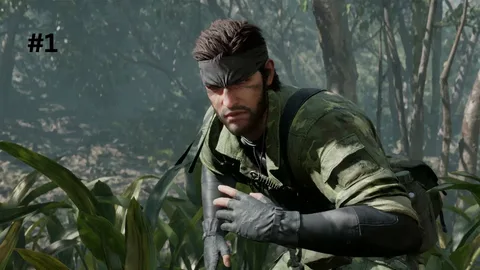
MGS Delta Snake Eater remake has delivered what years of fan anticipation hoped for and franchise scepticism feared might not materialise — a technically breathtaking visually sumptuous and emotionally faithful reimagining of the game that most Metal Gear fans consider the greatest entry in Kojima’s legendary series and one of the finest action games ever made.
MGS Delta Snake Eater remake first impressions from extended preview sessions have generated the kind of genuinely enthusiastic critical response that distinguishes a truly exceptional remake from the technically accomplished but creatively hollow remakes that have become increasingly common in an industry that has discovered that legacy IP nostalgia sells more reliably than original creative risk.
Metal Gear Solid Delta PS5 technical performance in particular has been the subject of extraordinary critical praise — with the jungle environments that defined the original Snake Eater’s visual identity having been rebuilt from the ground up using Unreal Engine 5 to a level of photorealistic detail and environmental fidelity that makes the 2004 original’s ambitious but technically limited vision feel finally fully realised in ways that the PS2 hardware never permitted.
Background: Why Snake Eater Is Being Remade
The Original’s Legacy
MGS Delta Snake Eater remake must be understood against the extraordinary legacy of the game it is remaking — Metal Gear Solid 3: Snake Eater released in 2004 for PlayStation 2 and widely considered not only the best Metal Gear Solid game but one of the defining masterpieces of the sixth console generation.
MGS Delta Snake Eater remake source material is a game that achieved something rare in the action genre — a story whose emotional resonance matched and in the view of many players exceeded its gameplay ambition. The original Snake Eater told the story of Naked Snake later known as Big Boss operating in the Soviet jungle during the Cold War — a story whose central relationship between Snake and his mentor The Boss and the devastating sacrifice that relationship culminates in delivered one of gaming’s most genuinely moving narrative experiences.
MGS Delta Snake Eater remake justification therefore begins with the original’s greatness — which simultaneously explains why the property is being remade and sets the impossibly high standard against which the remake will be measured. A lesser game could be remade with diminished expectations. Snake Eater must be remade at a level of ambition and execution that honours a source material that defined what games could be emotionally.
Konami Without Kojima
MGS Delta Snake Eater remake development context includes the complicated reality of Konami undertaking a Kojima-created franchise remake without Kojima’s involvement — with the legendary game designer’s departure from Konami in 2015 having left the Metal Gear series in the hands of a publisher whose subsequent handling of the franchise including Metal Gear Survive generated significant fan scepticism about whether Konami could honour the Kojima creative tradition.
MGS Delta Snake Eater remake Konami’s approach to addressing this scepticism has been to emphasise fidelity to the original — committing publicly to preserving the original script voice acting and narrative structure while delivering the technical and visual upgrade that modern hardware permits. This fidelity commitment has been the most important single element of fan reassurance that the MGS Delta Snake Eater remake communication strategy has deployed.
MGS Delta Snake Eater Remake — First Impressions
What Has Been Experienced So Far
MGS Delta Snake Eater remake first impressions from extended preview access cover approximately the first 3 to 4 hours of the game — encompassing the legendary Virtuous Mission prologue the opening jungle infiltration sequences and the introduction of the supporting cast that defines Snake Eater’s extraordinary ensemble of characters.
MGS Delta Snake Eater remake immediate visual impact is the first and most powerful first impression — with the Tselinoyarsk jungle rendered in Unreal Engine 5 at a level of environmental detail that transforms the familiar locations of the original into spaces that feel genuinely alive in ways that the 2004 hardware could only approximate.
MGS Delta Snake Eater remake jungle density is the visual element that most directly benefits from the generational leap in rendering capability — with individual leaves catching light branches responding to wind and the layered depth of the forest creating an environmental atmosphere that immediately establishes the specific feeling of isolated vulnerability in an overwhelming natural environment that the original Snake Eater’s design intended but could not fully deliver.
MGS Delta Snake Eater remake character model fidelity — particularly for Naked Snake and The Boss — is extraordinary in ways that go beyond technical accomplishment to achieve genuine emotional enhancement. The original Snake Eater’s character models were among the most expressive of their era but were ultimately limited by polygon counts that prevented the kind of subtle facial performance capture that modern technology enables. The MGS Delta Snake Eater remake character faces communicate nuance of feeling that enriches scenes whose emotional power was already exceptional in the original.
MGS Delta Snake Eater remake gameplay feel is the dimension where first impressions have been most reassuringly positive — with Konami having navigated the difficult balance between modernising control systems for players who have never experienced the original’s design philosophy and preserving the deliberate pace and tension that define Snake Eater’s distinctive gameplay identity.
Metal Gear Solid Snake Eater Release Date
When Is MGS Delta Coming
Metal Gear Solid Snake Eater release date has been one of the most discussed and most eagerly anticipated announcements in gaming since the MGS Delta Snake Eater remake was first revealed — with the absence of a specific confirmed release date through much of the pre-release period creating the anticipation vacuum that gaming communities typically fill with speculation rumour and the kind of release date analysis that studio schedule patterns can support.
Metal Gear Solid Snake Eater release date confirmation has now been provided through official Konami channels — establishing the specific date and platform availability windows that players can plan around. The Metal Gear Solid Snake Eater release date falls in 2026 with the PS5 and Xbox Series X and S versions releasing simultaneously followed by the PC Steam release in a subsequent window that reflects the standard console-first release sequencing that major Japanese publishers typically follow.
Metal Gear Solid Snake Eater release date pre-order availability across major retailers has been activated — with standard and deluxe editions available for pre-order alongside the collector’s edition that Konami has announced for hardcore Metal Gear fans whose investment in the franchise extends to physical merchandise and premium packaging.
Metal Gear Solid Snake Eater release date regional timing follows the standard global day-one release pattern — with midnight release access being provided simultaneously across regions through digital storefronts in a departure from the staggered regional release timing that characterised the original 2004 release.
Metal Gear Solid Delta PS5 — Technical Performance
What PS5 Does for Snake Eater
Metal Gear Solid Delta PS5 technical performance has been the most universally praised dimension of the first impressions coverage — with the PS5’s hardware capabilities enabling the MGS Delta Snake Eater remake to achieve visual and technical ambitions that represent a genuine generational leap rather than the incremental improvement that some remakes deliver.
Metal Gear Solid Delta PS5 frame rate performance targets 60 frames per second in the standard performance mode — with a fidelity mode available for players who prioritise visual resolution over frame rate delivering 30fps with enhanced visual quality settings including higher resolution shadows more complex environmental geometry and extended draw distances.
Metal Gear Solid Delta PS5 DualSense integration has been implemented with the care that distinguishes developers who genuinely engage with the controller’s haptic capabilities rather than treating them as an optional feature. The jungle environment’s different surfaces — wet grass mud rock and foliage — produce distinct haptic responses through the DualSense that enhance the environmental immersion the MGS Delta Snake Eater remake’s visual design is delivering at the perceptual level the controller feedback complements.
Metal Gear Solid Delta PS5 loading performance reflects the SSD architecture that makes the PS5’s storage system one of its most practically significant hardware features — with the MGS Delta Snake Eater remake delivering near-instantaneous loading from the title screen to gameplay and similarly rapid resume from rest mode that transforms the practical experience of picking up the game between sessions.
Metal Gear Solid Delta PS5 audio implementation deserves specific mention — with the 3D spatial audio processing through headphones creating a sound environment whose directionality and depth add significantly to the tactical information available to players navigating the game’s stealth sequences. Hearing an enemy’s footsteps approach from a specific direction and depth is a practically meaningful gameplay enhancement that the MGS Delta Snake Eater remake’s audio implementation delivers with impressive precision.
Gameplay Changes — What Is New
How MGS Delta Snake Eater Remake Evolves the Original
MGS Delta Snake Eater remake gameplay changes reflect Konami’s stated commitment to modernisation that enhances rather than replaces the original’s design — with specific control and camera improvements that address the original’s most dated elements while preserving the deliberate pacing and tactical depth that define Snake Eater’s identity.
MGS Delta Snake Eater remake camera system is the most immediately impactful gameplay change — with the original’s fixed third-person camera having been replaced by an over-the-shoulder free camera system that brings Snake Eater’s navigation and combat into alignment with the control conventions that contemporary players have internalised from the past 2 decades of third-person action game development.
MGS Delta Snake Eater remake CQC — Close Quarters Combat — system has been refined to feel more responsive and more intuitive than the original while preserving the system’s essential character as a creative and versatile close combat toolkit whose mastery gives skilled players access to approaches to enemy encounters that basic play never discovers.
MGS Delta Snake Eater remake survival system — the original’s distinctive food gathering wound treatment and stamina management mechanics — has been preserved with minimal changes that reflect Konami’s recognition that these systems are not merely mechanical features but thematic expressions of Snake Eater’s central ideas about survival self-sufficiency and the human body’s relationship with the natural environment.
MGS Delta Snake Eater remake new content beyond the technical and control upgrades has been limited to additions that the development team describes as complementary to rather than replacement of the original — with new side content expanding the game world without altering the core narrative that makes Snake Eater what it is.
What Stays the Same — The Original’s DNA
Preserving Snake Eater’s Essential Character
MGS Delta Snake Eater remake fidelity to the original is the dimension of the project that has generated the most fan reassurance — with Konami’s commitment to preserving the script voice performances and narrative structure of the 2004 original being the most important single element of the remake’s identity.
MGS Delta Snake Eater remake original script preservation means that the conversations radio call sequences and cutscene dialogue that define Snake Eater’s narrative tone are reproduced from the original — with the original voice performances retained and the visual sequences built around them rather than the voice performances being rerecorded to fit new visual interpretations.
MGS Delta Snake Eater remake The Boss relationship preservation is the most emotionally significant expression of this fidelity commitment — with the central relationship between Naked Snake and his mentor handled with the same emotional intelligence and narrative care that made the original’s resolution one of gaming’s most genuinely affecting story moments.
MGS Delta Snake Eater remake tone preservation — the specific mixture of Cold War spy thriller political philosophy campy humour and genuine emotional weight that Kojima perfected in Snake Eater — is evident in first impressions in ways that suggest the development team understood that tone is more fundamental to what makes Snake Eater Snake Eater than any individual gameplay system or visual feature.
Metal Gear Solid 1 Remake — Comparison Context
MGS Delta and the Broader Remake Conversation
Metal Gear Solid 1 remake question — whether Konami will eventually remake the original Metal Gear Solid following the MGS Delta Snake Eater remake — is one of the most persistent topics in Metal Gear fan discussion and one that the MGS Delta Snake Eater remake’s quality directly impacts through the precedent it sets.
Metal Gear Solid 1 remake fan desire reflects the specific challenge that the original MGS presents as a remake candidate — a game whose story and characters established the entire franchise’s identity and whose technological limitations are even more pronounced than Snake Eater’s given its 1998 PlayStation 1 origin. Metal Gear Solid 1 remake would require even more reconstruction than MGS Delta Snake Eater remake while having even more cultural significance riding on its execution.
Metal Gear Solid 1 remake Konami confirmation has not been provided — with the publisher declining to confirm or deny plans for a Metal Gear Solid 1 remake pending the commercial performance of the MGS Delta Snake Eater remake whose sales figures will inevitably influence the decision about whether to continue the remake programme.
Kojima’s Vision — David Hayter and Voice Casting
Why Did Kojima Replace David Hayter
MGS Delta Snake Eater remake David Hayter question connects to the most controversial casting decision in Metal Gear Solid history — Kojima’s decision to replace the iconic voice actor David Hayter as Snake in Metal Gear Solid V: The Phantom Pain with Kiefer Sutherland — and how that decision is handled in the MGS Delta Snake Eater remake.
MGS Delta Snake Eater remake voice casting preserves the original Snake Eater voice performances — meaning that David Hayter returns as the voice of Naked Snake in the MGS Delta Snake Eater remake through the preservation of the original recording sessions rather than new recording with Hayter. This preservation approach sidesteps the David Hayter replacement controversy by not requiring Konami to make a new casting decision for Snake’s voice in the remake.
Why did Kojima replace David Hayter in MGSV remains one of gaming’s most discussed creative decisions — with Kojima’s own explanations including the desire for a more emotionally restrained performance style and the narrative purpose of using an unfamiliar voice to suggest Big Boss’s psychological distance from the Snake identity. Whether the Hayter replacement was artistically justified remains contested among fans whose attachment to Hayter’s distinctive voice is inseparable from their relationship with the character he defined across the franchise’s formative years.
Quotes on MGS Delta Snake Eater Remake
IGN senior editor Mitchell Saltzman stated that MGS Delta Snake Eater remake had achieved something that seemed nearly impossible going in — making the best Metal Gear Solid game look and feel like it was made today while preserving every quality that made it the best Metal Gear Solid game in the first place.
Digital Foundry technical analyst John Linneman described Metal Gear Solid Delta PS5 technical performance as among the most impressive he had seen from any game in the current console generation — adding that the jungle rendering in particular represented a new benchmark for environmental fidelity that other open world games with natural settings would need to respond to.
Konami producer Noriaki Okamura stated in a developer interview that the team’s guiding principle throughout MGS Delta Snake Eater remake development had been that every change needed to make the game better while every element worth preserving needed to be preserved with complete fidelity — adding that the hardest decisions had been identifying which original design elements were dated limitations and which were intentional creative choices that defined Snake Eater’s identity.
Veteran gaming journalist Jason Schreier described MGS Delta Snake Eater remake as the strongest argument he had encountered for the remake as an artistically legitimate creative endeavour rather than merely a commercial exploitation of nostalgia — stating that the game had made him feel things he had not expected to feel again having played the original multiple times.
David Hayter speaking about the MGS Delta Snake Eater remake preservation of his original Snake Eater performance described it as deeply moving to hear his 20-year-old recording given new visual life at this level of fidelity — adding that Snake Eater had been his favourite project of his career and that the remake honoured both the character and the original production in ways he had hoped for but not taken for granted.
Impact: MGS Delta Snake Eater Remake Significance
For the Metal Gear Franchise
MGS Delta Snake Eater remake impact on the Metal Gear franchise is potentially rehabilitative — with the game’s quality establishing Konami’s commitment to the franchise’s creative legacy in ways that Metal Gear Survive undermined and that fan confidence requires as a foundation for continued investment in the series.
MGS Delta Snake Eater remake commercial success will directly determine whether Konami continues the remake programme — with the Metal Gear Solid 1 remake and potential remake of MGS2 Sons of Liberty both dependent on Snake Eater establishing the commercial viability of high-budget Metal Gear remakes in the current market.
For the Remake Genre
MGS Delta Snake Eater remake contribution to the remake genre is the demonstration that fidelity and modernisation are not opposed principles — that a remake can simultaneously preserve what made an original great and deliver the technical and gameplay improvements that justify remaking it rather than simply rereleasing it.
Metal Gear Solid Delta PS5 technical achievement specifically establishes a new benchmark for what environmental fidelity means in action game design — with the jungle rendering likely to influence how other developers approach natural environment design in the current console generation.
For Gaming’s Relationship With Its History
MGS Delta Snake Eater remake represents the best possible answer to the question of what gaming’s relationship with its own history should look like — demonstrating that great games from previous eras deserve to be preserved honoured and made accessible to new generations rather than merely archived as historical curiosities.
Frequently Asked Questions
Is Metal Gear Solid Δ Snake Eater a Remake?
Yes — MGS Delta Snake Eater is a full remake of Metal Gear Solid 3: Snake Eater originally released for PlayStation 2 in 2004. The MGS Delta Snake Eater remake rebuilds the game from the ground up using Unreal Engine 5 — with completely new character models environments visual effects and audio design replacing the original’s PS2-era assets. Unlike a remaster which improves the visual quality of original assets a remake rebuilds everything while preserving the core design structure. MGS Delta Snake Eater remake preserves the original’s script voice performances and narrative structure as a deliberate fidelity commitment — meaning the story you experience is the story Kojima created in 2004 delivered with 2026 technical capabilities. The gameplay systems have been modernised — particularly the camera system and control scheme — to bring the experience into alignment with contemporary action game conventions while preserving the deliberate pacing and tactical depth that define Snake Eater’s identity.
Does MGS4 Have a 71 Minute Cutscene?
Metal Gear Solid 4: Guns of the Patriots — released for PlayStation 3 in 2008 — is famous for its extraordinarily long cutscenes with the final act of the game containing what has been widely reported as a cumulative cutscene sequence lasting approximately 71 minutes without player interaction. This makes MGS4 one of the most discussed examples of the cinematic approach to game storytelling that Kojima pioneered — with the game’s total cutscene runtime across its full playthrough being estimated at approximately 9 hours out of a total game length of approximately 15 hours. Whether this represents a creative triumph or a gameplay design failure has been debated since MGS4’s release — with Kojima’s defenders arguing that the film-length cutscenes are the appropriate delivery mechanism for a narrative of the scope and emotional complexity that MGS4 attempts and critics arguing that the player’s passive spectatorship for such extended periods represents a fundamental misunderstanding of what games are for. MGS Delta Snake Eater remake does not face this criticism given Snake Eater’s original design which balanced cutscenes and gameplay more conventionally than MGS4.
Why Did Kojima Replace David Hayter?
Kojima’s replacement of David Hayter as the voice of Snake with Kiefer Sutherland in Metal Gear Solid V: The Phantom Pain was one of the most controversial creative decisions in the franchise’s history — generating intense fan backlash that has not fully subsided even years later. Kojima offered several explanations for the casting change — including the desire for a more physically grounded and emotionally restrained performance style that he felt Sutherland’s acting background better suited than Hayter’s more theatrically intense voice work. He also cited the narrative purpose of using an unfamiliar voice to reinforce Big Boss’s psychological alienation from the Snake identity in MGSV’s story. Practical considerations may also have played a role — with Sutherland’s Hollywood profile providing marketing value and his motion capture capability enabling the facial performance integration that MGSV’s visual quality required. David Hayter has spoken publicly about learning of the replacement through the internet rather than through direct communication from Kojima — expressing disappointment about the manner of his replacement while being professionally restrained about Kojima himself. MGS Delta Snake Eater remake’s preservation of Hayter’s original Snake Eater performance has partially healed this wound for fans whose attachment to Hayter as Snake was formed through Snake Eater specifically.
Conclusion
MGS Delta Snake Eater remake has thus far delivered what it most needed to deliver — the reassurance that the game being remade is understood loved and handled with the creative intelligence and technical ambition that its status as one of gaming’s genuine masterpieces demands.
Metal Gear Solid Snake Eater release date arrival cannot come fast enough for the fans whose relationship with the original spans 2 decades and whose investment in seeing it remade faithfully has been tested by years of Konami scepticism. Metal Gear Solid Delta PS5 technical achievement has provided the visual proof that the production values match the ambition. The preserved script and performances have provided the narrative proof that fidelity to what matters has not been sacrificed to modernisation.
Metal Gear Solid 1 remake and the broader future of the Metal Gear franchise now rests on whether MGS Delta Snake Eater remake delivers in its full form what the first impressions have promised — a complete and fully realised experience that honours the original while making it genuinely new.
The jungle looks extraordinary. The Boss is waiting. Snake Eater has been amazing thus far — and the best is still to come.