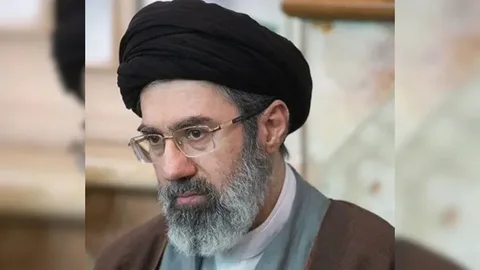

Iran’s newly appointed Supreme Leader Mojtaba Khamenei sustained injuries — including a fractured foot and facial lacerations — during the US-Israeli strikes on February 28, 2026, that also killed his father. He has not appeared publicly since taking office. Mojtaba Khamenei latest news from multiple international outlets suggests he is either recovering in a secure location, critically incapacitated, or — according to some unverified reports — in a coma. Western officials openly question whether Mojtaba Khamenei is still alive and in control of the Islamic Republic.
BACKGROUND
How Mojtaba Khamenei Came to Power
On February 28, 2026, the United States and Israel launched coordinated airstrikes on Iran’s leadership compound in Tehran. The attack killed Iran’s longtime Supreme Leader Ayatollah Ali Khamenei, along with five family members. What happened to Mojtaba Khamenei begins on that very same day — he was present near the strike location and was wounded in the initial bombardment.
In the days that followed, Iran’s Assembly of Experts — an 88-member clerical body — convened in Qom and named Mojtaba, the 56-year-old second son of the late leader, as Iran’s third Supreme Leader, receiving approximately 85% of votes from those present. The appointment was made under extreme wartime pressure.
The choice was controversial from the start. Iran’s ambassador to Cyprus, Alireza Salarian, confirmed to The Guardian that Ali Khamenei had not wanted his son to succeed him, having resisted the idea of a dynastic system. Senior clerics reportedly overruled his wishes, telling Mojtaba: “This is your job; you have to obey.”
Key Facts at a Glance
- Mojtaba Khamenei, 56, named Supreme Leader on March 9, 2026
- Mojtaba Khamenei injuries sustained on Feb. 28 — day one of the war
- Reported injuries: fractured foot, bruised left eye, facial lacerations
- Has not appeared on video or in public since his appointment
- US Defense Secretary Hegseth: “wounded and likely disfigured”
- Unverified report: secretly flown to Moscow for surgery
- Some sources claim he may be in a coma at Sina University Hospital
DETAILS
Mojtaba Khamenei Injuries: What the Reports Say
The question of Mojtaba Khamenei injuries has dominated international coverage since his appointment. Multiple outlets — citing sources inside Iran and Western intelligence — confirm he was wounded in the February 28 strike. The severity, however, is heavily disputed.
CNN reported, citing a source familiar with the situation, that Khamenei suffered a fractured foot, a bruise around his left eye, and minor cuts to his face. The Times of Israel reported injuries to his legs, with sources noting concern that any public communication could reveal his location and make him a target for further strikes.
Iran’s own state television acknowledged the injuries in an indirect but telling way — referring to the new supreme leader as “janbaz,” a term in Iran used exclusively for disabled war veterans. The label deepened speculation about whether his injuries were more serious than officially admitted.
Euronews spoke with Mohsen Sazegara — a founding member of the IRGC who later became a prominent critic of the Islamic Republic — who said sources inside Iran told him Mojtaba Khamenei was alive but recovering, with some reporting abdominal and leg surgery, and others suggesting facial injuries.
More alarming accounts emerged from i24NEWS, citing a Tehran source claiming the new supreme leader was hospitalised in intensive care at Sina University Hospital, reportedly unaware of the war, the deaths of his family, and even his own appointment as leader. A Kuwaiti newspaper report, cited by the Kyiv Post, claimed he was secretly evacuated to Moscow on a Russian military aircraft for surgery at a secure facility on the grounds of one of President Putin’s residences.
On the question of is Mojtaba Khamenei still alive — the most widely searched query — both US and Israeli officials believe he is alive, based on repeated attempts by senior Iranian figures to schedule meetings with him. However, US Director of National Intelligence Tulsi Gabbard told a House Intelligence Committee hearing that he was “very seriously wounded” and that decision-making had been disrupted as a result.
QUOTES
What Officials and Experts Have Said
“He is wounded and likely disfigured. He put out a statement yesterday — a weak one actually — but there was no voice, and no video. It was a written statement.”
— US Secretary of Defense Pete Hegseth, Pentagon press conference, March 2026
“I think he is damaged, but I think he’s probably alive in some form.”
— US President Donald Trump, White House press remarks
“No one knows anything about Mojtaba, whether he is alive or dead or how badly injured. We are all just told that he’s injured. He has no control over the war because he is not here.”
— Unnamed Iranian official, cited by i24NEWS
“He is wounded, but he is doing well. I don’t know when he will deliver his first speech.”
— Iranian Foreign Ministry spokesperson Esmaeil Baghaei, to Corriere della Sera
ANALYSIS
Would Mojtaba’s Death Change Iran’s Direction?
According to Mojtaba Khamenei latest news analysis from Al Jazeera, research fellow Kayhan Valadbaygi argues that focussing on Mojtaba Khamenei’s personal fate misses a more fundamental point: Iran’s power structure has been deliberately built to survive the loss of any single individual leader.
Over decades of Ali Khamenei’s rule, the Office of the Supreme Leader was transformed from a modest clerical role into the regime’s central institutional command post — with authority over security, finance, communications, religious seminaries, and the unelected state apparatus. The office now matters more than the person who holds it.
The IRGC and semi-state foundations — including the Mostazafan Foundation and Setad — form a military-bonyad complex that functions as the real engine of the regime. This structure is designed to consolidate and perpetuate itself regardless of what happened to Mojtaba Khamenei or who formally holds the title of supreme leader.
IMPACT
Regional and Global Implications
The invisible leadership of Mojtaba Khamenei has created a dangerous governance vacuum during an active war. Senior Iranian military commanders have reportedly not received direct orders from him since the conflict began. Israel’s Defence Minister Israel Katz declared any leader appointed by the regime would be “an unequivocal target for elimination,” raising the stakes of any public appearance further.
The IRGC has rapidly consolidated its grip on decision-making in the absence of clear supreme leader direction. Some clerical and political circles in Qom reportedly discussed restoring a temporary collective leadership structure, but the IRGC was expected to resist any such move strongly.
At least 1,444 people have been killed and more than 18,000 injured in Iran since the war began, according to Iran’s Health Ministry. US officials say more than 15,000 targets have been struck, including nuclear and military sites.
CONCLUSION
What Comes Next
The question of is Mojtaba Khamenei still alive and capable of governing remains the most consequential unanswered question of the current Iran crisis. If he is incapacitated or dead, a successor will emerge from Iran’s entrenched clerical-security establishment — but the transition during an active war could be highly destabilising.
If he recovers and reasserts authority, the deeper question is whether Iran’s deeply securitised system leaves any room for changed direction. Most analysts agree: the institutional machinery of the Islamic Republic is built to continue. What Mojtaba Khamenei latest news ultimately reveals is a regime that has deliberately made itself bigger than any single leader — harder, narrower, and more militarised than before the war began.
FREQUENTLY ASKED QUESTIONS
FAQ: Mojtaba Khamenei, Khomeini, and Iran’s Leadership
Q: What happened to Khomeini?
Ayatollah Ruhollah Khomeini was Iran’s first Supreme Leader following the 1979 Islamic Revolution. He died of natural causes on June 3, 1989, after a prolonged battle with heart disease and cancer. He was not assassinated or killed in any attack. Following his death, Ali Khamenei — father of Mojtaba Khamenei — was appointed as the second Supreme Leader by the Assembly of Experts.
Q: Who assassinated Khamenei?
Ayatollah Ali Khamenei was killed on February 28, 2026, in coordinated US-Israeli airstrikes on a leadership compound in Tehran. Five other family members were also killed in the same strike. His son, Mojtaba Khamenei, was named successor — and sustained his own Mojtaba Khamenei injuries in the same attack.
Q: How did Khamenei lose his hand?
Ali Khamenei lost the use of his right hand in a 1981 bomb attack while delivering a speech at a Tehran mosque. A bomb hidden inside a tape recorder exploded, causing permanent damage to his right arm. The attack was attributed to the Mojahedin-e Khalq (MEK). His son Mojtaba Khamenei now reportedly suffers from his own war injuries — a fractured foot, bruised eye, and facial lacerations — sustained in the 2026 US-Israeli strikes.