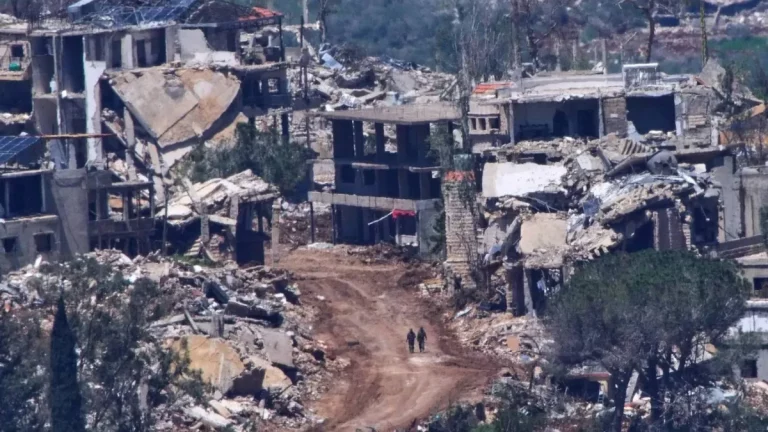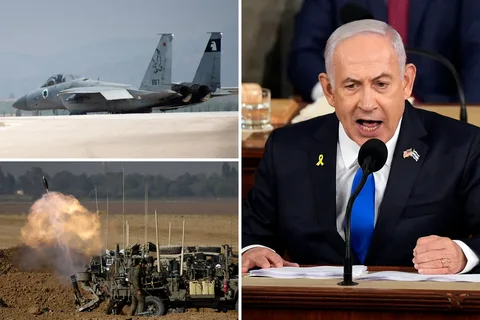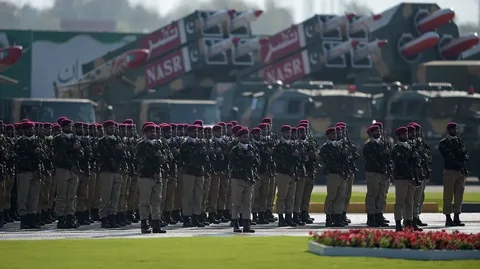


Brent crude rises to its highest level in a month as renewed military tensions between the United States and Iran raise concerns over global oil supplies through the Strait of Hormuz.
Global oil prices surged to their highest level in a month on Tuesday as renewed hostilities between the United States and Iran entered a third consecutive day, fueling fears of supply disruptions in the strategically vital Strait of Hormuz.
Brent crude, the international benchmark for oil prices, climbed as much as 3.8% during early trading, extending Monday’s 9.6% rally as investors reacted to escalating geopolitical tensions in the Middle East.
As of 08:00 GMT, Brent crude futures for September delivery were trading at $85.92 per barrel, their highest level since June 15.
The latest price rally comes after a period of relative stability following last month’s memorandum of understanding (MoU) between Washington and Tehran aimed at easing regional tensions.
Despite that agreement, Brent crude has now climbed 19% compared with levels recorded before the outbreak of the latest US-Iran conflict, highlighting growing market concerns over the security of global energy supplies.
The Strait of Hormuz, through which roughly one-fifth of the world’s oil shipments pass, remains one of the most critical maritime routes for international energy trade.
Any disruption to shipping through the narrow waterway can significantly affect global crude prices and fuel markets.
The US Central Command (CENTCOM) announced on Monday that American forces carried out strikes against Iranian targets for a third consecutive day.
According to CENTCOM, the operations were aimed at reducing Iran’s capability to threaten commercial shipping and civilian vessels operating in the Strait of Hormuz.
In response, Iran’s Islamic Revolutionary Guard Corps (IRGC) claimed responsibility for attacks on two oil supertankers transiting the strait and said it launched missile and drone strikes targeting US military facilities in Kuwait and Bahrain.
The exchange has heightened fears that the conflict could further disrupt shipping lanes and energy exports from the Gulf region.
Adding to uncertainty in global markets, President Donald Trump announced plans to reinstate a blockade on Iranian ports and introduce transit fees for vessels using the Strait of Hormuz.
Trump said the United States would act as the “guardian” of the strategic waterway, although details regarding the proposed measures have not yet been released.
Analysts say any restrictions affecting maritime traffic through the strait could have significant implications for international trade and global oil supplies.
Energy traders continue to closely monitor military developments in the region, with concerns that further escalation could tighten global oil supplies and place additional pressure on fuel prices.
Market analysts note that geopolitical tensions remain one of the biggest drivers of oil price volatility, particularly when they involve the Gulf region, which accounts for a significant share of global crude exports.
Investors are expected to remain focused on diplomatic developments and military activity in the coming days as the situation continues to evolve.