
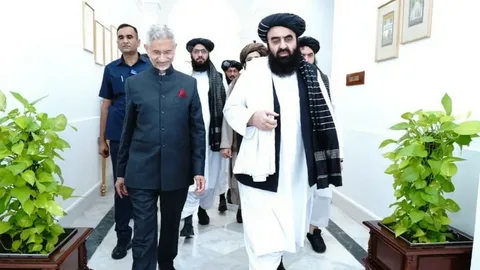
The Pakistan FO India Afghanistan statement row has erupted into one of the sharpest diplomatic exchanges between Islamabad and New Delhi in recent memory.
Pakistan’s Foreign Office rejected the baseless, misleading, and unwarranted statement issued by India’s Ministry of External Affairs on Pakistan’s action against terrorist infrastructure in Afghanistan.
The Pakistan FO India Afghanistan statement rejection came after India condemned Pakistan’s airstrikes in Afghanistan as a direct threat to regional peace and stability — a characterisation Islamabad called absurd, hypocritical, and grounded in bad faith.
The exchange adds a sharp diplomatic dimension to an already contested pak afghan war that has seen Pakistan strike 81 locations across Afghanistan since Operation Ghazab Lil Haq began.
Background
Pakistan FO India Afghanistan Statement — How the Row Began
The Pakistan FO India Afghanistan statement dispute cannot be understood without the broader context of the pak afghan war and the deeply complicated india-afghanistan relations that have shaped South Asian geopolitics for decades.
The development came as Pakistan continued with Operation Ghazab lil-Haq, which was launched in late February following unprovoked firing by the Afghan Taliban from across the border. India’s MEA condemned Pakistan’s strikes in Afghanistan, calling it an act of aggression and claiming the action led to the death of several civilians.
Pakistan’s response to the India statement on its pakistan-afghanistan operations was categorical. FO spokesperson Tahir Andrabi said India’s comments on Pakistan’s legitimate, targeted and precise actions against terrorist hideouts and support bases inside Afghanistan are not only absurd and unwarranted but also shamefully hypocritical.
The Pakistan FO India Afghanistan statement rejection reflects the full weight of Islamabad’s frustration with what it describes as India’s decades-long policy of using Afghanistan as a base of operations against Pakistan — a central accusation in the pak afghan war narrative.
Details
Pakistan FO India Afghanistan Statement — Full FO Response
FO spokesperson Tahir Andrabi stated that the Pakistan FO India Afghanistan statement rejection was grounded in clear evidence. He said that against the backdrop of India’s active sponsorship of terrorism directed at Pakistan from Afghan soil, as well as its historical role as a spoiler, the Indian statement merely reflected India’s blatant hypocrisy and duplicity.
Pakistan went further than simply rejecting India’s criticism. The FO accused India of actively supporting and sponsoring terrorist groups operating from Afghan soil, including Fitna-al-Khawarij and Fitna-al-Hindustan, stating that India’s reaction reflected its frustration at the destruction of its terrorist franchise in Afghanistan.
The Pakistan FO India Afghanistan statement also addressed India’s record on human rights. The spokesperson stated that India, a serial violator of human rights and international law, continues to illegally occupy Indian Illegally Occupied Jammu and Kashmir in violation of the United Nations Charter and relevant UN Security Council resolutions, and has been responsible for perpetrating state terrorism in the occupied territory. Under its Hindutva extremist ideology, India continued to systematically marginalise its minorities, spread Islamophobia, and had even weaponised water in contravention of its treaty obligations.
Pakistan at the UN Security Council
The Pakistan FO India Afghanistan statement row extended to the United Nations. At the UN Security Council during a debate on Afghanistan, Pakistan’s Permanent Representative Ambassador Asim Iftikhar Ahmad said India’s remarks were no surprise, citing India’s animosity towards Pakistan and the sole objective of its Afghan policy being to destabilise Pakistan. He further accused India of actively supporting and sponsoring terrorist groups operating from Afghan soil, such as the Tehreek-i-Taliban Pakistan and the Baloch Liberation Army.
India’s Position
India’s Ministry of External Affairs had called Pakistan’s military action in Afghanistan a direct threat to regional peace and stability, citing civilian casualties from the strikes. India’s statement was consistent with its long-standing india-afghanistan relations policy of maintaining a presence and voice in Afghan affairs — something Pakistan has historically viewed as strategic encirclement.
Pakistan-Afghanistan Background
The pakistan-afghanistan relationship that underpins the Pakistan FO India Afghanistan statement dispute has never been straightforward. Pakistan’s motivation in its Afghan policy has been to ensure that India’s presence in Afghanistan, even political or cultural, is minimal, and to prevent Afghanistan from being used as a base that threatens Pakistan’s strategic depth.
The current pak afghan war has brought those long-running tensions to a direct military confrontation. Pakistan claims it is acting in self-defence against terrorist attacks launched from Afghan soil. The Taliban government denies harbouring anti-Pakistan terrorists. India’s entry into the debate has added a third dimension that further complicates any diplomatic resolution.
India-Afghanistan Relations — Why India Speaks on Afghanistan
Understanding why India issued the statement that triggered the Pakistan FO India Afghanistan statement rejection requires understanding the depth of india-afghanistan relations.
India is the biggest regional donor to Afghanistan and fifth largest donor globally with over $3 billion in assistance. India has built over 200 public and private schools, sponsors over 1,000 scholarships, and hosts over 16,000 Afghan students.
India’s investment in afghanistan relations has always carried a strategic dimension. India’s growing economic and political influence in Afghanistan has angered Pakistan, the traditional power there. Islamabad fears an Indian-dominated or closely allied Afghanistan would leave it encircled and vulnerable in any potential conflict with India.
From India’s perspective, the pak afghan war directly threatens infrastructure, diplomatic relationships, and strategic positioning that New Delhi has built in Afghanistan over more than two decades. That is why india-afghanistan relations drove India to issue the statement that produced the Pakistan FO India Afghanistan statement rejection.
Quotes
“Pakistan rejects the baseless, misleading, and unwarranted statement issued by the Indian Ministry of External Affairs on Pakistan’s ongoing action against terrorist infrastructure in Afghanistan.” — FO Spokesperson Tahir Andrabi
“India’s active support and sponsorship of terrorist groups operating from Afghan soil, including Fitna-al-Khawarij and Fitna-al-Hindustan, are well known.” — FO Spokesperson Tahir Andrabi
“India must refrain from supporting and sponsoring terrorist groups operating from Afghan soil, including those listed under the UN Security Council sanctions list. India should cease its misplaced lament over Pakistan’s successful counter-terrorism measures.” — Pakistan Foreign Office Concluding Statement
“India’s remarks were no surprise, given its animosity towards Pakistan and the sole objective of its Afghan policy being to destabilise Pakistan.” — Ambassador Asim Iftikhar Ahmad, Pakistan’s UN Permanent Representative
“Pakistan’s strikes in Afghanistan had led to the death of several civilians and constitute an act of aggression.” — Indian Ministry of External Affairs Statement
“Pakistan’s recent strikes in Afghanistan were aimed solely at terrorists and grounded in precise intelligence, driven entirely by the need to protect its citizens.” — Mosharraf Zaidi, PM Shehbaz’s Foreign Media Spokesman
Impact
For pakistan-afghanistan relations, the Pakistan FO India Afghanistan statement row confirms that the pak afghan war has now drawn in a third major party. India’s public condemnation of Pakistan’s strikes has given the Taliban diplomatic cover at the international level — a development Islamabad views as deliberate and dangerous.
For india-afghanistan relations, the episode exposes the limits of New Delhi’s influence since the Taliban takeover. India has no formal diplomatic recognition of the Taliban government, yet it chose to publicly condemn military action taken against Taliban-affiliated territory — a position that reflects india-afghanistan relations built on decades of investment and strategic interest rather than any formal alliance.
For the pak afghan war, the diplomatic fallout from the Pakistan FO India Afghanistan statement dispute makes a negotiated resolution harder. With India now publicly on record criticising Pakistan’s military operations, Islamabad has less incentive to moderate its military posture and more reason to frame the entire operation as a response to a broader Indian-Afghan-Taliban nexus.
For the UN Security Council, the Pakistan FO India Afghanistan statement dispute has been aired at the highest international forum. Pakistan’s claims of Indian sponsorship of terrorism and India’s claims of Pakistani civilian casualties are now formally on record — a development that may shape any future international investigation into the conduct of the pak afghan war.
FAQs
Who is the largest donor to Afghanistan?
India is the biggest regional donor to Afghanistan and fifth largest donor globally with over $3 billion in assistance. India has built over 200 public and private schools, sponsors over 1,000 scholarships, and hosts over 16,000 Afghan students.The United States remains the largest single international donor to Afghanistan overall. India’s dominance as a regional donor is central to understanding why india-afghanistan relations remain so strategically significant — and why the Pakistan FO India Afghanistan statement row carries the weight it does.
Why does Afghanistan support India instead of Pakistan?
India is a major donor of aid to Afghanistan with extensive cultural and educational relations. Most of Afghanistan’s elite have been educated in India at high school or college level, and many Afghans see India as a guarantor of Afghanistan’s sovereignty against possible dominance by Pakistan.Afghanistan’s historical grievances with Pakistan over the Durand Line, cross-border Taliban support, and interference in its internal affairs have consistently pushed Kabul closer to New Delhi in its foreign policy — a reality that Pakistan views as strategic encirclement and that has driven much of the pak afghan war’s underlying logic.
Who is stronger, Pakistan or Afghanistan?
Pakistan is significantly stronger militarily than Afghanistan by every conventional measure. Pakistan has a nuclear arsenal, a professional standing army of over 600,000 active personnel, an air force with advanced F-16 and JF-17 fighters, and a defence budget that dwarfs Afghanistan’s entire GDP. The current pak afghan war has seen Pakistan conduct airstrikes across 81 locations in Afghanistan without any matching Afghan conventional military response. Afghanistan’s Taliban government has relied on drone harassment, cross-border militia attacks, and diplomatic pressure — including through the Pakistan FO India Afghanistan statement dispute — rather than conventional military confrontation, reflecting the vast asymmetry in pakistan-afghanistan military capability.
Conclusion
The Pakistan FO India Afghanistan statement rejection is more than a diplomatic communiqué. It is a window into the full complexity of the pakistan-afghanistan conflict and the india-afghanistan relations that have shaped it for decades.
Pakistan sees India’s statement as evidence of a deliberate strategy to exploit the pak afghan war for strategic gain — to weaken Pakistan diplomatically while its military is stretched along the Afghan frontier.
India sees Pakistan’s airstrikes as destabilising, civilian-harming, and threatening to the infrastructure of india-afghanistan relations it has built at a cost of over three billion dollars.
Pakistan’s position is clear — India must refrain from supporting and sponsoring terrorist groups operating from Afghan soil and should cease its misplaced lament over Pakistan’s successful counter-terrorism measures.
The Pakistan FO India Afghanistan statement dispute will not be resolved by press releases. It reflects a fundamental strategic competition between South Asia’s two nuclear powers, fought — as it has been for decades — on Afghan soil.