Pakistan’s military rank in 2026 sits at 14th out of 145 countries on the Global Firepower Index, the most widely cited annual ranking of conventional military strength. That’s a decline from 9th in 2024 and 12th in 2025, a two-year slide that’s prompted real debate among defense analysts about what’s actually driving it: shifts in the index’s methodology, changes in equipment and readiness, or a mix of both.
Numbers alone don’t capture everything, and Pakistan still maintains a large, experienced military backed by nuclear deterrence, a sizable air force, and a growing domestic defense industry. But a ranking conversation that doesn’t mention the actual rank, or the direction it’s been moving, isn’t telling the full story.
Pakistan Military Rank in 2026: Current Global Standing
The Global Firepower Index evaluates 145 countries across more than 60 factors: manpower, equipment, logistics, financial resources, geography, and more, producing a Power Index score where lower is stronger. The United States holds the top spot with a score of 0.0741, a position it’s kept since 2005. Russia and China round out the top three, with India in fourth and South Korea in fifth.
Pakistan’s 2026 score is 0.2626, placing it 14th. That keeps it inside the broadly defined top tier of global military powers, but the trend line matters here: the country has dropped five places in two years. Some defense commentary has connected that slide to changes in how the index weighs operational readiness following India’s Operation Sindoor strikes in May 2025, alongside Germany, France, and Japan posting notable gains that pushed other nations down the list in relative terms. Whatever the precise cause, treating the ranking as static when it’s actually moved substantially in two years would be misleading.
Rankings like this also have real limits. They don’t fully capture combat experience, strategic geography, doctrine, or how a military actually performs under real operational stress rather than on a spreadsheet.
Pakistan Military Power Continues to Evolve
Pakistan’s military modernization has leaned into indigenous weapons production, including armored vehicles, drones, precision-guided weapons, naval platforms, and fighter aircraft developed through partnerships, mainly with China. That domestic capacity matters strategically because it reduces dependence on foreign suppliers for critical equipment.
Modernization efforts have also pushed into digital warfare, intelligence gathering, electronic warfare, and integrated command networks meant to improve coordination across the army, air force, and navy. Whether that investment is translating into a stronger overall ranking is genuinely an open question given the recent downward trend.
Pakistan Army Remains the Backbone of National Defense
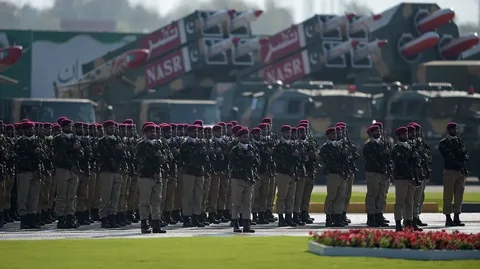
The Pakistan Army is still the country’s primary conventional force and one of the largest standing armies in Asia, with hundreds of thousands of active personnel and a substantial trained reserve.
Its operational record spans counterterrorism, border security, mountain warfare, disaster response, and international peacekeeping. The army has continued investing in armored formations, artillery, air defense, surveillance, and battlefield communications, though the practical effect of these investments on overall readiness has come under more scrutiny following recent regional developments.
Pakistan Air Force Strength and Modernization
The Pakistan Air Force remains one of the country’s more technologically advanced branches, with modern fighter aircraft, airborne early warning systems, aerial refueling, precision strike capability, and integrated radar networks.
Joint production programs have strengthened the domestic aerospace sector while cutting long-term procurement costs, and training standards and multinational exercises have continued shaping operational readiness. The PAF also plays a role in disaster relief, surveillance, maritime security, and broader strategic deterrence beyond pure air combat.
Pakistan Navy Expands Maritime Security
Regional sea lanes and economic corridors have pushed maritime security higher up Pakistan’s defense priorities. The Navy has focused on expanding its submarine fleet, modern frigates, maritime patrol aircraft, coastal defense systems, and naval aviation.
Investments in port infrastructure and surveillance have strengthened coastal security as well, aimed at protecting trade routes and Pakistan’s interests in the Arabian Sea, alongside contributing to broader regional maritime stability.
Pakistan Military News Today Highlights Modernization
Recent coverage of Pakistan’s military tends to center on defense cooperation, indigenous weapons development, joint exercises, cybersecurity, and broader technological modernization. Military leadership continues to stress training alongside hardware, with growing attention to unmanned systems, AI, satellite surveillance, and integrated battlefield management.
How much these investments shift Pakistan’s standing over the next few years will depend heavily on whether they translate into measurable readiness gains rather than just procurement announcements.
Pakistan Military Rank in 2025 Compared with 2026
Pakistan’s GFP rank moved from 12th in 2025 to 14th in 2026, continuing a decline that started from 9th in 2024. That’s not a one-year blip. It’s a sustained two-year slide, and it’s worth being direct about that rather than describing the transition as simple “continuity.”
Annual rankings do fluctuate for reasons beyond raw military capability: updated budgets, new acquisitions elsewhere, shifting logistics figures, and methodology revisions all play a role. But Pakistan’s specific trend has been consistently downward for two consecutive years, which is a different story than year-to-year noise.
Regional Security Environment
South Asia remains one of the world’s most closely watched regions strategically, and Pakistan’s defense posture is shaped largely around deterrence, territorial integrity, and counterterrorism. Military planners have also been paying more attention to hybrid warfare, cyber threats, information operations, and broader technological competition with regional neighbors.
Regional developments, India’s military posture chief among them, continue to shape Pakistan’s procurement decisions, exercises, and intelligence cooperation.
Economic Challenges and Defense Planning
Like most countries, Pakistan has to balance defense spending against other economic priorities, and that tension shapes what’s actually achievable in modernization. Training, maintenance, research, and infrastructure all require sustained investment, and Pakistan’s broader economic performance has a direct bearing on how much of that investment is realistic.
A defense budget constrained by wider economic pressure limits what indigenous manufacturing and research programs can actually deliver, regardless of stated ambitions.
Pakistan Military Rank in 2027 Outlook
Whether Pakistan’s rank stabilizes, recovers, or continues sliding in 2027 depends largely on whether the country can reverse the trend that’s defined the past two years. Greater domestic defense production, expanded drone capability, stronger cyber defense, and AI integration could help, but the recent trajectory suggests that simply continuing current programs hasn’t been enough to hold position so far.
Pakistan Military Rank in 2030: Long-Term Expectations
Predicting where Pakistan lands by 2030 is genuinely speculative, since future rankings depend on economic growth, defense spending, geopolitical shifts, and how assessment methodologies themselves evolve.
If the current downward trend continues, Pakistan risks slipping further out of the world’s most closely tracked military powers. Reversing it would likely require more than incremental modernization; it would mean addressing whatever specific weaknesses recent assessments have flagged, rather than just expanding existing programs.
Pakistan Military Rank in 2050: Future Possibilities
Anything said about Pakistan’s military standing in 2050 is necessarily speculative. Military capability over the next two decades will hinge on technological innovation, demographic trends, industrial development, AI, robotics, space capability, and international partnerships.
Future warfare looks set to rely more heavily on autonomous systems, cyber operations, satellite networks, and integrated command structures. Countries that invest early in these areas are likely to come out ahead, and Pakistan’s long-term position will depend as much on innovation, education, and industrial capacity as on traditional military spending.
Expert Perspectives
Numerical rankings like the GFP index can’t fully capture combat experience, strategic geography, nuclear deterrence, alliance structures, doctrine, or leadership quality. Pakistan’s decades of counterterrorism operations and peacekeeping deployments contribute real professional expertise that doesn’t show up cleanly in a spreadsheet score.
That said, the recent two-year decline in Pakistan’s ranking isn’t something rankings alone can explain away either. It reflects real assessments of operational readiness following recent regional conflict, and that’s worth taking seriously rather than dismissing as just methodology noise. Future military competition is also widely expected to hinge more on technological edge than sheer force size, which raises the stakes on Pakistan’s modernization actually delivering results.
Regional and Global Impact
Pakistan’s military capability remains a real factor in South Asian strategic stability, touching deterrence, maritime security, counterterrorism cooperation, and peacekeeping contributions. Global defense observers continue tracking its modernization push, indigenous industry, and evolving partnerships, particularly with China.
As military technology reshapes how conflicts are fought worldwide, how well Pakistan’s investments translate into actual readiness, not just rankings, will remain a significant factor in regional defense planning.
Conclusion
Pakistan’s military rank in 2026, 14th out of 145 on the Global Firepower Index and down from 9th just two years earlier, is more specific and more telling than a vague claim of being “among the world’s leading military powers.” The country still fields a sizable, experienced military with nuclear deterrence and a growing indigenous defense base, but the recent ranking trend points to real challenges in operational readiness that modernization programs haven’t fully offset.
Where Pakistan lands in 2027, 2030, and 2050 will depend on whether current investment translates into measurable readiness gains or continues to lag behind the pace other nations are setting.
Frequently Asked Questions (FAQs)
What is the rank of Pakistan Army in the world 2026?
On the 2026 Global Firepower Index, the most widely cited annual ranking, Pakistan sits 14th out of 145 countries, with a Power Index score of 0.2626. That’s down from 9th in 2024 and 12th in 2025. Different organizations use different methodologies, so other indexes may produce somewhat different placements, but GFP’s trend line shows a clear two-year decline.
Which is stronger, IAF or PAF?
It depends on the criteria. The Indian Air Force operates a larger fleet with greater overall manpower and resources, while the Pakistan Air Force is generally regarded for high operational readiness, pilot training, and integrated air defense systems relative to its size. Most military analysts avoid declaring one universally stronger, since each force has different strategic priorities and operates under different doctrines.
Is Pakistan’s army stronger than Israel’s?
This comparison doesn’t translate cleanly because the two countries operate in completely different strategic environments. Pakistan maintains one of the world’s larger standing armies with substantial conventional capability and nuclear deterrence, while Israel relies on advanced technology, intelligence capability, and a sophisticated domestic defense industry built around a much smaller force. Which one comes out “stronger” really depends on the specific scenario being considered rather than any single ranking.