
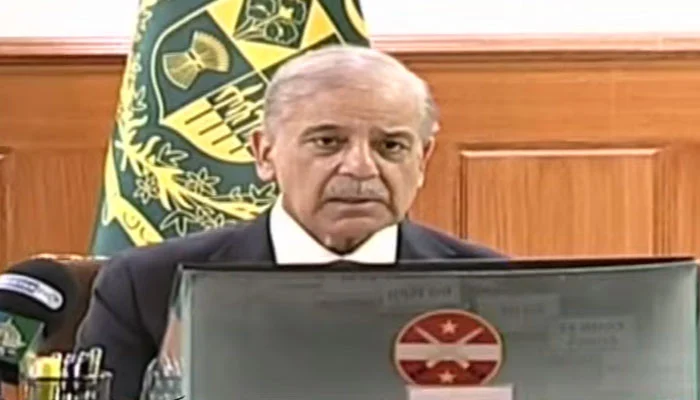
The Pakistan Prime Minister 2026 update centers on Shehbaz Sharif, who this week chaired a high-level Apex Committee meeting in Quetta to review the deteriorating security situation in Balochistan. Prime Minister Shehbaz Sharif arrived in the provincial capital on a one-day visit, following a series of deadly terrorist attacks that left dozens of security personnel and civilians martyred across the province. The meeting brought together the country’s top civilian and military leadership to chart the way forward.
Background
Shehbaz Sharif currently serves as the sitting Pakistan Prime Minister in 2026, holding the office for a second time after first becoming premier in 2022. He belongs to the Pakistan Muslim League-Nawaz (PML-N) and is widely recognized as the 23rd Prime Minister of Pakistan when he first took oath, later returning to the office in March 2024 following the general elections.
Balochistan has remained one of the most volatile regions in the country for years, with militant groups repeatedly targeting security forces, railway infrastructure, and civilian convoys. This week alone, three major terrorist incidents claimed the lives of 42 security personnel and civilians, prompting Prime Minister Shehbaz Sharif to travel to Quetta personally rather than delegate the response.
Details
Prime Minister Shehbaz Sharif landed in Quetta amid tight security arrangements, where he was received by Balochistan Governor Jaffar Khan Mandokhail, Chief Minister Sarfraz Bugti, and senior civil and military officials. He was accompanied by Economic Affairs Minister Ahad Khan Cheema, Information Minister Attaullah Tarar, and Adviser to the Prime Minister Rana Sanaullah during the visit.
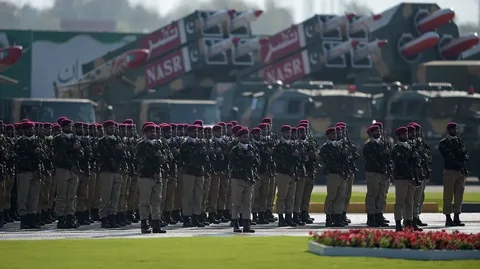
The prime minister chaired a meeting of the Provincial Apex Committee under the National Action Plan, a forum designed to coordinate counter-terrorism strategy between federal and provincial authorities. Chief of Army Staff and Chief of Defence Forces Field Marshal Asim Munir attended alongside the heads of major law enforcement agencies, underscoring the seriousness with which the government is treating the province’s security challenges.
During the session, officials briefed the prime minister on ongoing counter-terrorism operations, with the military confirming that 54 militants had been neutralised in retaliatory strikes following this week’s attacks. Chief Minister Bugti reaffirmed that operations against militants and their facilitators would continue without pause until the last threat was eliminated from Balochistan’s soil.
Quotes
Chief Minister Sarfraz Bugti stressed during the meeting that anyone taking up arms against the state would find no safe haven in Balochistan. He further emphasised that there would be no compromise on the peace, stability, and long-term development of the province, adding that every conspiracy against Balochistan would be crushed through unity and resolve.
Officials at the Prime Minister’s Office noted that the visit reflected the federal government’s continued commitment to standing beside Balochistan’s people during a difficult period, with further security and development measures expected to follow the Apex Committee’s recommendations.
Impact
The renewed security push in Balochistan carries significance well beyond the province itself. Balochistan hosts critical infrastructure, mineral resources, and trade corridors linked to regional connectivity projects, meaning instability there has ripple effects on Pakistan’s broader economic and security outlook. A stable Balochistan is also seen as essential to reassuring international investors and neighbouring countries about the safety of long-term development projects in the region.
Regionally, Pakistan’s ability to manage internal security challenges also shapes its diplomatic standing, particularly as Prime Minister Shehbaz Sharif has simultaneously positioned Pakistan as a mediator in wider regional conflicts this year. Analysts note that sustained instability in Balochistan could complicate these broader foreign policy efforts if not addressed decisively.
Conclusion
Going forward, the Apex Committee’s decisions from this Quetta meeting are expected to translate into intensified counter-terrorism operations, additional troop deployments in sensitive districts, and continued coordination between Islamabad and the provincial government. Prime Minister Shehbaz Sharif is likely to remain closely engaged with Balochistan’s security file in the coming weeks, given the scale of this week’s attacks and the political pressure to demonstrate a decisive federal response.
Who Is Shehbaz Sharif? A Quick Profile
Mian Muhammad Shehbaz Sharif was born on 23 September 1951 in Lahore, Punjab. He is a Pakistani politician and businessman who has led the Pakistan Muslim League-Nawaz (PML-N) since 2017 and currently serves as the country’s prime minister. Before entering national politics on a full-time basis, he built a long career in Punjab provincial government.
Shehbaz Sharif served three separate terms as Chief Minister of Punjab, spanning more than 12 years in total, which makes him the longest-serving person to hold that provincial office. His tenure in Punjab was known for large infrastructure projects, including the Lahore Metro Bus and Orange Line Train systems, along with education and healthcare reforms across the province.
Shehbaz Sharif Prime Minister Number: Where Does He Rank?
A common question people search for is the Shehbaz Sharif prime minister number, meaning where he sits in the country’s line of premiers. Shehbaz Sharif first took oath as Pakistan’s prime minister on 11 April 2022, becoming the 23rd person to hold the office after Imran Khan, who was the 22nd prime minister, was removed through a no-confidence vote. His first term lasted until August 2023, when he stepped down ahead of general elections.
Following the 2024 general election, Shehbaz Sharif returned to the prime minister’s office in March 2024 as head of a coalition government led by his party. Some official records count this second term as a fresh, later-numbered premiership, while others treat it as a continuation of the same individual’s tenure in office. Either way, Shehbaz Sharif remains the current Pakistan Prime Minister in 2026, making him one of only a handful of leaders in the country’s history to hold the post more than once.
Nawaz Sharif and the Sharif Family’s Political Legacy
Shehbaz Sharif’s political rise cannot be separated from his elder brother, Nawaz Sharif, who served as Pakistan’s prime minister three separate times and remains one of the most influential figures in the country’s modern political history. Nawaz Sharif founded and long led the PML-N before handing party leadership to Shehbaz in 2017, after the Supreme Court disqualified Nawaz from holding public office.
The Sharif family’s roots trace back to Amritsar before Partition, after which the family settled in Lahore and built the Ittefaq Group business empire. This shared business and political background has shaped both brothers’ careers, with Shehbaz often described as the more administration-focused counterpart to Nawaz’s broader political messaging.
Shehbaz Sharif Father: Family Background
Shehbaz Sharif’s father was Mian Muhammad Sharif, a successful businessman who founded the family’s industrial ventures after relocating from Amritsar to Lahore following Pakistan’s independence in 1947. Mian Muhammad Sharif built the foundation of the Sharif family’s business empire, which later expanded into steel and other industries under his sons’ leadership.
The elder Sharif is often credited with instilling the work ethic and business discipline that both Nawaz Sharif and Shehbaz Sharif carried into their respective political careers. Though he did not hold public office himself, his influence on the family’s rise in both business and politics is widely acknowledged in profiles of the Sharif dynasty.
Shehbaz Sharif Spouse and Children
Regarding the Shehbaz Sharif spouse question, reports indicate that Shehbaz Sharif has been married multiple times over the years, though only two marriages are formally acknowledged by the Sharif family. His first wife, Begum Nusrat Shehbaz, whom he married in 1973, was the mother of four of his children. His second acknowledged wife is Tehmina Durrani, a Pakistani author and social activist, whom he married in 2003.
With Nusrat, Shehbaz Sharif has two sons, Salman and Hamza, along with twin daughters, Javeria and Rabia. Hamza Shehbaz has followed his father into politics and has previously served as Chief Minister of Punjab, continuing the family’s long-standing presence in provincial governance. The Shehbaz Sharif children have largely maintained a mix of public and private profiles, with Hamza being the most politically active among them.
Pakistan Prime Minister List: 1947 to 2023
For readers researching the Pakistan Prime Minister list from 1947 to 2023, the office has seen more than twenty individuals hold the post, alongside several caretaker premiers appointed to oversee transitions between governments. The list begins with Liaquat Ali Khan, the country’s first prime minister, who took office at independence in August 1947 and served until his assassination in 1951.
Other prominent names on the Pakistan Prime Minister list include Huseyn Shaheed Suhrawardy, Chaudhry Muhammad Ali, and Feroz Khan Noon in the 1950s, followed by a long gap during military rule under Ayub Khan and Yahya Khan. The office was restored in the 1970s under Zulfikar Ali Bhutto, Pakistan’s first democratically elected prime minister, and later saw Muhammad Khan Junejo take charge in the 1980s.
The 1990s and 2000s brought repeated terms for Benazir Bhutto, Pakistan’s first and only female prime minister, and Nawaz Sharif, who served three non-consecutive terms and remains the longest-serving prime minister overall. More recent names on the list include Yusuf Raza Gilani, Raja Pervez Ashraf, Nawaz Sharif’s third term, Shahid Khaqan Abbasi, Imran Khan, and Shehbaz Sharif, whose first term extended into 2023 before Anwaar-ul-Haq Kakar took over as caretaker prime minister ahead of the 2024 elections.
Prime Minister Shehbaz Sharif on X (Twitter)
Prime Minister Shehbaz Sharif remains active on X, where his official handle is regularly used to announce major government decisions, diplomatic developments, and responses to national security incidents. Earlier this year, he used the platform to announce a ceasefire breakthrough between Iran and the United States, inviting both delegations to Islamabad for further negotiations, a move that drew international attention to Pakistan’s diplomatic role.
His presence on X has become an important channel for real-time updates on issues ranging from Balochistan security operations to economic policy announcements, making it a key source for journalists and analysts tracking the Pakistan Prime Minister 2026 news cycle.
Frequently Asked Questions
Who is the youngest Prime Minister of Pakistan?
Among Pakistan’s prime ministers, Zulfikar Ali Bhutto is often cited as one of the younger leaders to take on major national leadership roles, though the title of youngest elected prime minister is generally associated with Benazir Bhutto, who first became prime minister in December 1988 at 35 years of age. This made her not only the youngest person to hold the office at the time but also the first woman to lead a Muslim-majority country as an elected head of government. Her rise to power came shortly after the death of military ruler Zia-ul-Haq, marking a significant shift back toward civilian, democratic rule in Pakistan.
Where is PM Shehbaz Sharif now?
As of this week, Prime Minister Shehbaz Sharif is in Quetta, Balochistan, where he arrived on a one-day visit to chair a high-level Apex Committee meeting on the province’s security situation. He is expected to return to Islamabad after concluding consultations with provincial leadership, military officials, and law enforcement heads. His schedule in the near term is expected to remain focused on Balochistan’s security file, alongside his ongoing responsibilities managing the federal government’s economic and diplomatic priorities.
How long has Shehbaz Sharif been in politics?
Shehbaz Sharif’s political career dates back to 1988, when he was first elected to the Punjab Assembly. Over more than three decades since then, he has served as a provincial lawmaker, three-time Chief Minister of Punjab, Leader of the Opposition in the National Assembly, and now twice as the Prime Minister of Pakistan, making him one of the most experienced administrators in the country’s political history.