
Pakistan is racing against time to secure its energy future as the closure of the Strait of Hormuz the world’s most critical oil chokepoint threatens to cut off the bulk of the country’s petroleum supplies.
The Strait of Hormuz, through which roughly 20% of the world’s daily oil consumption flows, was officially closed to many foreign vessels on February 28, 2026, following US-Israeli military strikes on Iran. For Pakistan, a country whose oil trade routes run almost entirely through this narrow waterway, the crisis has triggered urgent diplomatic action and a desperate search for alternative oil routes in Pakistan. The government has turned to Saudi Arabia, requesting fuel supply via the Red Sea port of Yanbu, while Finance Minister Muhammad Aurangzeb has urged citizens to conserve fuel as a precautionary step.
Background: Why the Strait of Hormuz Matters So Much to Pakistan
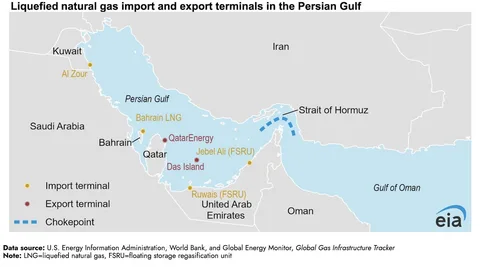
The Strait of Hormuz, a narrow corridor barely 33 kilometres wide at its tightest point, connects the Persian Gulf to the Gulf of Oman and the Arabian Sea. In 2025, nearly 15 million barrels per day of crude oil approximately 34% of all global crude oil trade passed through the Strait of Hormuz, with the bulk destined for Asian markets.
For Pakistan, this is not a distant geopolitical problem. Bangladesh, India, and Pakistan imported almost two-thirds of their total LNG supplies via the Strait of Hormuz in 2025, making a disruption of the Strait of Hormuz oil route an immediate national emergency.
The bulk of Pakistan’s oil and energy supplies normally pass through the Strait of Hormuz, meaning the country’s fuel imports, power generation, and transportation sector are all tied to a single, now-blocked chokepoint. The Strait of Hormuz oil percentage that flows toward Asia estimated at around 84% of all Strait exports underscores just how exposed Pakistan and its neighbours are.
Details: Pakistan’s Diplomatic Push for Alternative Oil Routes
Pakistan formally requested Saudi Arabia to continue its oil supply through an alternate route after Iran’s closure of the Strait of Hormuz. Federal Minister for Petroleum Ali Pervaiz Malik made the request during a meeting with Saudi Ambassador to Pakistan Nawaf bin Said Al-Malki, asking specifically for the provision of oil through the port of Yanbu on the Red Sea.The port of Yanbu sits at the western end of Saudi Arabia’s East-West Crude Oil Pipeline, also known as the Petroline, which runs across the Arabian Peninsula from the oil-rich eastern fields to the Red Sea coast. The Saudi East-West crude oil pipeline has a capacity of 5 million barrels per day and runs east-to-west from the Abqaiq processing center to Yanbu on the Red Sea.This is the most practical Strait of Hormuz alternative currently in operation.
On March 4, Pakistan officially requested that Saudi Arabia reroute oil supplies through the port of Yanbu, with Saudi Arabia providing assurances and arranging at least one crude shipment to bypass the closed strait.
In parallel, India and Pakistan sent destroyers to escort tankers in the Gulf of Oman, although not in the Strait of Hormuz itself. This military deployment signals just how seriously Islamabad is treating the threat to its oil trade routes.
On a more positive note for Pakistan, on March 26, the Foreign Minister of Iran, Abbas Araghchi, announced that ships owned by five nations including China, Russia, India, Iraq, and Pakistan would be allowed to transit the Strait of Hormuz. A day later, a Pakistani oil tanker crossed the Strait of Hormuz with Iranian permission on March 16, offering a brief window of relief. However, the situation remains fluid, and Pakistan cannot rely solely on Iranian goodwill for its long-term energy security.
The Global Picture: How Limited Are Strait of Hormuz Alternatives?
The uncomfortable truth that energy analysts keep repeating is that alternative oil routes cannot fully replace the Strait of Hormuz oil route at least not quickly and not at scale.
Only Saudi Arabia and the UAE have operational crude pipelines that could potentially reroute flows to bypass the Strait of Hormuz, with an estimated 3.5 to 5.5 million barrels per day of available capacity compared to the 20 million barrels per day that passed through the Strait in 2025.Beyond Saudi Arabia’s Petroline, the other main alternative is the UAE’s Abu Dhabi Crude Oil Pipeline. The UAE diverted oil via the Abu Dhabi Crude Oil Pipeline to the port of Fujairah on the Arabian Sea, which bypasses the Strait entirely. Iraq, meanwhile, has an alternative route in the form of the Kirkuk-Ceyhan Oil Pipeline, running to the Mediterranean coast through Turkey.
But even with all these pipelines running at maximum capacity, the combined capacity of these pipelines about 9 million barrels per day cannot match the 20 million barrels per day that moved through the Strait, and the Red Sea route remains vulnerable to potential Houthi attacks.
The Strait of Hormuz oil percentage disrupted in this crisis is staggering: traffic through the strait has plunged by more than 95% since the closure was announced.
Quotes: What Officials Are Saying
Pakistan’s Petroleum Minister Ali Pervaiz Malik stated that Pakistan is closely monitoring the evolving situation on a daily basis, as the majority of Pakistan’s energy supplies transit through the Strait of Hormuz. Saudi Ambassador Nawaf bin Said Al-Malki assured “full” support, confirming Riyadh will stand firmly with Pakistan to meet any emergency requirements.Finance Minister Muhammad Aurangzeb said there is no fuel shortage in Pakistan but cautioned that “things could become serious if the war drags on,” while urging citizens to conserve fuel as a preventive measure.Energy experts at MUFG Bank have warned: “A full closure of the Hormuz Strait would still impact the accessibility of a major part of the world’s spare production capacity concentrated in the Persian Gulf.”
Impact: Regional and Global Consequences
The ripple effects of the Strait of Hormuz closure on Pakistan’s economy are severe and multi-dimensional. As a net oil importer, Pakistan’s fuel prices, inflation, and trade deficit are all directly affected by disruptions to global oil trade routes.
The restriction of shipments by more than 90% raised energy and agricultural input costs worldwide, with Brent crude prices jumping 10–13% in early trading after the closure was announced.For Pakistan specifically, the crisis threatens not just fuel pumps and power plants, but fertiliser imports as well. Up to 30% of internationally traded fertilisers normally transit the Strait of Hormuz, meaning Pakistan’s agricultural sector already under pressure faces compounding input cost shocks.
The LNG situation is equally alarming. A disruption to LNG flows transiting the Strait of Hormuz would represent a major supply shock to the global gas market given the major role of Qatar in global LNG trade, and the inability to bring this LNG to market through alternative routes.
The Strait of Hormuz oil percentage that Pakistan depends on for its energy mix makes it one of the most vulnerable countries in South Asia to a prolonged closure.
Pakistan’s Long-Term Options: Building Resilience
In the longer term, Pakistan’s dependence on a single oil trade route through the Strait of Hormuz is a strategic liability that policymakers can no longer afford to ignore. Alternative oil routes in Pakistan require both diplomatic diversification and infrastructure investment.
Yanbu via the Red Sea: Currently the most active Strait of Hormuz alternative for Pakistan. Oil loaded at Yanbu must then travel around the Cape of Good Hope or through the Suez Canal — adding time and freight costs.
Diversifying suppliers: Pakistan could reduce Gulf dependence by increasing imports from Central Asia, Russia, or even US shale producers, though logistics and price considerations complicate this in the short term.
Strategic reserves: Analysts and the government itself have flagged Pakistan’s lack of significant strategic petroleum reserves as a vulnerability. Building storage capacity would reduce exposure to sudden supply shocks.
CPEC energy corridors: The China-Pakistan Economic Corridor, if expanded to include overland energy supply routes from Central Asia, could provide an entirely different oil trade route that bypasses the Persian Gulf entirely.
Conclusion: A Crisis That Demands a Permanent Solution
The current Strait of Hormuz oil route crisis has exposed a dangerous truth: Pakistan’s energy security architecture is built on a single, fragile chokepoint. The Strait of Hormuz oil percentage flowing to Pakistan is so significant that even a temporary closure triggers a national emergency.
While the diplomatic outreach to Saudi Arabia and the Red Sea Yanbu route are welcome short-term measures, they are not permanent solutions. Alternative oil routes in Pakistan must evolve from emergency contingency plans to fully operational, diversified supply corridors backed by investment in infrastructure and strategic reserves.
The world learned in 2026 what energy analysts had warned for decades: the Strait of Hormuz is irreplaceable in the short run, and countries that depend on the Strait of Hormuz oil route without building alternatives are playing a dangerous game. For Pakistan, the time to act is now not when the next crisis hits.
FAQs
Q: What supplies 80% of all energy in the world?
Fossil fuels oil, natural gas, and coal collectively supply approximately 80% of all global energy. Oil alone accounts for around 30% of the total global energy mix, making it the single largest source, followed by natural gas and coal.
Q: What are the 7 major sources of energy?
The seven major sources of energy in the world are: (1) crude oil, (2) natural gas, (3) coal, (4) nuclear power, (5) hydropower, (6) wind energy, and (7) solar energy. Fossil fuels dominate global supply, though renewables are growing rapidly as part of the energy transition.
Q: Who legally owns the Strait of Hormuz?
The Strait of Hormuz is not owned by any single country. It is an international waterway governed by the United Nations Convention on the Law of the Sea (UNCLOS). However, the territorial waters of Iran and Oman overlap the strait, meaning both countries have jurisdiction over portions of it. Iran has repeatedly threatened to close the strait, though international law generally protects the right of innocent passage for commercial and naval vessels.