(Publish from Houston Texas USA)
(Dr. Muhammad Rizwan Bhatti)
Conceptual Foundations of Political Tolerance
Despite being one of Pakistan’s most precarious political practices, political tolerance is frequently cited as a moral goal. Yet, in a society characterized by ethnic, religious, and intellectual diversity, tolerance extends far beyond social peace. It concerns the capacity of the political system to accommodate dissent without marginalization, coercion, or delegitimization. Pakistan’s experience suggests that while diversity is constitutionally recognized, it is politically managed through hierarchy rather than equality.
At a fundamental level, political tolerance refers to the willingness of individuals and institutions to permit the political rights, expression, and participation of groups whose identities or views diverge from dominant norms. It does not require approval or agreement but rather restraint. Democracies endure not by suppressing difference but by institutionalizing diversity through representation, accountability, and the rule of law.
However, political theory reminds us that tolerance must be understood in relation to power and difference. Minorities do not constitute a uniform category. Political theory distinguishes among religious minorities, ethno-national groups, linguistic communities, sectarian minorities, and ideological dissidents. Each encounters exclusion in distinct ways and seeks different forms of recognition or protection. While some demand equal citizenship and basic security, others seek political autonomy or cultural accommodation.
Therefore, states typically manage diversity through one of three approaches. Assimilationist models expect minorities to conform to a dominant identity, while integrationist models tolerate difference in private but restrict public recognition. Multicultural models, by contrast, recognize that group identities are politically meaningful and therefore require institutional accommodation. Pakistan’s trajectory has largely combined integration with selective recognition. Although ethnic and cultural diversity is publicly acknowledged, political legitimacy continues to be filtered through a narrow conception of national identity, increasingly defined in religious and ideological terms.
Classical liberalism prioritized individual rights and assumed the neutrality of the state. Contemporary liberal thought, however, has long challenged this assumption. A state that reflects the language, religion, or moral worldview of the majority cannot be considered neutral. Formal equality often conceals structural advantage. Consequently, liberal theories of minority and collective rights argue that genuine equality may require differentiated protections so that minorities can meaningfully exercise citizenship rather than merely possess it in theory.
In this sense, political tolerance is not synonymous with passive non-interference. Instead, it represents an active commitment to preventing political institutions from privileging one identity over another. Without such commitment, appeals to neutrality risk becoming instruments of exclusion. These theoretical insights help explain Pakistan’s contemporary political condition.
According to Sten Widmalm’s book Political Tolerance in the Global South, Pakistan is analyzed as a multi-conflictual society where ideological, religious, and ethnic differences influence political tolerance. The willingness of citizens to provide civil and political rights to unpopular groups is influenced by elite competitiveness, weak democratic institutions, and ongoing political instability.
Political Intolerance and Democratic Consequences in Pakistan
However, combative political leadership, social media manipulation, poor democratic institutions, and a history of authoritarian disruptions are all blamed for Pakistan’s rising political intolerance. It draws attention to the ways that intolerance threatens democratic norms, social cohesiveness, and political engagement. According to the report, Pakistan’s democratic progress may be strengthened, and political collaboration, tolerance, and institutional stability can be fostered by reviving and successfully executing the Charter of Democracy.
Multiculturalism is often portrayed as a threat to unity, yet democratic theory suggests otherwise. Democracies fail not because they recognize difference but because they are unable or unwilling to manage it fairly. When diversity is denied political expression, it resurfaces as polarization, resentment, or conflict. This dynamic is increasingly visible in Pakistan’s political discourse, where groups challenging dominant narratives on religious interpretation, provincial autonomy, or civil liberties are frequently portrayed as subversive rather than as legitimate democratic actors.
Pakistan’s constitutional history reveals a persistent tension between pluralism and ideological majoritarianism. The Objectives Resolution of 1949 affirmed minority rights while simultaneously embedding a religious framework that later enabled exclusionary interpretations of citizenship. Subsequent constitutional amendments and legal developments gradually narrowed the political space for religious minorities, while sectarian and ideological minorities experienced both social and legal marginalization. Formal guarantees of equality thus coexist with political practices that render some citizens more equal than others.
Moreover, intolerance has not been confined to religious minorities alone. Ethnic movements, regional demands, and dissenting political voices have often been treated as security challenges rather than democratic claims. Rather than fostering unity, this approach has deepened centralization, eroded political trust, and weakened democratic legitimacy.
Political tolerance, therefore, is not an abstract ideal but a necessary condition for democratic stability. It legitimizes opposition, safeguards minority participation, and reduces the likelihood that political competition will devolve into violence. In plural societies, intolerance does not produce cohesion. Instead, it generates silence followed by rupture.
The consequences of political intolerance in Pakistan have been profound, including the alienation of minorities, the erosion of federal trust, and the contraction of democratic space. Ultimately, a political order sustained through exclusion undermines its own legitimacy. Reimagining citizenship beyond religious and cultural hierarchy, strengthening constitutional protections, and recognizing dissent as democratic engagement rather than disloyalty are essential steps toward a more inclusive political system.
Although the Supreme Court’s 2014 ruling on religious tolerance was a step forward, its execution has lagged. Recent constitutional changes raise judicial concerns, highlighting the need for careful review of blasphemy laws, stronger safeguards against forced conversions, and educational reforms to promote tolerance in Pakistan’s diverse society.
Political tolerance does not weaken the state. On the contrary, it signals confidence in democratic institutions. By acknowledging difference, the state affirms that unity need not depend on uniformity. In a society as diverse as Pakistan’s, pluralism is not a problem to be managed but a reality that must be governed.
About Author:
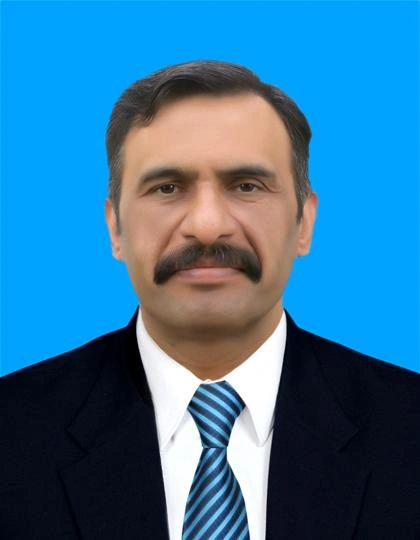
Dr. Muhammad Rizwan Bhatti holds a PhD in political science and writes regularly on terrorism, counterterrorism, countering violent extremism, and policing affairs. He can be reached at rizwanbh79@gmail.com.
For more reading please visit our Articles.